Every country has the inherent right to defend its sovereignty and territory. If a foreign nation crosses its borders without permission or stirs up conflicts in any way, the affected country is unlikely to remain passive or let the matter slide.
In more severe situations, such as an outright invasion, the invaded nation will undoubtedly respond, whether through direct retaliation or other means.
Similarly, when a country launches a series of aggressive attacks with the intent to inflict destruction, it can ignite significant diplomatic tensions. Worse still, if these attacks are supported by adversaries, the situation could escalate further.
And this time, 'World War III' and 'WWIII' are trending on social media, following Ukraine's attack on Russia using a U.S.-made longer-range missiles.
The moment marked the first time Kyiv used the weapons during its 1,000 days of war with Kremlin.
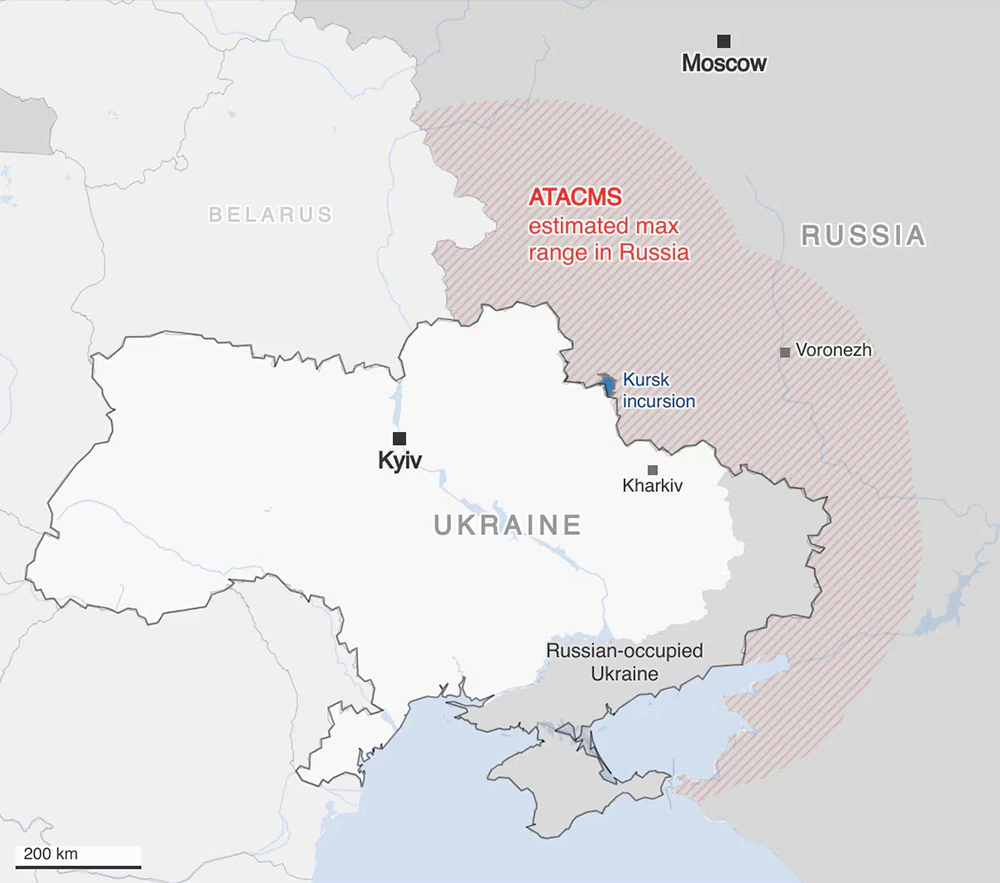
The missiles it used were Army Tactical Missile System, known as ATACMS.
A Telegram channel affiliated with the Ukrainian military posted a video that it said shows U.S.-supplied ATACMS missiles being fired from an undisclosed location in Ukraine.
At first, a Russian news agency claimed that 6 missiles were launched, 5 had been shot down, and one failed to hit its designated target.
The fragments fell on the territory of an unspecified military facility and sparked a fire, but didn’t cause any damage or casualties, it said.
But according to a U.S. official, 8 missiles were fired, and just 2 were intercepted by the Russians. The official said that the U.S. was still assessing the damage, but according to the official, the missiles struck an ammunition supply location in Karachev, a city of about 18,000 people in Russia’s Bryansk region.
The official spoke on the condition of anonymity to discuss intelligence assessments.
When asked at a news conference if Ukraine had struck the Bryansk region ammunition depot with ATACMS, Ukraine’s President Volodymyr Zelenskyy declined to provide any details.
However, he said, “Ukraine has long-range capabilities, including domestically produced long-range drones … and now we have ATACMS as well.”
In response to Ukraine’s use of long-range ATACMS missiles against its territory, Russia marked it a "new phase of the Western war" against Moscow, and has said it will react "accordingly."
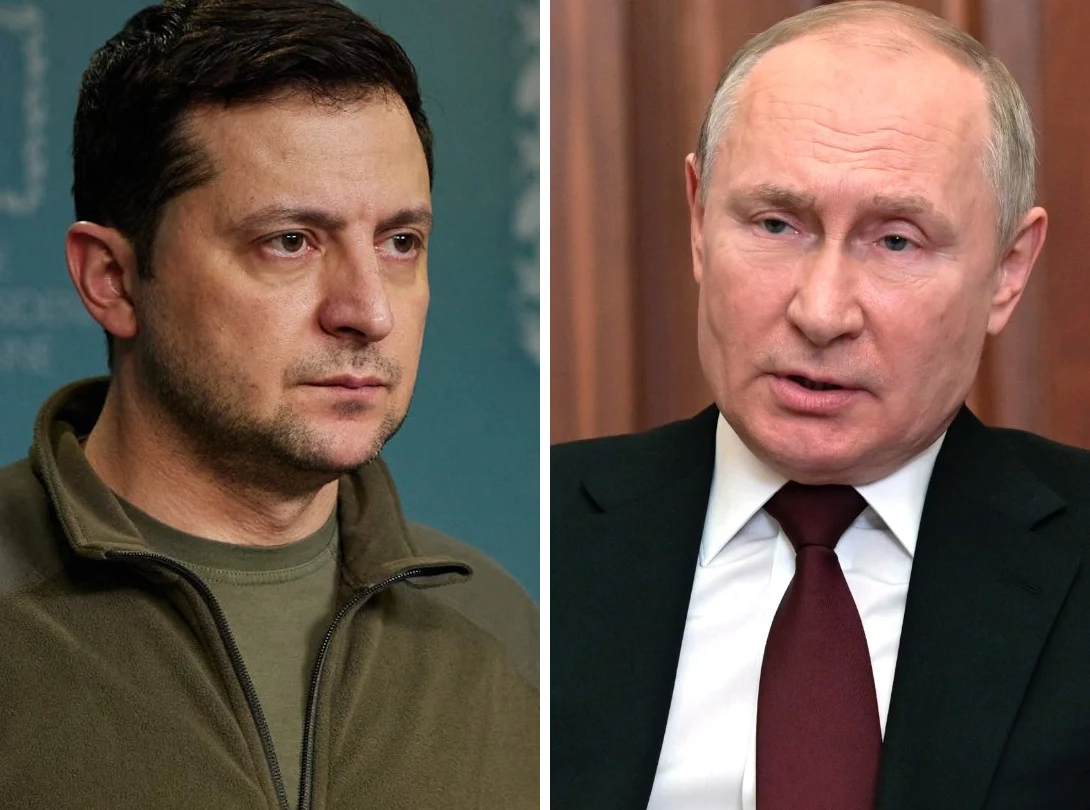
The attacks occurred after U.S. President Joe Biden authorized Ukrainian President Volodymyr Zelenskyy to deploy ATACMS missiles against Russia.
Russian President Vladimir Putin is acutely aware that the deployment of U.S.-made missiles could shift the dynamics of the war, enabling Ukraine to strike deeper into Russian territory without relying solely on drones.
Using the longer-range missiles, Ukraine should be able to tackle its manpower difficulties on the front, and focus its troops to slow Russia's advances instead.
This escalation has amplified fears of a far more severe retaliatory strike from Russia, with tensions rising over what Ukraine has done and the advanced weaponry it has employed.
Simultaneously, Putin formally reduced the threshold for using nuclear weapons, signaling that Moscow could respond with nuclear force even to conventional attacks, particularly if the attacks are backed by a nuclear-armed nation.
Kremlin spokesman Dmitry Peskov answered affirmatively, saying the doctrine provides scope for such a response to a conventional strike that threatens the “sovereignty and territorial integrity” of Russia and its ally, Belarus.
The previous doctrine, contained in a 2020 decree, said Russia may use nuclear weapons in case of a nuclear attack by an enemy or a conventional attack that threatened the existence of the state.
This development has heightened global concerns, as it places U.S.-supported Ukrainian strikes squarely within the realm of potential nuclear retaliation.
The attacks represent a troubling intensification of the conflict, which continues to strain international stability.
Adding to the unease, U.S. officials have voiced alarm over Russia’s reported use of North Korean troops in its efforts against Ukraine, further complicating the already volatile situation.
Analysts suggest that neither Russia nor Ukraine can sustain the conflict indefinitely.
However, Russia, with its vast resources and expansive territory, appears more equipped and capable for a more prolonged engagement.
And according to Zelenskyy, the series of aerial strikes the Russians have launched proved that Putin isn't interested in ending the war.
“Each new attack by Russia only confirms Putin’s true intentions. He wants the war to continue. Talks about peace are not interesting to him. We must force Russia to a just peace by force,” Zelenskyy said.
Furthermore, it is speculated that Putin has not yet committed the full extent of his country’s capabilities to the war.
Putin’s frequent travels to meet foreign leaders and strengthen alliances indicate he remains highly active, though seemingly focused on maintaining his established style of leadership.
In contrast, Ukrainian President Volodymyr Zelenskyy has concentrated on securing international support, particularly from the U.S., and addressing the United Nations to rally global backing.
The 1,000-day mark of the war has intensified global scrutiny over its progression and potential resolution, especially with U.S. President-elect Donald Trump set to take office in about two months.
Trump has promised to quickly bring the war to an end and has been critical of the financial burden the U.S. has shouldered in supporting Ukraine.
Following the attacks, a resurfaced video shows President-elect Donald Trump warning that the world has never been closer to a third world war than it has been under President Joe Biden’s leadership.
The video has resurfaced following Biden’s authorization allowing Ukraine to use its long-range missiles it supplied to conduct strikes inside Russian territory.
"We have never been closer to World War III than we are today under Joe Biden. A global conflict between nuclear-armed powers would mean death and destruction on a scale unmatched in human history; it would be nuclear Armageddon," he said.
Trump, who issued the video message during his 2024 presidential campaign, emphasized that the U.S. needs “new leadership” to avoid the "nightmare” of a third world war.
He warned that the U.S. risks "global war" should it continues allowing the "proxy battle in Ukraine" to happen.
"We must be absolutely clear that our objective is to immediately have a total secession of hostilities. All shooting has to stop," Trump added. "This is the central issue. We need peace without delay."
In the resurfaced video, Trump warned that the "entire globalist neocon establishment" is continually dragging the U.S. into "endless wars" by "pretending to fight for freedom and democracy" around the globe while turning the U.S. into a "third-world country."
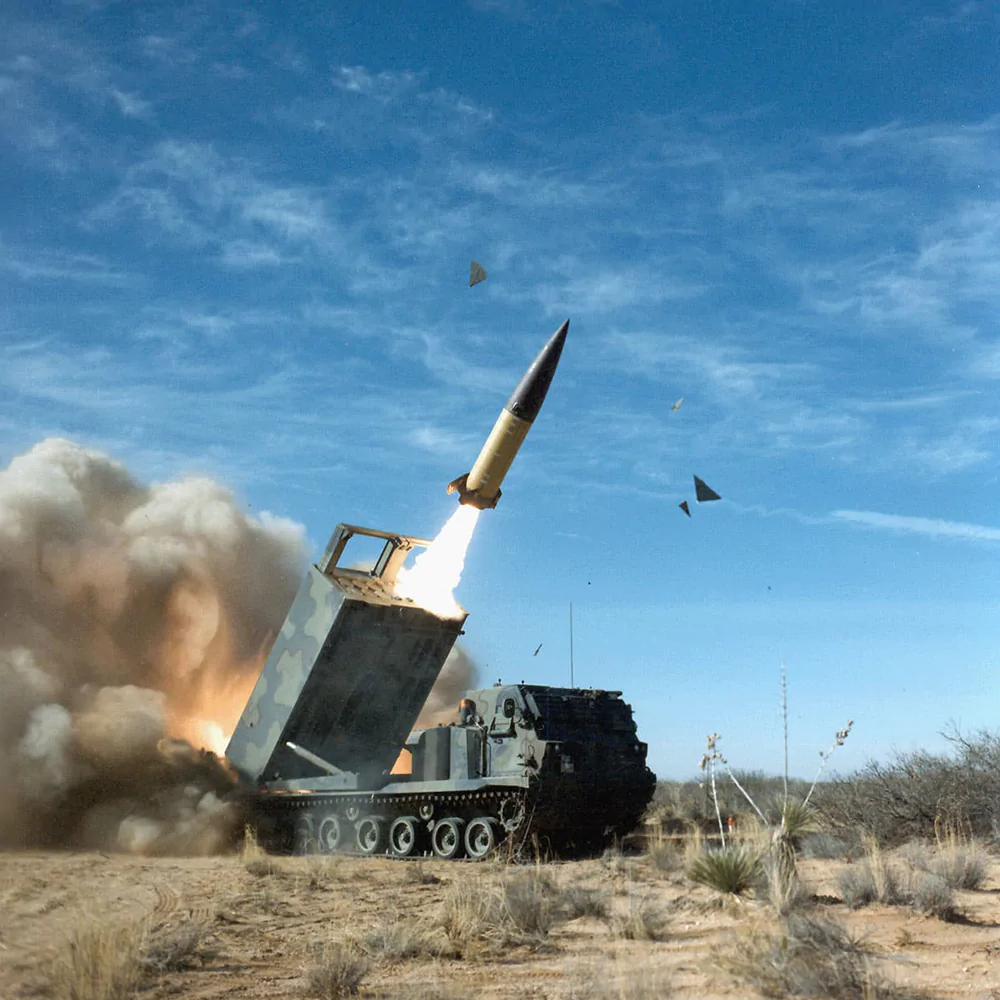
Army Tactical Missile System (ATACMS) is a supersonic tactical ballistic missile designed and manufactured by the U.S. defense company Ling-Temco-Vought (LTV), and later Lockheed Martin through acquisitions.
Also called the MGM-140, the missiles that stands 4 meters high, use solid propellant to propel themselves up to 300 kilometers at their maximum range. For better mobility, the missiles can be fired from the tracked M270 Multiple Launch Rocket System (MLRS) and the wheeled M142 High Mobility Artillery Rocket System (HIMARS).
ATACMS was first designed in 1986, and began its service in 1991, after the fall of the Soviet Union during the Cold War.
While updates and also upgrades have been made to improve the technology, ATACMS is considered outdated in the world arms race.
The U.S. has developed the mode advanced Long-Range Precision Fires (LRPF), which was later renamed Precision Strike Missile (PrSM), with the idea of replacing ATACMS missiles.
Each ATACMS unit costs around $1 million.
Read: Russia-Ukraine War On The Internet: Between Cyberattacks To Censorship, Encrypted Messages And More














































































































































































































































































