Tech demos are supposed to inspire awe. They’re the staged moments when a company steps onto the spotlight, eager to convince the world that the future is already here.
But sometimes, the stage lights reveal more cracks than breakthroughs. Instead of showcasing brilliance, a demo can expose fragility, turning what should be a victory lap into a cautionary tale.
When Meta unveiled its smart AI glasses, expectations were high.
The company promised a glimpse into seamless human-AI interaction, wearable intelligence that could change the way people see and engage with the world. But in an ironic twist, the very showcase designed to highlight innovation ended up highlighting a very different kind of problem.
The glasses failed to understand the given commands, making the demo a big fail.
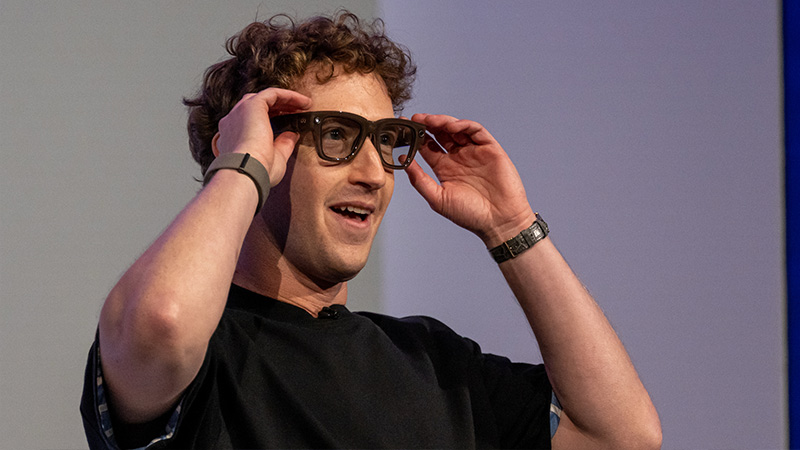
It all began during Mark Zuckerberg’s much-anticipated demo of Meta's new AI glasses at the Connect 2025 keynote.
The device, called Meta Ray-Ban Display, pitched as a breakthrough in wearable "agentic AI" with digital assistants that act on behalf of users.
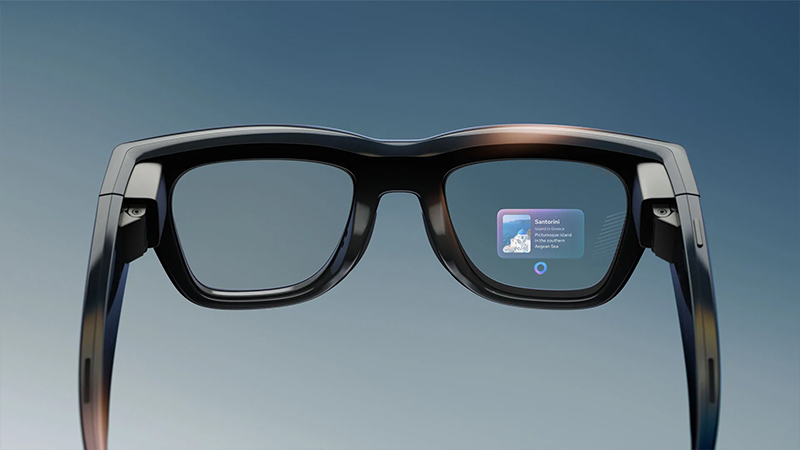
Meta’s Ray-Ban Display marks the company’s boldest step yet in bringing wearable computing into everyday life. Unlike earlier versions of Meta’s smart glasses, this model features a built-in display, seamlessly tucked into the right lens. The display is small, with only around 600×600 resolution, a 90 Hz refresh rate. But with a peak brightness reaching up to 5,000 nits, it makes whatever projected to the lens visible even in bright daylight.
While the field of view is relatively limited at about 20 degrees, it is enough to show notifications, navigation overlays, and AI-powered information without overwhelming the wearer’s vision.
To control the glasses, Meta pairs them with a “Neural Band,” a wrist-worn accessory that uses electromyography (EMG) to read subtle signals from the muscles in your wrist and hand. This allows for gestures like swiping, pinching, or tapping in the air, creating an intuitive interface that doesn’t rely solely on voice or touch.
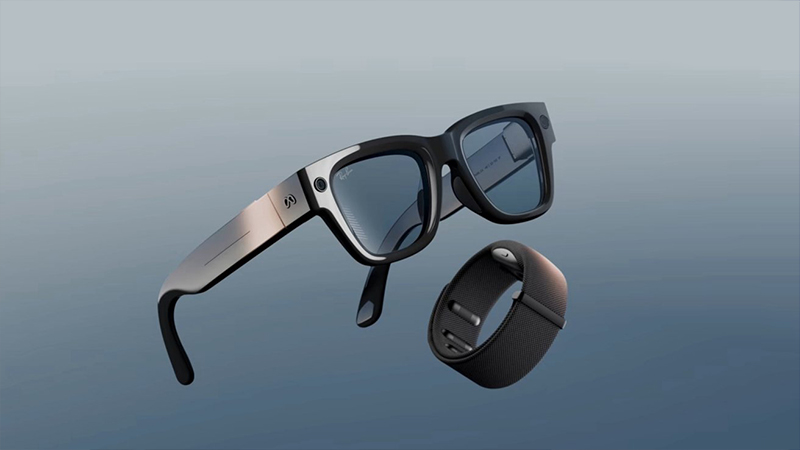
Combined with a 12 MP ultra-wide camera, open-ear speakers, and multiple microphones, the glasses position themselves as both a communication tool and a real-time AI assistant.
The intended uses range from simple convenience, like checking messages, receiving navigation cues, or reading real-time translations, and to access more advanced AI integrations, such as instant responses from Meta AI appearing directly in the wearer's line of sight.
The display is designed to remain unobtrusive when inactive, so users can wear the glasses like a normal pair of Ray-Bans without distraction.
Priced at $799, which includes the Neural Band, Meta is clearly targeting early adopters and those curious about the merging of fashion and technology.
By leveraging Ray-Ban’s iconic aesthetic, Meta aims to avoid the “tech gadget” stigma that plagued earlier smart glasses attempts, offering instead a product that blends into everyday wear.
But the event was notable because two demos deliberately failed, leaving the Meta's smart glasses looking slightly less polished in front of hundreds.
First, Mark Zuckerberg stepped on stage wearing the Ray-Ban Display glasses and began his demo.
The keynote, held at Meta’s Silicon Valley headquarters, was billed as the coming-out party for the long-rumored "Hypernova" glasses.
The Meta founder and CEO looked toward the crowd, raised his voice slightly, and said the activation phrase, "Hey Meta." But instead of responding to the wake up command instantly, the moment dragged.
The glasses hesitated, the response didn’t come through smoothly, and the demo stalled right in front of the audience. For a few seconds, Zuckerberg repeated the phrase, trying to get the system to kick in, but the glasses still failed to react the way they were intended to.
The awkward moment left Zuckerberg fumbling with the technology before a global audience.
The crowd started to murmur, realizing something wasn’t working.
Zuckerberg gave a quick smile, then addressed the situation directly, and professionally, acknowledging the glitch. He made light of it, offering a quip to ease the tension, and then moved on with the presentation.
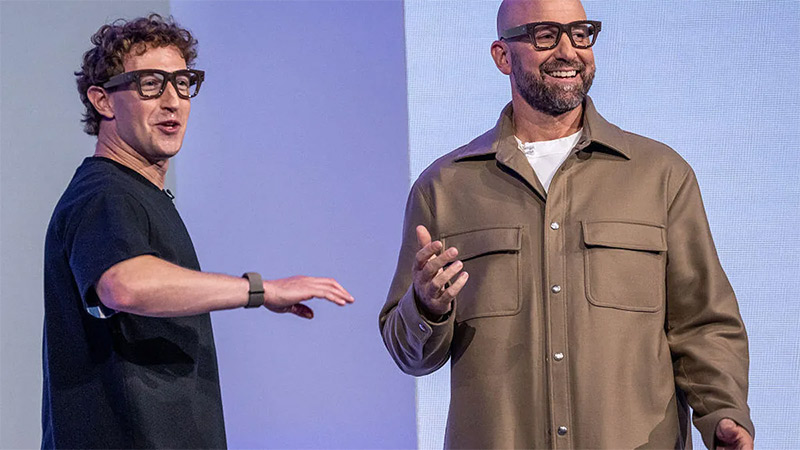
The second fail came during a showcase of the Neural Band. At the time, Zuckerberg successfully sent and received a text from Meta CTO Andrew Bosworth. But when Bosworth attempted to initiate a WhatsApp video call, the glasses would not pick it up.
"This is, uh... it happens," the CEO said, " ... I keep messing this up."
Zuckerberg fumbled with the interface before giving up.
Bosworth eventually walked onstage, joking about "brutal Wi-Fi" as the audience laughed.
"You practice these things like a hundred times, and then you never know what’s gonna happen," Zuckerberg said.
After Zuckerberg's demo, cooking creator Jack Mancuso joined him to try the glasses' new LiveAI feature, which is supposed to walk users through recipes step by step.
The goal was to demonstrate how the glasses could act like a hands-free assistant in the kitchen. The idea was simple: while cooking, the chef could just say "Hey Meta" and ask the glasses for help, like looking up for recipes, step-by-step instructions, or substitutions for missing ingredients.
At first, the demo looked routine:
the chef spoke the activation phrase confidently and waited for the glasses to guide him. But again, the moment dragged. Instead of a crisp response, there was hesitation, and the AI failed to deliver the expected instructions on time.
After repeating the question, “What do I do first?” with no response
The chef repeated the prompt, "What do I do first?" the AI responded by saying: YYou already combined the base ingredients," when in fact, Mancuso was sheepishly standing in front of an empty glass bowl.
This left the audience watching an awkward pause instead of a seamless flow, forcing Mancuso to stop the demo.
He then tossed it back to Zuckerberg, saying that he thinks the Wi-Fi may be messed up.
Long story short, during the $799 AI glasses debut, pretty much everything went wrong while live because the device malfunctioned onstage.
Some suggested that the device had issues, while others pointed out that it was a Wi-Fi issue.
Andrew Bosworth clarified what went wrong, insisting that it was a "demo fail, not a product fail."
The issues, he said, happened because Meta routed all traffic to its "dev server," including from all of the headsets in the building. So what happened here is that, when the wake up command "Hey Meta" was spoken, no only the device being demoed was activated, all Meta AI-powered devices in the building woke up simultaneously.
With so much traffic into a server not designed to handle so much requests, "we DDoS'd ourselves, basically," Bosworth admitted, referring to a common cyberattack strategy known as a "denial-of-service attack" that attempts to bring a network down by overwhelming it with phony internet traffic.
It was due to a "never-before-seen bug" that Zuckerberg was unable to accept calls on his smart glasses.
"You guys know we can do video calling," Bosworth pleaded on Instagram. "We got WhatsApp, we know how to do video calling."
Despite the onstage glitches, Zuckerberg framed the glasses as a leap forward in AI-powered personal technology.
He emphasized that the devices represent Meta’s vision of a future where wearable AI assistants anticipate needs and handle tasks with minimal user effort.
"Mark has enthusiasm, and so he was willing to take the risk, but, unfortunately, in a couple of instances, it didn't go his way," added Ulanoff.
"I'm sure Mark Zuckerberg felt extremely uncomfortable, but I give him credit for maintaining his calm and making a joke about it all."
Journalists who got the opportunity to try the glasses out for themselves appear to have been surprisingly impressed by the experience. So maybe Zuckerberg's disastrous keynote was just the result of poor planning after all.














































































































































































































































































