The rapid escalation in the Middle East has crossed from chronic instability into a historic and deeply chilling rupture.
What had long been a shadow war, waged through sanctions, sabotage, assassinations, and proxy violence, has now erupted into direct, state-on-state military confrontation with consequences that will reverberate for decades.
Over the weekend, the U.S., in close operational coordination with Israel, launched massive joint strikes against Iran under Operations Epic Fury and Roaring Lion. The campaign went far beyond symbolic deterrence. Nuclear facilities, ballistic missile infrastructure, hardened command-and-control nodes, air defense systems, and senior leadership compounds were hit across multiple provinces, including the capital, Tehran.
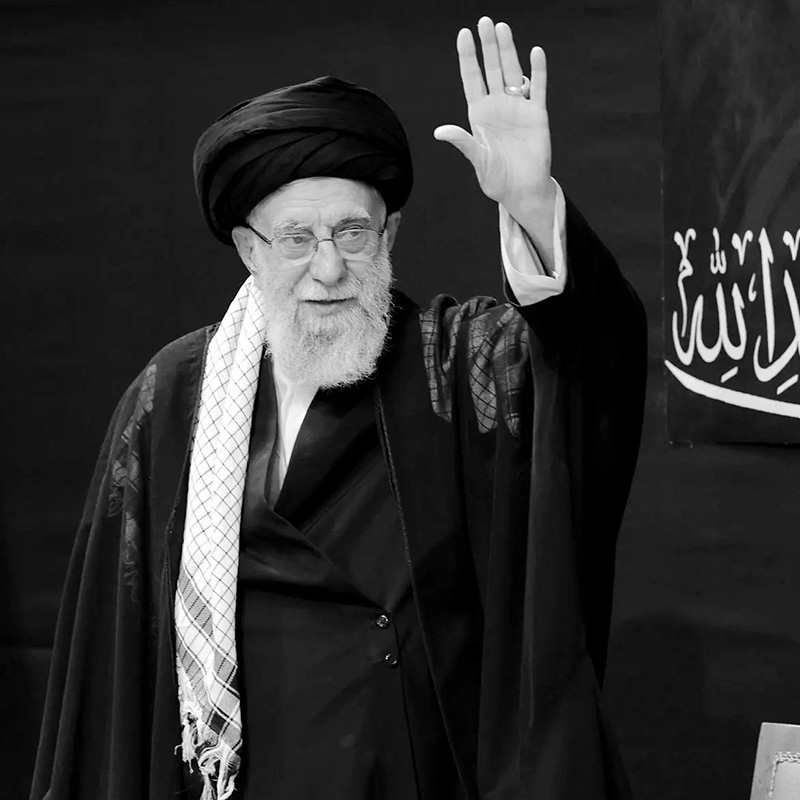
In what may become one of the most consequential targeted killings in modern history, Iran's Supreme Leader, Ali Khamenei, was killed, alongside a significant portion of the country’s top military and internal security leadership.
For the Islamic Republic, this was not merely a military defeat but a decapitation strike at the ideological core of the regime.
And somehow, AI is involved.
Read: Firepower And Firewall: How Israel And Iran Wage War Online In A Battle For Public Perception
The war of Iran stems from years of tension over Iran's nuclear ambitions, which have intensified since the U.S. withdrawal from the 2015 Joint Comprehensive Plan of Action (JCPOA) in 2018.
The JCPOA once constrained Iran's enrichment activities in exchange for sanctions relief, but its gradual unraveling, coupled with Iran's accelerating breaches, left the program in a precarious state.
By 2025 and early 2026, Iran had amassed significant stockpiles of highly enriched uranium, with IAEA reports indicating enough 60%-enriched material for potential multiple weapons if further processed.
Negotiations in Geneva and Vienna faltered as the US, under President Trump, demanded the dismantling of key facilities like Fordow, Natanz, and Esfahan, the transfer of enriched uranium abroad, and a permanent deal without sunset clauses.
Iran resisted, offering limited concessions like phased dilution and low-level enrichment for civilian purposes, but refused core demands.
Prior strikes in June 2025 had already damaged major sites, yet the program persisted in shadowy, dispersed forms, with lost IAEA oversight complicating verification.
The current offensive represents a shift from targeted setbacks to a broader campaign that many analysts describe as aiming for regime change. President Trump has urged Iranians to rise against their government, vowing to continue operations for weeks if needed to eliminate threats.
— Donald J. Trump (@realDonaldTrump) February 28, 2026
But what's unexpected in this geopolitical storm is the revelation that the U.S. military employed Anthropic's Claude AI model in planning and executing aspects of the strikes.
And this happened in mere hours after President Trump ordered a full severance of federal ties with the company.
Labeling Anthropic a "radical left" entity out of step with national interests, Trump directed agencies to phase out its tools, with Defense Secretary Pete Hegseth citing national security risks.
Yet Claude's integration, through contracts allowing classified use and partnerships like Palantir, proved too entrenched for an immediate cutoff. Reports indicate that Claude assisted with intelligence analysis, target selection, and battle simulations for U.S. Central Command, highlighting the practical challenges of disentangling advanced AI from military operations even amid ethical and political disputes.
These were not autonomous kill decisions, but high-speed analytical processes that shaped human judgment under extreme time pressure.
The episode exposes a stark reality: once advanced AI systems are operationally integrated, political directives alone may be insufficient to disentangle them from active conflict.
Anthropic said in a statement that it is "deeply saddened by these developments."
The company said it will challenge any supply chain risk designation in court.
"We believe this designation would both be legally unsound and set a dangerous precedent for any American company that negotiates with the government," Anthropic added.
This week, Anthropic delivered a master class in arrogance and betrayal as well as a textbook case of how not to do business with the United States Government or the Pentagon.
Our position has never wavered and will never waver: the Department of War must have full, unrestricted…— Secretary of War Pete Hegseth (@SecWar) February 27, 2026
Within days, OpenAI announced its own agreement to provide unrestricted access, underscoring how strategic dependencies in AI can shift rapidly when ideology collides with operational necessity.
The transition was less a moral reckoning than a supply-chain substitution, reinforcing the sense that AI has become a fungible but indispensable component of modern warfare.
The Adolescence of Technology: an essay on the risks posed by powerful AI to national security, economies and democracy—and how we can defend against them: https://t.co/0phIiJjrmz
— Dario Amodei (@DarioAmodei) January 26, 2026
I've been working on this essay for a while, and it is mainly about AI and about the future. But given the horror we're seeing in Minnesota, its emphasis on the importance of preserving democratic values and rights at home is particularly relevant.
— Dario Amodei (@DarioAmodei) January 26, 2026
Iran’s response to the assassination of its Supreme Leader was swift, expansive, and deliberately calibrated to signal both resolve and reach.
Missile and drone salvos were launched at U.S. installations across the Gulf, Israeli territory, and allied regional infrastructure, saturating air-defense systems and dragging neighboring states deeper into an ever-widening vortex. What began as a decapitation strike rapidly evolved into a regional escalation, with each exchange raising the risk of miscalculation and uncontrollable spillover.
In this unfolding crisis, the weight of history presses heavily on the present.


The legacy of figures such as Ruhollah Khomeini, the Former Supreme Leader of Iran, and now Ali Khamenei, looms large, as the region, and the world, grapples with what comes next in this volatile chapter.
Khamenei’s death marks one of the most consequential moments for the Islamic Republic since the 1979 Islamic Revolution, severing a line of authority that had defined Iran’s post-revolutionary defiance for more than three decades.
Khomeini himself died on June 3, 1989, following a prolonged illness involving heart attacks and digestive complications, at the age of 89.
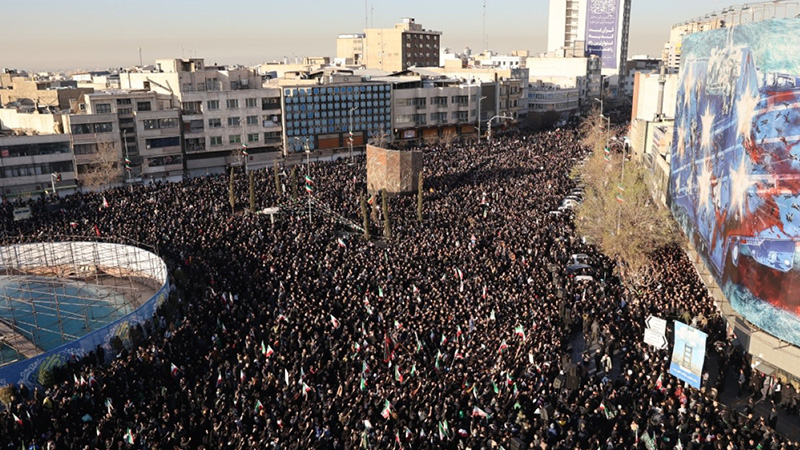
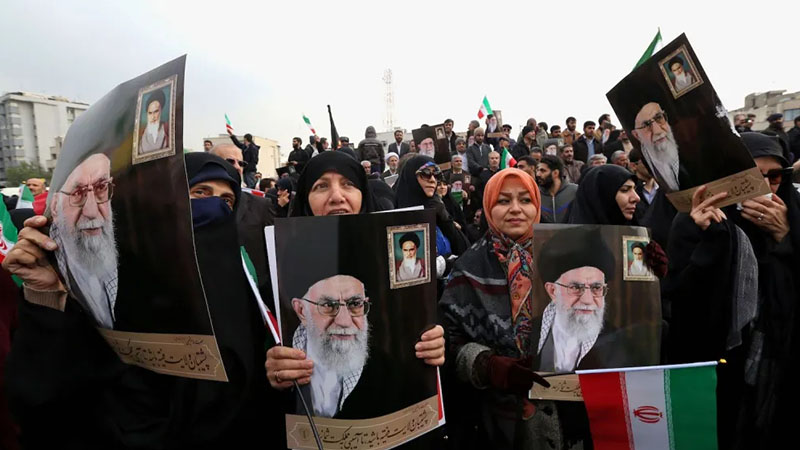
His passing triggered extraordinary national mourning, with millions crowding the streets of Tehran for his funeral and messages of tribute arriving from allies such as Pakistan, Syria, and Lebanon. That transition, though fraught, occurred in relative calm. Khamenei’s violent elimination, by contrast, has torn open a power vacuum at the pinnacle of Iran’s theocratic system amid ongoing strikes, economic strain, and the specter of internal unrest. Questions of succession, legitimacy, and cohesion now collide with the immediacy of war.
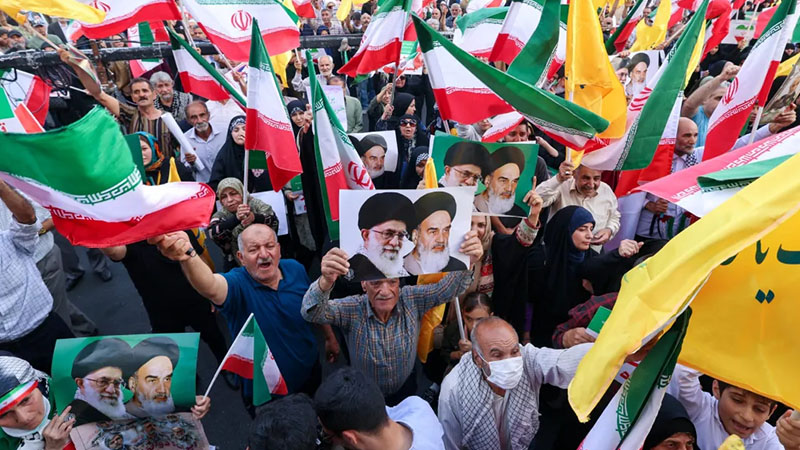
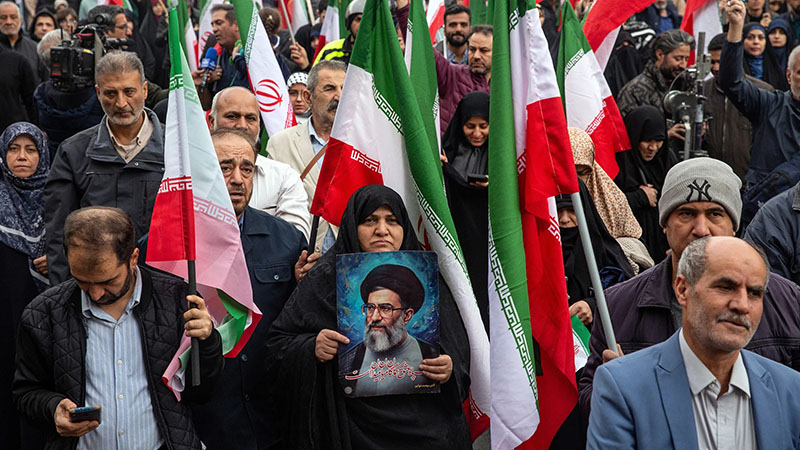
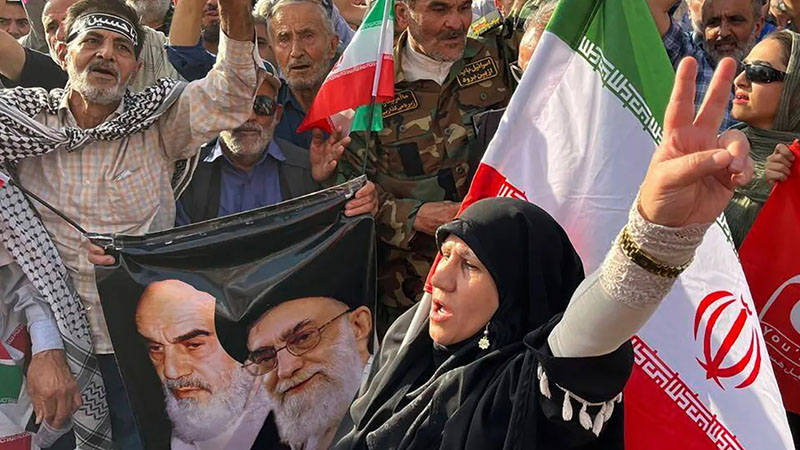
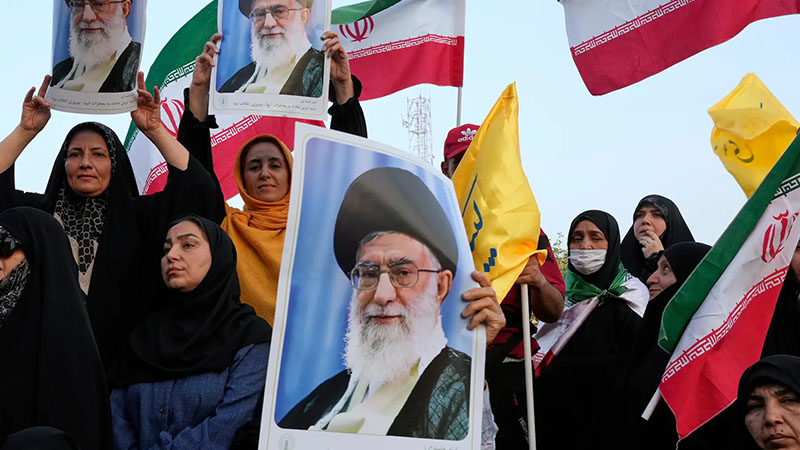
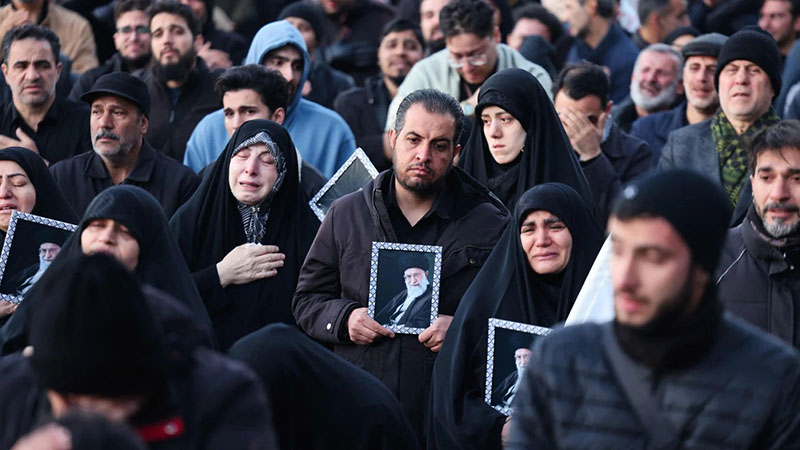
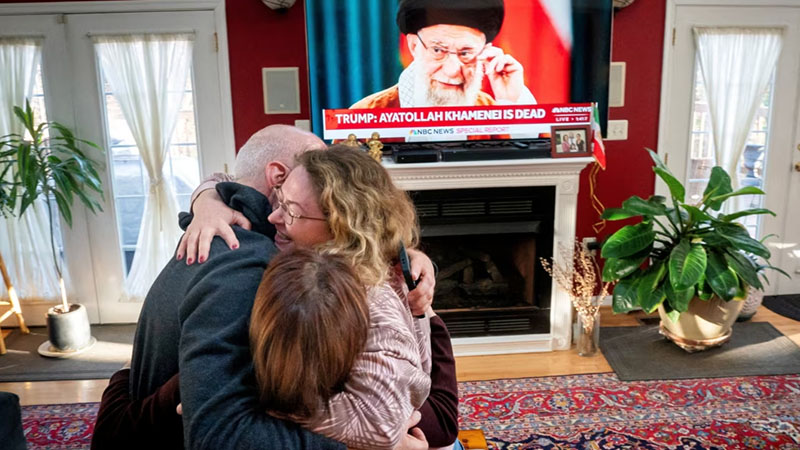
Iranians themselves, are divided.
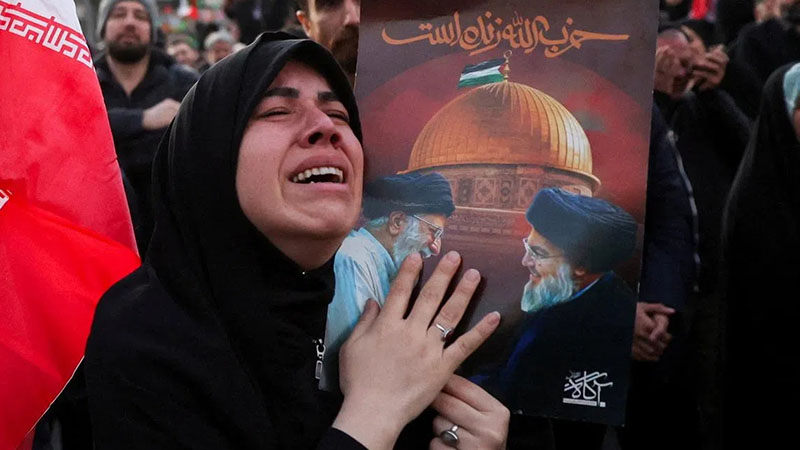
While a lot of people are mourning, a lot of others cheer cheering and celebrating.

The UN Secretary-General, António Guterres, condemned the escalation, warning that it undermines global peace and urging immediate de-escalation. European leaders in France, Germany, and the UK called for restraint, emphasizing civilian protection and renewed diplomacy while criticizing Iran’s retaliatory strikes.
Allies such as Australia and Canada voiced support for U.S. actions, framing them as a response to long-standing security threats. In contrast, Russia and China denounced the strikes as reckless and destabilizing, accusing Washington and its partners of inflaming an already fragile region.
On the ground, the human toll continues to mount.
Protests and mourning have erupted across Iran and within diaspora communities abroad, while some Iranian expatriates have openly celebrated the regime’s setbacks.
Civilian casualties are rising, with reports of more than 100 girls killed near a military site and hundreds of thousands displaced in Lebanon as violence spills across borders.
As the conflict grinds on, it leaves behind not only shattered infrastructure and lost lives, but a growing sense that the region has crossed a threshold from which there is no easy return.














































































































































































































































































