For years, the most obvious gap in Apple’s lineup wasn’t performance or design. Instead, it was price.
While competitors filled stores and classrooms with $400-$700 laptops, Apple stubbornly stayed in the premium tier. If a person wanted a Mac, the cheapest realistic option was usually a discounted MacBook Air from a previous generation. That strategy worked for a long time, but it also meant millions of potential users, especially students, never entered the Mac ecosystem at all.
The newly announced MacBook Neo changes that.
Starting at $599, it's the most affordable laptop Apple has ever made, and it represents a shift the company avoided for more than a decade.
Instead of relying on older models to serve the low end, Apple built a completely new Mac designed from the ground up to reach people who previously couldn't justify the cost of a MacBook.
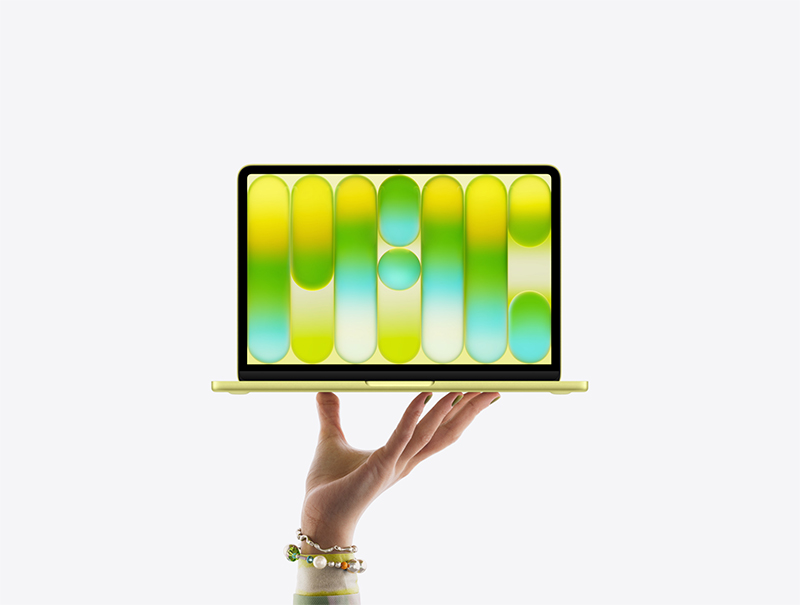
The Neo sits below the Air and Pro in Apple’s laptop lineup.
While considered the weakest of all Macs, the Neo still carries the design DNA that defines modern Macs.
First of, it has a slim aluminum body, representing a premium design. Then, Apple is giving it a bright 13-inch Liquid Retina display capable of showing a billion colors, a level similar to that of the MacBook Air. Then, the laptop also has the same macOS ecosystem that connects seamlessly with iPhones and iPads. Apple also claims up to 16 hours of battery life, which is impressive for a laptop in this price range.
But what makes the MacBook Neo particularly interesting is what powers it.
Instead of the company’s usual M-series processors, Apple said that it chose the A18 Pro chip, which is the same architecture used in recent iPhones.
That decision is unusual for a Mac, but it helps keep the cost down while still delivering solid performance for everyday tasks like browsing, document editing, streaming, and light photo work.
Apple says the chip can even handle on-device AI features thanks to its built-in neural engine.
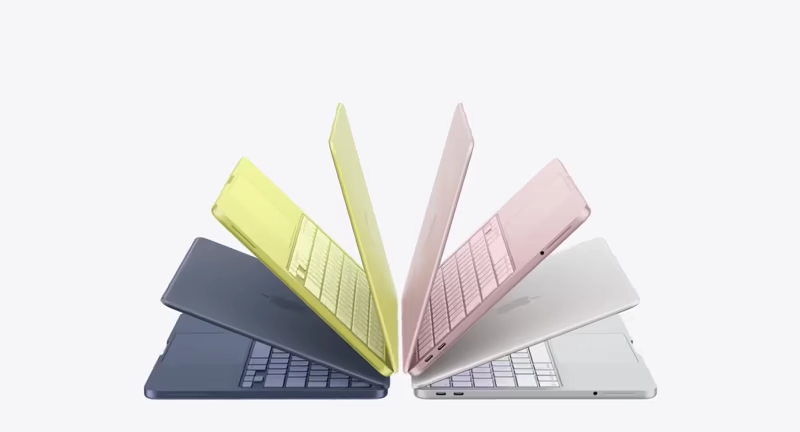
To hit the $599 price, Apple had to make compromises.
The base model includes 8GB of memory and storage options starting at 256GB, with limited upgrade options. Some higher-end Mac features are missing as well. For example, the Neo has no Thunderbolt support, and the low-tier Neo skips features like Touch ID. Even the keyboard lighting and charging accessories are simplified compared with more expensive MacBooks.
The more expensive Neo, which is priced $100 higher, has TouchID, and double the storage.
Despite those trade-offs, the Neo isn't meant to compete with Apple’s own premium machines.
Instead, it targets the massive market of budget laptops dominated by Windows PCs and Chromebooks. For years, schools and first-time laptop buyers often chose those devices simply because Macs were too expensive.
The Neo finally gives Apple a product designed specifically for that segment.
Online reactions show why the device could matter.
Many tech communities see the Neo as Apple’s long-awaited answer to low-cost laptops, a way to bring more people into the Mac ecosystem. Some commenters argue that if Apple had released something like this years ago, millions more users might already be using Macs today. Others point out that the company likely waited until it could build a cheaper laptop without sacrificing battery life, efficiency, or the tight integration that defines Apple's hardware.
The timing also reflects a broader shift inside Apple.
iPhone 17e, iPad Air, MacBook Air, MacBook Pro...
And now, say hello to the all-new MacBook Neo!
We’re so excited to bring the magic of Mac to even more people around the world. pic.twitter.com/z2w4RmShRO— Tim Cook (@tim_cook) March 4, 2026
Thanks to its own silicon chips and tighter control over hardware and software, the company can now build devices more efficiently than it could during the Intel era. That makes it possible to create a lower-priced Mac without relying on outdated components or cutting too deeply into the experience.
In that sense, the MacBook Neo may end up being more important than its specs suggest.
Neo is certainly not the fastest Mac Apple has ever built, and it certainly isn't the most powerful. But Apple hopes that it could be the Mac that introduces millions of new users to the platform.
After more than a decade of resisting the idea of a truly affordable laptop, Apple has finally built the one that is more affordable to most people.
The last time Apple created a truly affordable Mac was in 2008, when Steve Jobs unveiled the polycarbonate MacBook (polycarbonate). The laptop used a plastic enclosure instead of Apple's aluminum unibody design, among other compromises, to lower the cost. Apple continued selling the model, especially to schools and students, until 2011, before shifting its Mac lineup further upmarket.














































































































































































































































































