For years, Siri symbolized Apple's vision of voice computing. Introduced in 2011, it arrived before most modern digital assistants and helped popularize talking to smartphones.
Yet as generative AI transformed the technology industry, Siri increasingly looked outdated compared to tools like ChatGPT, Gemini, Claude, and Copilot. In the highly-competitive sphere, Apple faced a reality it had long tried to avoid: the company that built its reputation on controlling every critical technology stack could no longer rely on incremental improvements.
To remain in the race, and at least remain relevant, Apple fundamentally rebuilt Siri, embraced outside collaboration, and redesigned the AI infrastructure powering its ecosystem.
The result is the most significant Siri overhaul since the assistant's launch.
Apple started over, by changing how it considers things.
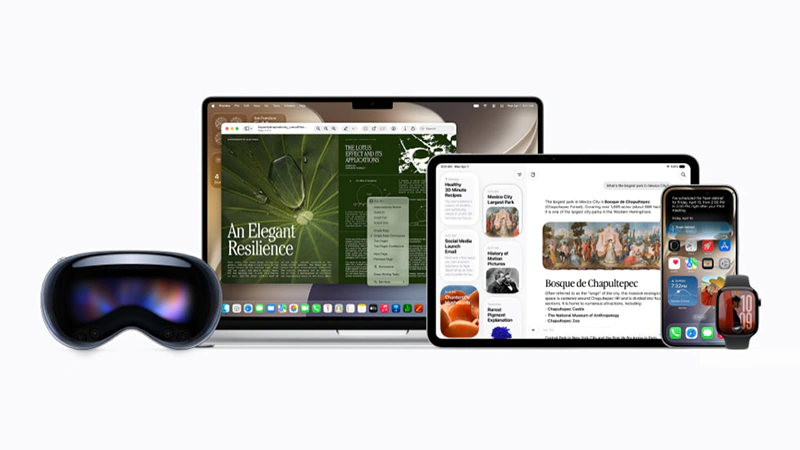
Apple's original AI strategy focused heavily on privacy, on-device processing, and tight hardware integration. While those strengths helped differentiate the company, they also limited its ability to compete with rapidly advancing large language models developed by companies investing tens of billions of dollars into AI research.
As rivals introduced assistants capable of reasoning, writing, coding, analyzing images, and maintaining natural conversations, Siri remained largely confined to predefined commands and basic requests.
The rise of generative AI created new expectations. Users no longer wanted assistants that simply executed commands. They wanted systems capable of understanding context, reasoning through complex tasks, and acting across applications.
Apple's answer was not a Siri update. It was a complete architectural reset.
This was first came to light during WWDC 2026, where Apple introduced the third generation of its Apple Foundation Models, a family of five AI models designed to power everything from Siri to image generation and advanced productivity features.
Unlike previous generations, these models were built through a deep collaboration with Google while remaining integrated into Apple's privacy-focused ecosystem.
The model family includes:
- AFM 3 Core, Apple's next-generation on-device language model.
- AFM 3 Core Advanced, a larger multimodal model optimized for newer Apple devices.
- AFM 3 Cloud, a server-side model focused on speed and efficiency.
- ADM 3 Cloud for image generation and editing.
- AFM 3 Cloud Pro, Apple's most powerful reasoning model for demanding AI tasks.
Rather than relying entirely on local processing or entirely on cloud infrastructure, Apple created a hybrid system that dynamically routes requests to the most appropriate model.
Simple tasks can run directly on a device. However, when the AI is supposed to deal with more complex requests, things can be handled through Apple's cloud infrastructure. And here, the most advanced reasoning tasks can be processed by AFM 3 Cloud Pro, which runs on Google's cloud infrastructure using Nvidia hardware while remaining protected by Apple's Private Cloud Compute security architecture.
And this is where one of the biggest misconceptions surrounding Apple's AI strategy happens, with reports suggesting that Siri simply runs on Gemini.
Apple executives have stated that the company does not use the Gemini assistant itself, Google's consumer-facing applications, or Google's search infrastructure as Siri's intelligence layer.
Instead, Apple and Google have quietly collaborated on the development of the underlying foundation model architecture used throughout Apple's AI platform.
In practice, this means Siri remains an Apple product with Apple-designed experiences, interfaces, privacy controls, and integrations. However, Google's expertise in large-scale AI model development played a major role in helping Apple accelerate progress after falling behind competitors.
The partnership represents a notable shift for Apple, which has historically preferred to build key technologies internally whenever possible.
The rebuilt Siri, called the 'Siri AI,' is no longer primarily a voice command system. Instead, it now functions more like a conversational AI assistant that understands context across devices, applications, and personal information.
The assistant can understand what appears on screen, retrieve information from messages, emails, photos, and files, and take actions across supported apps. Siri can also maintain more natural conversations and handle follow-up questions without requiring users to repeat context.
Apple has expanded Siri's capabilities beyond voice interactions as well. The assistant now appears throughout the operating system, including Spotlight, visual intelligence features, writing tools, camera experiences, and application workflows.
The goal is for Siri to become an intelligent layer that spans the entire Apple ecosystem rather than a standalone assistant waiting for voice commands.
Perhaps the most important development is Apple's ability to run significantly larger AI models on consumer devices.
AFM 3 Core Advanced is a 20-billion-parameter model designed to operate on-device using a sparse architecture that activates only a portion of the model for each request. This approach allows Apple to deliver substantially more capable AI without requiring the memory and power consumption typically associated with models of that size.
What's more, Apple expanded its Private Cloud Compute architecture to support third-party infrastructure while maintaining attestation, hardware verification, encryption, and isolation mechanisms designed to prevent unauthorized access to user data. The company says requests processed through cloud-based models remain protected under the same privacy principles that govern local processing.
This emphasis on privacy is one reason Apple chose to create a custom architecture rather than simply integrating existing third-party AI assistants.
The strategy reflects Apple's long-standing preference for pushing as much intelligence as possible onto local hardware, reducing dependence on cloud services while improving privacy and responsiveness.
As a result, since this Siri AI is pretty much powered by Apple and runs on its servers, privacy can remain central to the overall strategy
Even as Apple relies on external infrastructure for some AI workloads, the company continues to position privacy as a core differentiator.

The Tradeoff Apple Accepted
Apple's new approach reflects a broader reality facing the company.
For much of its history, Apple succeeded by building key technologies internally and integrating them tightly with hardware and software. The AI era introduced a challenge that proved difficult to solve alone within the necessary timeframe.
Rather than waiting years to catch up, Apple chose a more pragmatic path. It leveraged others' expertise, expanded its cloud capabilities, and redesigned Siri around modern foundation models.
The decision may represent one of the clearest examples of Apple's willingness to adapt when market conditions demand it.
The rebuilt Siri is more than a feature update. It represents Apple's attempt to establish a long-term AI platform capable of competing with the industry's leading assistants.
Apple killed its stubborness, by no longer viewing AI as an enhancement to existing products. Apple starts seeing the technology as the foundational layer across the company's ecosystem.
After years of appearing behind the industry's AI leaders, Apple has effectively restarted Siri from the ground up. The company did not do it alone, but the resulting platform may be the strongest indication yet that Apple intends to remain a major player in the AI era.






















































































































































































































































































