
AI continues to surprise us, and it the pace its advancing can sometimes surprise their own creators.
The large language models (LLMs) war began the moment OpenAI's ChatGPT arrived and showed the world what conversational AI could do. Overnight, the interface of computing started shifting from apps and menus to a single text box.
Competitors quickly followed: Google with Gemini, Meta with open models, and Anthropic with Claude, and more.
But Anthropic has always tried to position itself slightly differently in that race.
The company built Claude around the idea of "constitutional AI," a training approach designed to make models more reliable and aligned with human values rather than purely optimized for engagement or scale. That philosophy has shaped how Claude evolves.
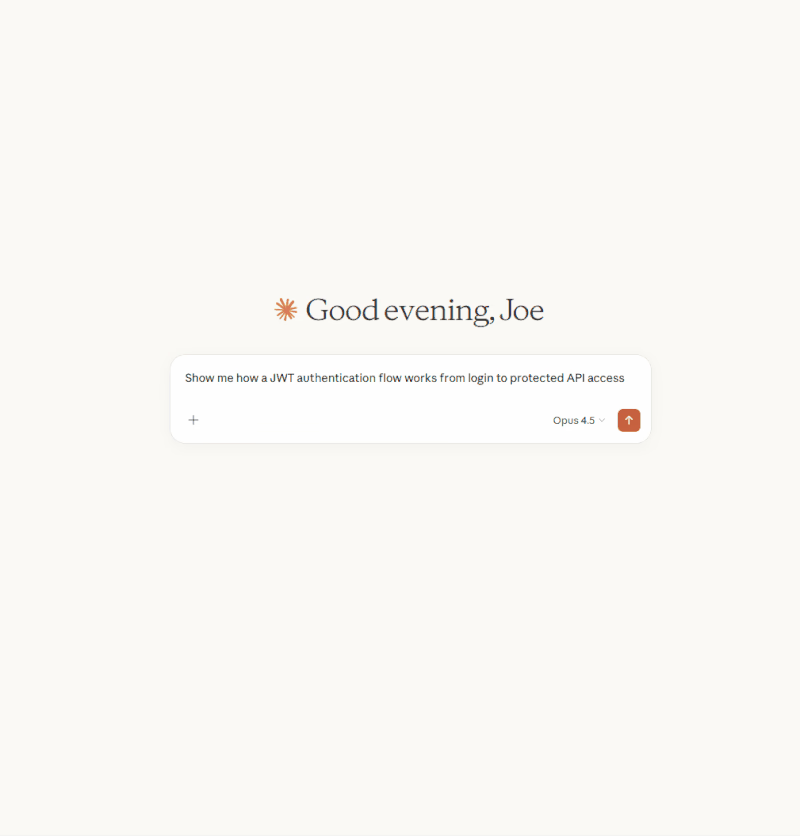
While some AI companies chase flashy generative media or agent automation, Anthropic has leaned heavily into making AI a thinking partner for work and learning. The latest update continues that direction. Claude can now generate charts, diagrams, timelines, and other visual explanations directly inside a conversation, turning text-only responses into interactive visual reasoning.
Claude can now build interactive charts and diagrams, directly in the chat.
Available today in beta on all plans, including free.
Try it out: https://t.co/tHPAZRgQkn pic.twitter.com/WXRrD4VkAt— Claude (@claudeai) March 12, 2026
Instead of explaining everything in paragraphs, Claude can now draw the explanation while it talks.
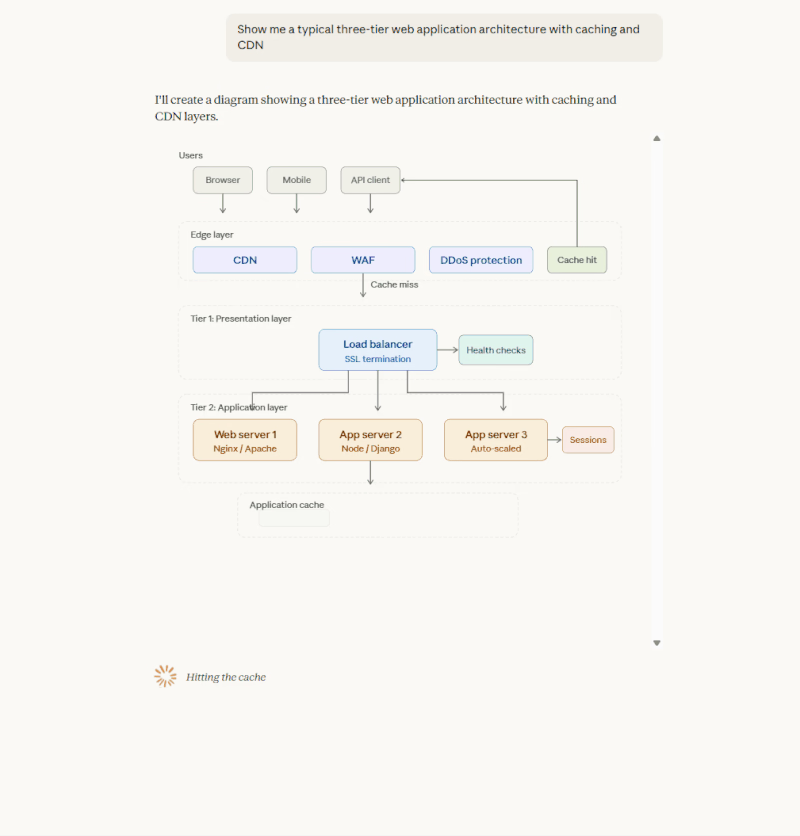
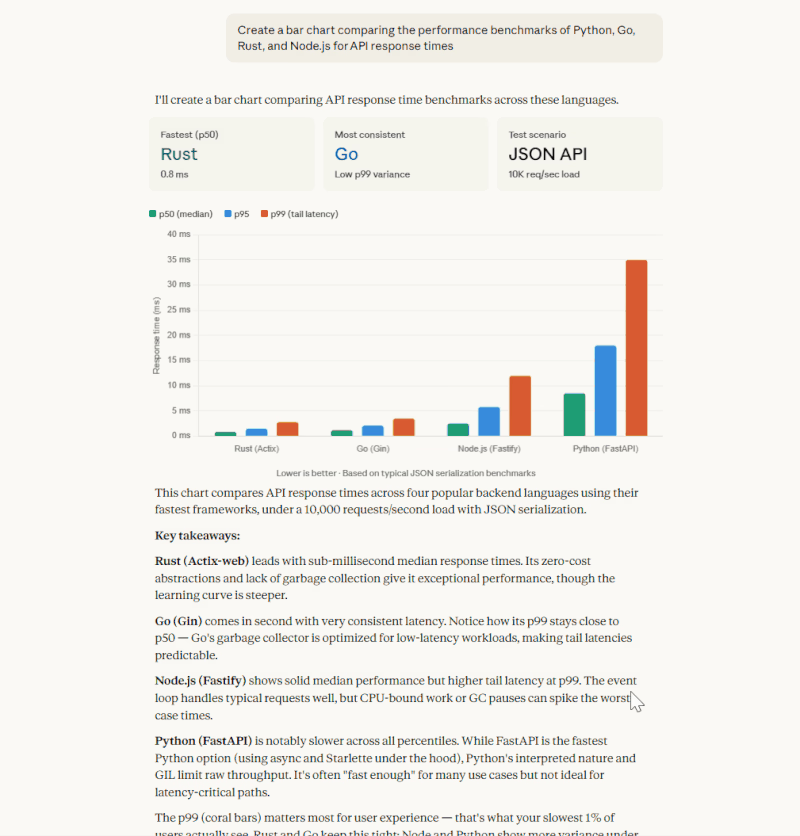
Ask about financial data and it may produce a bar chart. Ask about system architecture and it can generate a diagram. Ask about a trend over time and it can build a line graph in real time. These visuals appear inline in the chat rather than opening in a separate tool or panel, keeping the conversation intact while the explanation becomes visual.
The feature builds on earlier ideas Anthropic experimented with, such as "Artifacts," which let Claude generate persistent outputs like documents, dashboards, or mini apps. But the new visuals serve a different role.
They are temporary, evolving elements that help clarify ideas during the conversation itself. If the discussion changes, the visual can update or disappear as the explanation evolves.
What makes this interesting is how seamlessly the visuals appear.
Claude can automatically decide when a diagram or chart would explain something better than text, though users can also explicitly request one by saying things like "visualize this" or "draw it as a diagram."
Once the graphic appears, you can ask Claude to tweak it, expand it, or break down the data further without leaving the conversation.
The practical use cases are wide-ranging.
Someone analyzing a spreadsheet could instantly get a spending dashboard.
A developer discussing system architecture could receive a quick flow diagram.
A student learning about compound interest might see an interactive curve rather than reading a long explanation.
Instead of jumping between tools like Excel, PowerPoint, or diagram software, the AI becomes both the analyst and the presentation layer in the same space.
That shift may sound small, but it points toward a broader evolution in how AI interfaces work.
Early LLMs were essentially text engines great at explaining things, but still limited to words. Visual reasoning changes that dynamic. It moves AI closer to becoming a collaborative workspace where ideas can be explored through diagrams, models, and structured visuals rather than just paragraphs.
In many ways, this is the natural next step for conversational AI. Humans don’t only communicate through language; we sketch ideas on whiteboards, draw arrows between concepts, and visualize patterns in charts. By embedding visuals directly into the flow of conversation, Claude begins to replicate that style of collaborative thinking.
For Anthropic, the move also reinforces its identity within the AI race.
While OpenAI pushes multimodal creativity and Google focuses on deeply integrated ecosystem AI, Anthropic appears to be building something closer to a thinking environment: a place where reasoning, explanation, and presentation happen simultaneously.
The LLM war may have started with text boxes. But if features like this become standard, the next phase of AI might look less like chatting with a bot and more like working with a digital whiteboard that can think alongside you.




















































































































































































































































































