

Facebook is the largest social network and it is using its influence to help people find food, shelter and transportation during or after major emergency.
Called the Community Help, the feature only becomes available after a Safety Check is activated. When a major emergency happens that triggers Safety Check, users can tap on the "Go to Safety Check" banner that appears on top of the screen.
Here users can select "Find Help" or "Give Help." On either option, users can select the type of help they want to provide/receive, such as food, transportation, water, shelter, baby supplies or others.
Users can then see a list of other users that were already offering the same aid, as well as their approximate locations. Users can send messages and also engage in conversation with others.
Inspired by people who have helped others during disaster, Community Help is also inspired by the #PorteOuverte ("Open Door") hashtag that offered shelter in the aftermath of the Paris attacks in November 2015.
Facebook is releasing Safety Check for both natural and accidental incidents that include, and not limited to, floods and fire disaster. The company also has been working to expand the feature to a greater number of communities, and to also include man-made disasters such as terrorist attacks.
The feature is initially available in only a limited country: U.S., Canada, Australia, New Zealand, India and Saudi Arabia. After a few weeks of testing, Facebook aims to roll it out to all countries.
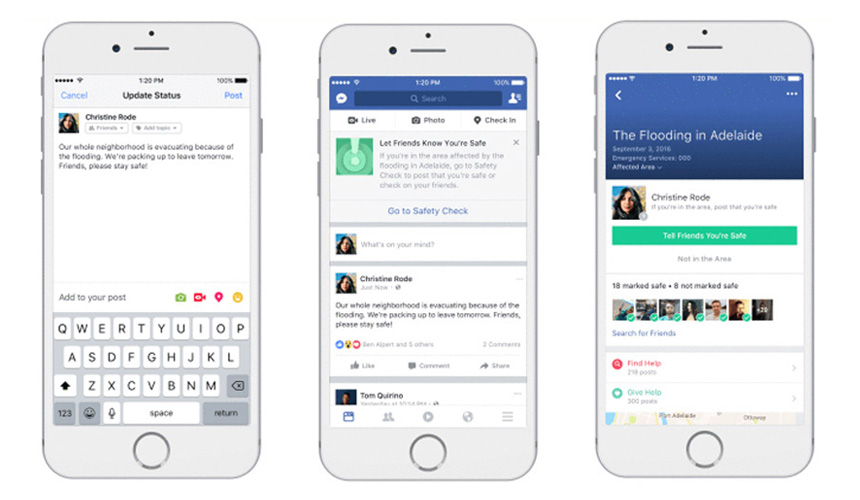
"We want to create a space on Facebook…that connects communities in the aftermath of a crisis and helps people feel safe faster, recover, and rebuild" said says Facebook Safety Check product designer Preethi Chetan.
Facing many scrutiny due to frequent false alarms where it should be activated but didn't, Facebook's Community Help is trying to stop its users from abusing the system. As an attempt, Facebook is not allowing new accounts or those users that Facebook find suspicious to use Community Help.
The company also takes extra precautions as it provides more organizational infrastructure. Community Help includes stranger-danger tips to victims and helpers, urging them to always meet in a public place, and research who they're meeting ahead to make sure they look trustworthy.