
 Facebook is already big with its over a billion users and counting. The social network is already capable in monetizing by delivering targeted ads to its visitors onsite. Now, the social giant is aiming to sell those targeted ads to elsewhere on the web, and compete directly with Google AdSense.
On Monday, September 29th, 2015, Facebook is rolling out an updated version of Atlas, the ad-serving platform the company purchased from Microsoft in 2013, so it can direct ads to people on websites and mobile apps. Atlas could create a new source of revenue for Facebook, and create a new valuable tool for marketers that are looking for an alternate way to ad network other than Google and Yahoo!.
The updated Atlas represents the next step in tracking ad effectiveness across devices. The platform is added with new user interface, and completely rewritten "from the ground up" to improve cross-service capabilities.
Facebook pointed out that the limitations in relying on cookies to track users and determine whether an ad is effective or not, don't work on mobile. This has made it less accurate in targeting people's demography. And it also can't easily measure the purchase funnel customers made across browsers and devices, or offline.
"Why aren't more dollars flowing to digital and to mobile?" said Facebook COO Sheryl Sandberg. "Mobile is getting a quarter of people's time, but ad budgets are at 10 or 11 percent. The reason is people haven't been able to deliver relevant ads or to measure them on mobile."
Because Atlas tracks "people" instead of cookies, Facebook says it can also help marketers track the relationship between their online advertising and actual offline sales. This can give a real impact to digital campaign by increasing reach and make new sales.
Facebook describes this approach as "people-based marketing" where advertisers can follow users across devices. This solution can be used to link users ad interaction to their Facebook accounts, as well as other websites and apps.
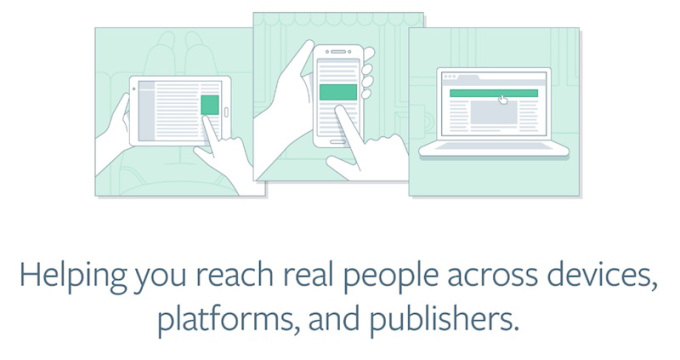
Erik Johnson, head of Atlas, said that Atlas and its method would help marketers "reach real people across devices, platforms and publishers." With Atlas serving ads in many places could help marketers to easily solve cross-service problem through targeting, serving and measuring across devices.
"What we're bringing here is an industry-leading product," said David Jakubowski, Facebook's Head of Ad Technology.
The ability to connect online ad impressions with offline sales, is work been done by Facebook and its partners that include Instagram that it acquired back in 2012, publishers, creative managements and others. In the announcement, Facebook said it had already signed a contract with Omnicom to begin serving advertisements for brands like Pepsi and Intel.
Privacy Against Money
Google has been known to serve online ads, and succeed more than anyone. But the search giant has always been interested in this people-centric strategy. Google's social network, the Google+ is one of the service the company uses to collect personal data in order to perfect its ads. But Google+ isn't performing well, and its popularity is far from Facebook, let alone its active users and the database it holds.
On the other hand, Facebook is totally different. Even before Atlas, Facebook is already a hybrid of social network and advertising platform. With this ability, Facebook has the chance to perform better in beating Google at its own game.
However, this new advertising method is not pleasing any of Facebook's already privacy concerned users. The social network's detailed tracking and massive database has already raised concerns more than often. To appeal more to the masses, Facebook released the "blue dinosaur" to aid users securing their personal information. But that secured information is just a way to keep it out of prying eyes, not from Facebook itself.
And as Facebook adds more partners within its ad network, the more data it will have at its fingertips ready for sale.
This is what fueled the sudden growth of Ello, a competitor in the social network industry that vows to never sell users' data.