
Facebook is one large social network with massive influence.
There is no denying that with more than two billion monthly active users, it's already owning half of all netizens in the world.
While Facebook is known for its "walled garden", its reach has spanned and scattered throughout the web.
In fact, according to a New York-based developer Ben Regenspan, the social media platform has become so integral that a large number of modern websites contain chunks of Facebook's code.
According to his insight, 6 percent of the top 10,000 most-visited websites in the world load contents from Facebook’s servers.
For most of them, that content is likely its SDK, which is required to display Facebook's features outside its platform, such as the Like button and the comment section.
Facebook is also said to compromise about 16 percent of the size of all JavaScript on average web page loads. The reason for this is because Facebook packages and all of its web features and widgets are included in the same kit.
Web developers find Facebook's code as convenient as with the kit, they can easily put Facebook's feature and other individual capabilities into a website. For the website's visitors, this can also be a convenience because sharing, liking, commenting and other Facebook activities on many websites can be done a lot easier.
But the thing is, Facebook's code can stuff websites with more codes than they actually need.
Regenspan estimates that the Facebook kit takes about 50ms (1/20th of a second) to load on the new MacBook Pro, and 1/10th of a second to load on the Google Pixel.
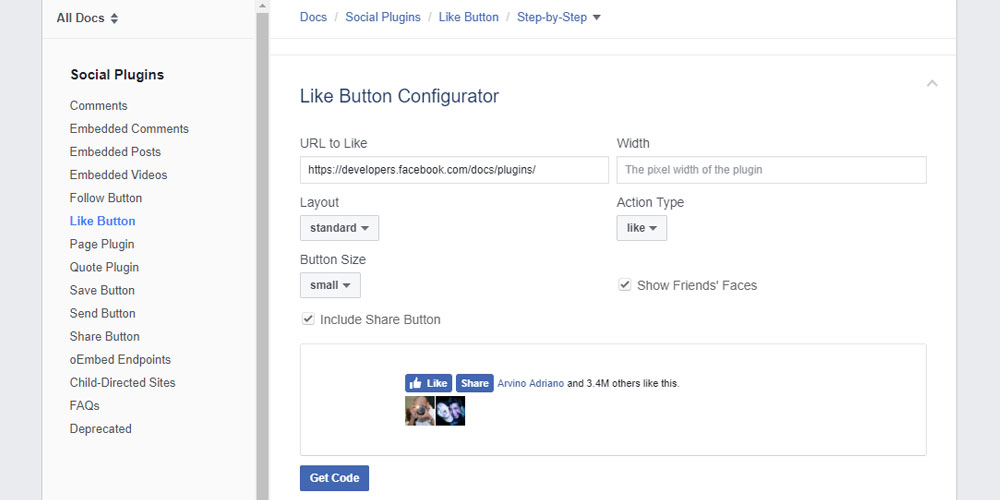
An example is Facebook's Canvas. It accounts for 1.53 percent of the whole package, with support for legacy features accounting for another 3.53 percent. These are also some of the less popular components of the SDK, that compromised 5.06 percent of the SDK.
The kit also consists of a the software library made up from Polyfills. Accounting to 15.34 percent Polyfills on the SDK are "used to supply features that are found in newer browsers to older browsers."
Unlike Canvas or other Facebook legacy support, most Polyfill-like tools added to the SDK are already "included in browsers used by the vast majority of internet users."
What this means, 15 percent of the overall Facebook package used on websites, is only used by less than 1 percent of all internet users.
As Regenspan goes on, the issue is that a considerable block of the SDK is made up from features that rarely ever come in function. As a result, most of the codes that remain idle can affect the websites' overall performance and speed, without giving anything in return.






















































































































































































































































































