
Publishers often wrestle with whether their headline truly works, wondering if it’s too clickbait, not catchy enough, potentially offensive, or optimized for search engines.
But behind the scene, Google is kind of helping (and killing) these by quietly running a small experiment in its core Search results that replaces original news headlines and website titles with AI-generated alternatives. Instead of showing the titles that publishers carefully craft, Google's system now sometimes displays rewritten versions it deems more relevant to a user's query.
This change has been spotted by multiple outlets over the past few months and appears in the traditional "10 blue links" section of Search, not just in Google Discover where a similar feature has already gone mainstream.
The test works by having AI scan the page content and generate a new title that supposedly better matches what people are searching for, with the stated goal of improving engagement.
In practice, this often means shortening headlines, removing nuance, or altering tone.
For example, an article using the title "I used the ‘cheat on everything’ AI tool and it didn’t help me cheat on anything" appeared as simply "Cheat on everything AI tool." Another piece about Microsoft rebranding Copilot was changed to "Copilot Changes: Marketing Teams at it Again."
Even em-dashes and subtitles get stripped or ignored, sometimes shifting the perceived meaning of the story.
Google has confirmed the experiment to reporters, describing it as "small" and "narrow," one of thousands of routine tests it runs on live traffic.
Spokespeople emphasize that it aims to identify "useful and relevant" titles from the page content.
Interestingly, while the current test relies on generative AI, the company insists that any full launch would not use a generative model to create headlines.
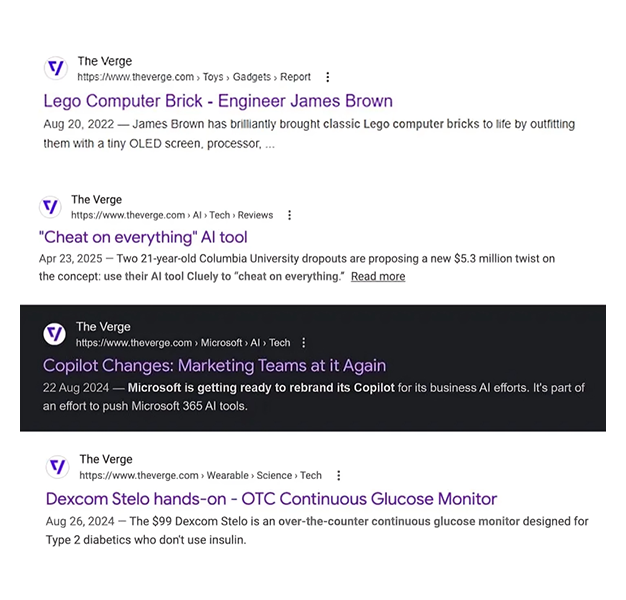
It's worth noting that Google has been tweaked titles for years, shortening overly long ones or pulling from on-page text. But this time, things feel like a much bigger step.
A similar experiment in Google Discover started small and later became permanent after the company cited strong user satisfaction metrics.
Publishers and editors are not thrilled, with some comparing it to a bookstore ripping covers off books and renaming them without permission. SEO professionals worry that changing headlines can misrepresent facts, erode brand voice, and damage long-term audience trust. One journalist described the feeling as simply "icky," while others point out that headlines are a key part of how news organizations attract readers and convey their perspective during tight news cycles.
The timing adds to the unease.
Google Search already sends significantly less traffic to websites than it once did, with click-through rates dropping in the age of AI overviews and zero-click searches rising sharply.
Publishers have watched referral traffic decline month after month, and now even the last major surface where their own headlines reliably appeared, the classic search results, is being altered.
This experiment raises questions about editorial control: if Google can rewrite titles at will, how much say do creators actually have in how their work is presented to millions of users?




















































































































































































































































































