
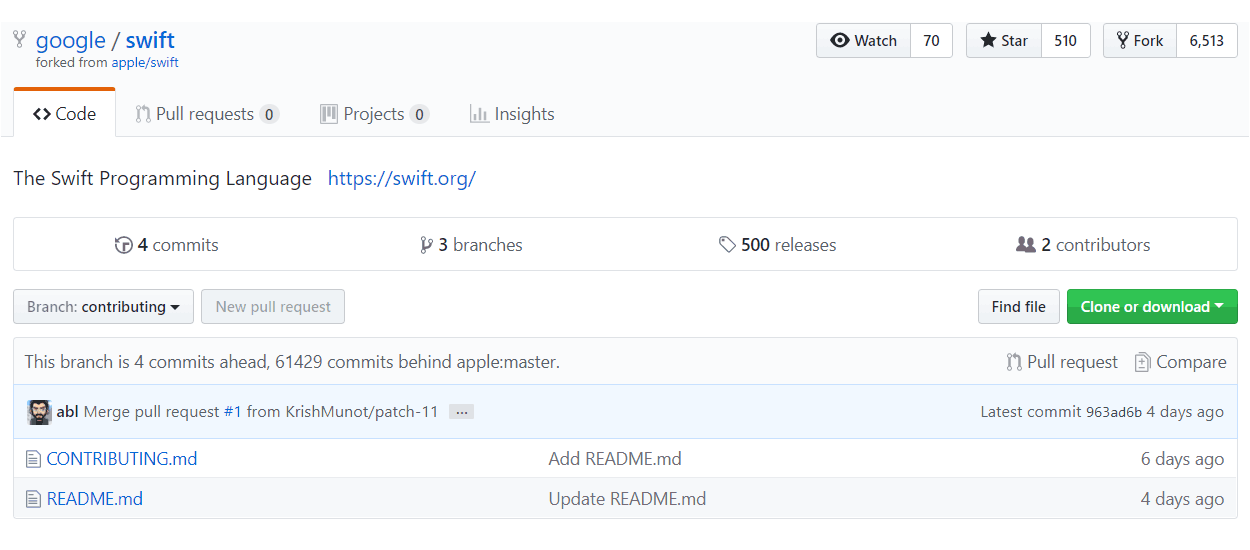
Google's "Fuchsia" operating system is still under development. An update to Google’s GitHub repository showed that the company had forked Swift, a programming language created by Apple for building iOS/macOS/tvOS/watchOS apps.
What this means, Fuchsia is opening its support for apps written in Apple's open-source Swift programming language.
Fuchsia already supports a Google-created language called Dart, as well as standards like C and C++. Other languages like Go, Rust and Python have also found a home in the project.
And adding Swift to that list means that it’ll be easier to port apps built for Apple’s platforms to Fuchsia OS, even if some retooling or a separate interface is required.
And because the platform is separate from Android and Chrome OS, Fuchsia should be more easily scalable, which could let it run on everything from embedded devices through to full-fledged computers. It could also serve as an embedded OS for devices like the Chromecast and Google Home
The support would also enable Google to work on its own working copy of the code, so it could make changes and then contribute them "upstream" to the official Swift repository.
Although it has been quite some times that Fuchsia made its existence, Google is still keeping things quite about its grand intentions for new operating system.
From how it works, Fuchsia is quite different from Android and Chrome OS, as it runs on top of the real-time 'Zircon' kernel instead of Linux.
From speculations, Fuchsia is said to be capable in running Internet of Things (IoT) gadgets or even replace or power smart devices similar to Android.
Swift is primarily intended for iOS, macOS, tvOS, and watchOS. It can compile to Linux, and Apple calls it "Objective-C without the C."
And on the company's own platforms, it can be mixed with existing C/Objective-C/C++ code (similar to how apps on Android can use both Kotlin and Java in the same codebase).
The programming language isn't strictly under Apple's control despite the company is in fact heavily promoting the language at colleges and universities.
While Swift is an open-source project, much of the iOS platform is closed source, so code that relies on those closed Apple libraries won't be portable.




















































































































































































































































































