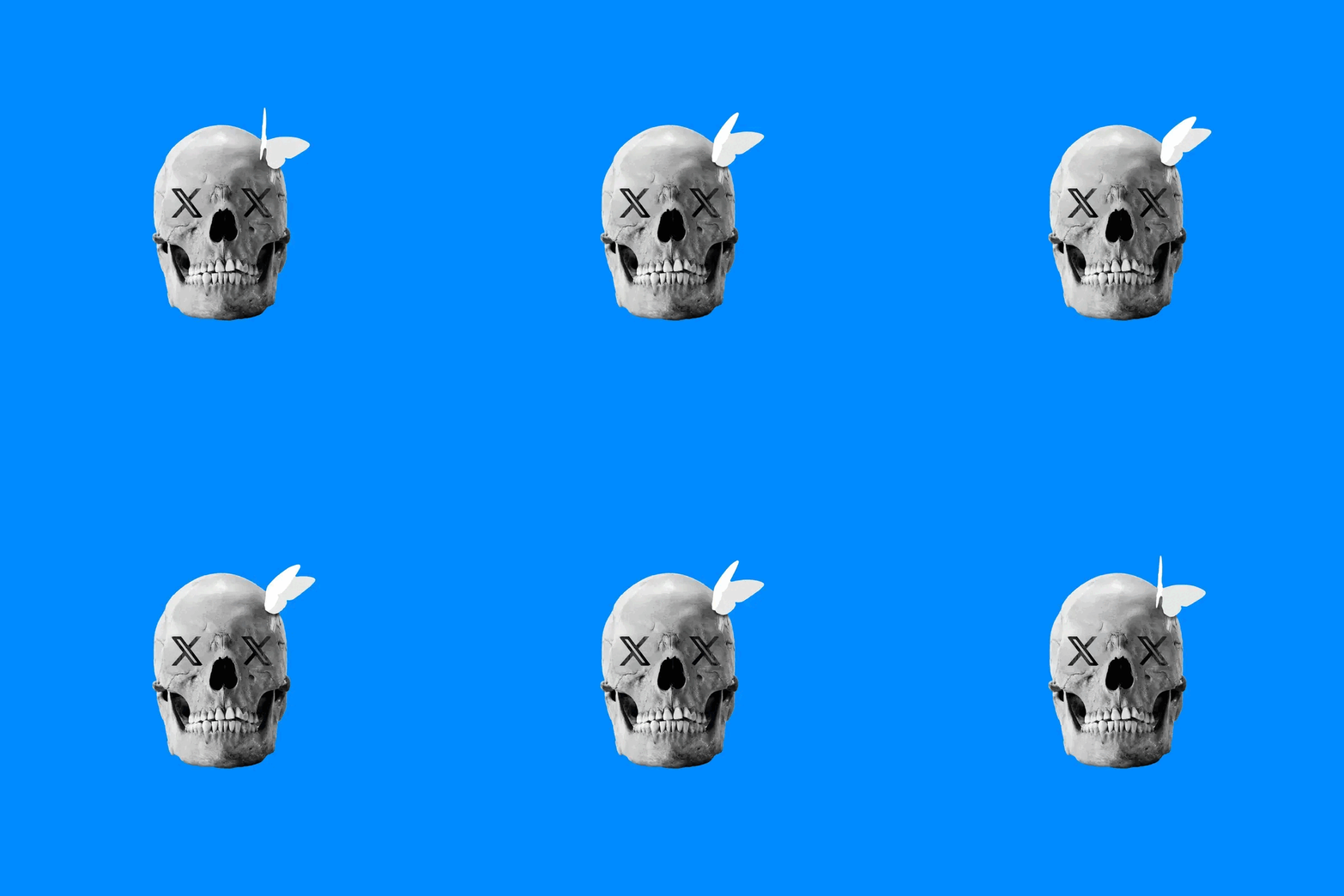
Twitter is dead, and there's no chance of seeing it rise from the grave.
The moment Elon Musk acquired it, many believed that the town hall of the internet would transform beyond recognition. For some, it was a chance for rebirth—a platform where free speech would reign supreme.
But for others, it signaled the end of an era, where years of community-building and nuanced moderation would be tossed aside for chaos and controversy.
As the dust settled, Musk's Twitter, which has rebranded to X, quickly became a battleground of polarizing changes.
Subscription-based verification replaced the legacy blue check system, alienating many prominent users. Algorithms favored sensationalism, while hate speech and misinformation saw a surge.
The result is a shift from a once-diverse user base into a disillusionment.
Many seek refuge elsewhere.
And here, they meet Bluesky.
"I didn't realize how much I missed interacting with real humans"
many people are saying thishttps://t.co/x6v5YW0WFT pic.twitter.com/f89Xfh1uh2— bluesky (@bluesky) November 12, 2024
Bluesky is a decentralized alternative that felt like a nostalgic throwback to Twitter's golden days.
Co-founded by Jack Dorsey, Twitter’s co-founder and its former CEO, Bluesky promised simplicity, transparency, and user autonomy.
Unlike X, where corporate decisions felt increasingly authoritarian, Bluesky empowered users to shape their own experience, right down to customizable algorithms.
we're 10k people away from reaching 1,000,000 new users in a single day....
help us find 10,000 of our closest friends? as a treat?https://t.co/x6v5YW0WFT pic.twitter.com/M8s8WXhmhv— bluesky (@bluesky) November 15, 2024
it's official — 1,000,000 people have joined Bluesky in just the last day!!!
welcome https://t.co/x6v5YW0WFTpic.twitter.com/ifpjZFpYsf— bluesky (@bluesky) November 15, 2024
For those fleeing X, Bluesky became the ideal sanctuary.
At least initially, Bluesky is ad-free, invite-only system fostered a sense of exclusivity and community that Twitter had long since abandoned.
Conversations were organic, genuine, and—most importantly—free of the noise and monetized drama that X seemed to thrive on.
another day, another million new users on bluesky
blew right past 18M people today! https://t.co/x6v5YW0WFT pic.twitter.com/1O8nc2jbIN— bluesky (@bluesky) November 17, 2024
bluesky's user count grew by another million today
welcome to all 19M of you https://t.co/x6v5YW0WFT pic.twitter.com/FtCvcyyr20— bluesky (@bluesky) November 18, 2024
But what sparked the massive exodus, only happened more recently.
To many users of X, they think they've had it when they realized that Musk’s X played a key role in helping Donald Trump secure a second term in the White House, an since then, the fallout in the social media landscape has been dramatic.
Musk, a vocal Trump supporter, reportedly poured an estimated $200 million into pro-Trump super PACs and orchestrated the Republican candidate’s ground game in pivotal states.
Under Musk’s leadership, X has morphed into a hotbed for misinformation and Russian interference.
Throughout the election, the platform’s algorithm appeared to promote pro-Trump content while sidelining posts from liberal figures and commentators. Musk himself posted more than 85 inaccurate claims, which garnered a collective 2 billion views, as reported by Reuters.
In the week following the election, more than 700,000 new users signed up for Bluesky.
Amid this chaotic landscape, the platform has emerged as a haven for those disillusioned by billionaire-controlled platforms.
“The state of most social platforms right now is that users are locked in and developers are locked out. We want to build something that makes sure users have the freedom to move and developers have the freedom to build.”
— Jay Graber, CEOhttps://t.co/x6v5YW0WFT pic.twitter.com/8aF5l9AVtv— bluesky (@bluesky) November 17, 2024
Twitter was toxic, no doubt about it. But it was thriving as a free-spirited entity.
It was a hub for genuine connection and lively debate.
Twitter, which has been renamed to X, doesn't inherit Twitter's toxicity that people may have missed. Not to mention how X is plagued by bots and rampant hate speech.
Thank you for joining Bluesky, we’re happy you’re here!
Our full Terms of Service and other policy documents are linked below:
[image or embed]— Bluesky (@bsky.app) November 16, 2024 at 12:17 AM
Bluesky here, is what was Twitter in it earlier days, which is something many X users missed.
Bluesky itself has humble origins, having started as a project within Twitter before becoming an independent company in 2022. Now a Public Benefit Corporation, it’s led by CEO Jay Graber, with Twitter co-founder Jack Dorsey sitting on its board.
Browsing Bluesky’s homepage feels like a throwback to Twitter’s early charm: cat videos, dog memes, comics, and lighthearted election jokes fill the feed, replacing the vitriol and drama that define X. For a growing number of users, Bluesky represents a fresh start—a space for connection without the baggage of billionaire agendas.
Bluesky is an open social network that gives creators independence from platforms, developers the freedom to build, and users a choice in their experience. We're so excited to have you here!
We share Bluesky updates & news from this account. A quick orientation thread:
— Bluesky (@bsky.app) October 17, 2024 at 2:06 PM
Despite its rapid growth, Bluesky with Jay Graber as its CEO, remains small in comparison.
X claims 250 million daily users and 550 million monthly visitors. Meanwhile, Meta’s Threads boasts over 275 million users, dwarfing Bluesky’s miniscule 14.5 million global users. Trump’s Truth Social lags even further behind, with just 2 million users.
Twitter may be dead, but its spirit lives on—just not in the place anyone expected. Bluesky has captured the essence of what Twitter once was: a place to connect, share, and be heard without the distractions of corporate ego and profit-driven chaos.
Read: Mastodon Wants To Become A Twitter Alternative, But Open Sourced And Decentralized




















































































































































































































































































