 When the internet is spreading to more places, its influence is somehow undisputed. With the help of mobile devices in practically in everyone's pockets, "digitally social" is just a word in common.
Because anything could be shared and everyone has the chance to see something when they're not meant to, the Indonesian government that had banned some websites that shows contents it thinks inappropriate, is starting to have its eyes on some messaging apps that are used by the nation's 250 million people.
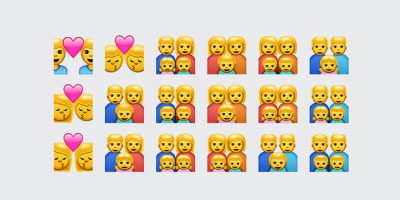
Emojis are those cartoon-like characters that are designed to express the range of human emotions, among other things. They are available in almost any messaging app, and many are distributed for free or for a fee. While most of those emoji's don't matter at all, some of messaging apps host same-sex emojis, stickers as well as emoticons. Those emojis that indicate two genders of the same sex with a child or heart between them are of particular concern.
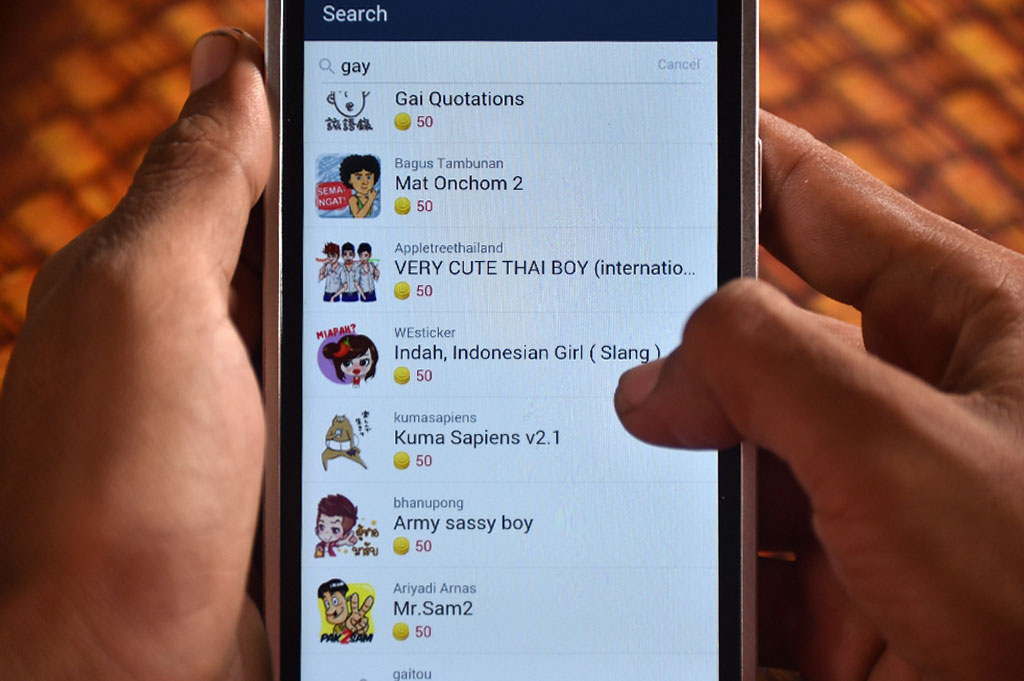
One of which initially came to rise was the Japanese-Korean messaging app LINE. The messaging app was told to remove its same-sex, lesbian, gay, bi-sexual and any other LGBT-related themed stickers from its Indonesian-language store.
"Social media must respect the culture and local wisdom of the country where they have [a] large numbers of users," said Ismail Cawidu, a spokesperson for Indonesia's Ministry of Information and Communication.
"Such contents are not allowed in Indonesia based on our cultural law and the religious norms and the operators must respect that," adding that the emojis could appeal to children. "Those things might be considered normal in some Western countries, while in Indonesia it's practically impossible," he said.
While there is no such laws against LGBT or homosexuality in most parts of Indonesia, and homosexuality is still not illegal in the country, but the topic has been a controversial issue recently and has caused 'public upset'. The government has made a flurry anti-gay statements lately. Indonesia is a nation which has the most Muslims, and it's trying to negate any external sources that it thinks will disrupt its citizens' moral.
Last month Muhammad Nasir, Minister for Technology, Research, and Higher Education, has gone further when he argued that the LGBT communities should be barred from university campuses, because there are "standards of values and morals to uphold."
As for LINE's messaging app, it had over 600 billion users worldwide as of early 2015. Indonesia was LINE's second-biggest market with approximately 30 million users in the late 2014. LINE that offers an in-store purchase to pay for stickers as well as animated cartoons, also offers a vast amount of creative LGBT-related images.
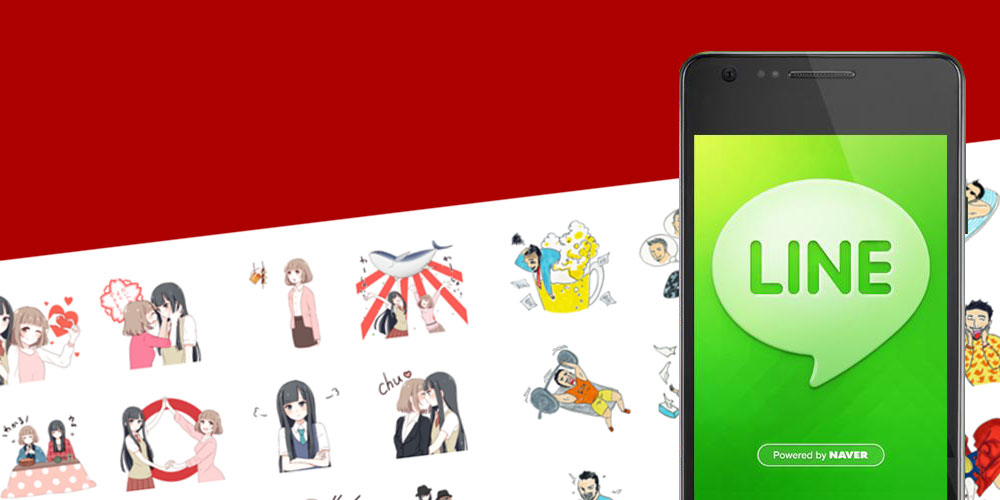
LINE's store is a home of not only its homemade stickers. Only some of LINE's stickers are made by LINE, many others are actually made and sold in the app by third-parties. But as per Indonesian's government request, LINE has withdrawn all of its LGBT-related stickers from the country's market.
In its statement on Facebook, LINE apologized for making some Indonesian users "uncomfortable", and said that globally it screens content that is deemed sensitive to local cultures.
"The Ministry is appreciative of LINE Indonesia for their understanding and discretion in dealing with matters that could potentially cause public unrest, especially the concerns of mothers for their children in terms of the negative influence the circulation of these LGBT stickers could cause," said Ismail Cawidu.
Requests To Take Down
Those controversial emojis, may probably weren't meant to be that way. Their designers may not be seeing and making them to be LGBT-related when they were first designing them. Some people have seen it to be just a mere coincidence that made them look that way, but they do indeed have such LGBT connotations if you look closely, such as the emojis that apparently show same-sex couples holding hands with a love heart in between them.
To some, they don't really care. But the Indonesian government do.
LINE is one, and there tons others. WhatsApp, Facebook, Tinder and may other messaging app are also having same-sex emojis.
While it's easy for LINE to remove those types of stickers from their Indonesian-language store, the Indonesian government's goal of banning all LGBT-themed items from social messaging will be tougher when it comes to the variety of apps people use.
For example, Facebook-owned WhatsApp's emojis are built in as part of its keyboard. And this could be more difficult to remove because those images come native within the app. Indonesia may set its eyes on Apple as well since in 2015, the company also introduced same-sex emojis.
"We have our own rules, like religious values and norms, which they must respect," explained Ismail Cawidu.
Meanwhile, human rights groups are becoming increasingly alarmed by what they see as incremental steps by President Joko Widodo (Jokowi) to severely limit and to even stop any expansion of gay civil rights. Human Rights Watch called on the President to stand up for gay rights and condemn anti-LGBT rhetoric. Two recent examples noted by the rights group were suggested bans on LGBT groups on university campuses, and the Indonesian police's decision to interrupt an outreach event intended to educate gay men on HIV.
Graeme Reid, Director of LGBT research at Human Rights Watch, said that Jokowi should clarify his stance "before such rhetoric opens the door to more abuses."
But to country which sees homosexuality as a taboo subject, and with regions which are still ruled by the law of Sharia, LGBT and any related same-sex engagement (relationship) or materials are still not welcomed.
Indonesia has a high concern about pornography or adult materials on the web as high as it sees LGBT-related issues. The government have previously attempted to ban contents deemed un-Islamic. During the previous administration, Communications Minister Tifatul Sembiring made his mission to stamp out anything that houses pornography. He tracked down thousands of websites and blocked them.
He went to an extent that even Vimeo came on his list. Reddit and Imgur were also banned.
Netflix was also a concern. Telekomunikasi Indonesia which is the nation's largest internet service provider, decided to block the streaming-video service when it was told directly by the government regulators. But some saw this ban to happen because Netflix is a potential adversary to Telkom's which among its numerous services also has a video-on-demand service called UseeTV.
An Eye On The Tumblr
Just about a week after the LGBT-related emoji trackdown, the Indonesian government continues its attempt to ban Tumblr as well.
Tumblr is Yahoo!'s microblogging platform and social networking website originally founded by David Karp. The service that allows users to post multimedia and other content to a short-form blog, also homes a variety of NFSW contents. As the reason behind its ban is because the site hosts pornography.
According to Azhar Hasyim, the E-Business Director at Indonesia's Information Ministry, he told that the move was made without any consultation with Yahoo! which is Tumblr's parent company. He was quoted as saying, "We must ban the site first, and tell them later."
While Indonesia is on the move to track and limit LGBT-related materials and pornography on the web as it sees unfit for the nation's moral, these aren't the firsts that Indonesia has limit the content of the web for its netizens. People doubt that these will be the last.






















































































































































































































































































