
Thanks to COVID-19, millions of people have started working home, using their available resources to work using information that passes to and from their devices.
And among the tools those people use, video-conference apps are like godsend items. They allow people to communicate through the distances, letting them attend face-to-face meetings, without having to meet in person.
Because working at home does mean that the professional lives of users can cross path with their private lives, video-conferencing apps have that 'mute' button to prevent the noise of everyday life intruding their business meetings.
To the many users, this button is an extreme convenient.
But at the same time, the button may not do what they are supposed to do.
According to a research, the mute button might not keep people safe from eavesdroppers.
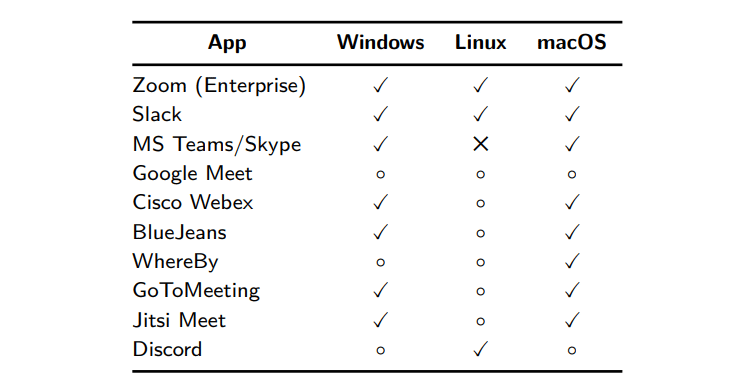
In a study, it was revealed that many popular video call apps continue to listen to their users' audio even when the mute button has been pressed.
What this means, the apps are still collecting data without users' consent.
According to researchers at the University of Wisconsin-Madison, who have investigated many different videoconferencing apps to see if they still accessed the microphone while being muted, found that all of the apps they conducted their research on, gather 'raw audio data' from the microphone while mute is activated, with one app in question gathering information and sending it to a server.
"And that's a problem. When you're muted, people don't expect these apps to collect data," said Professor Kassem Fawaz.
Fawaz was first suspicious when his brother told him that during a muted videoconference, he noticed that the microphone light was still on.
Fawaz, an expert in online privacy and an assistant professor of electrical and computer engineering at the University of Wisconsin-Madison, began to wonder, whether the microphone was still being accessed despite the mute feature is already turned on.
He then contacted graduate student Yucheng Yang to help him investigate whether this "mic-off-light-on" phenomenon was more widespread.
They created a team, and began by asking 223 video-conferencing app users, asking them whether they understood what a mute button does.
Knowing that the majority of them believes apps should not be able to collect data while set to mute, they began testing many different videoconferencing applications on major operating systems, including iOS, Android, Windows and Mac, checking to see if the apps still access the microphone when it is muted.
The team then investigated how the mute button actually works, discovering that the button only provided a false sense of security.

After realizing that all video-conferencing apps still send data, Fawaz and Yang, along with colleagues from Loyola University Chicago, conducted a more formal investigation of just what happens when videoconferencing software microphones are muted, trying to figure out the actual behavior of the mute button on many popular apps, determining what type of data is collected and whether it could reveal personal information.
They used runtime binary analysis tools to trace raw audio in popular videoconferencing apps as the audio traveled from the apps to the computer audio driver, and then how they travel to the network while the app was muted.
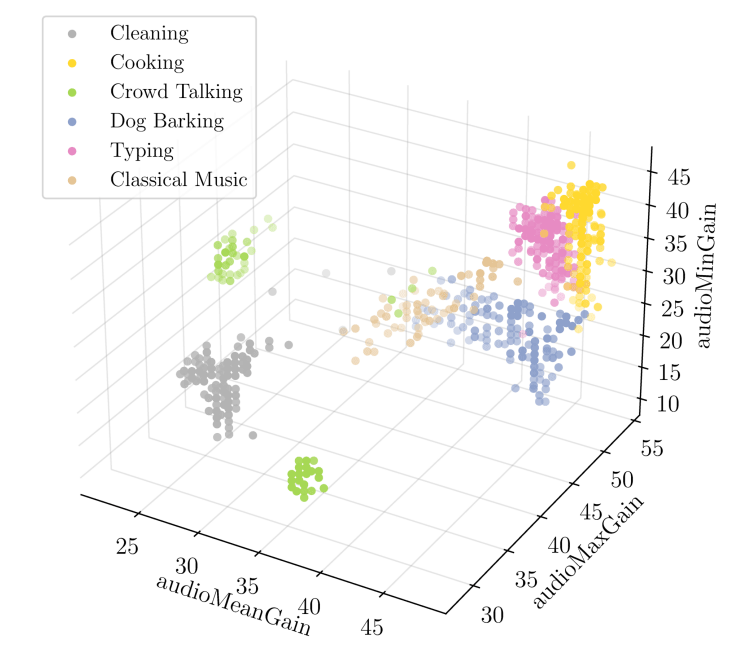
The team use an AI to see if it could work out what was taking place, such as cooking, eating, playing music, or cleaning.
According to their report. the AI was able to determine with 82% accuracy what people were up to.
Although Fawaz and his team haven't confirmed which apps they used, they believe it raises privacy concerns.
"With a camera, you can turn it off or even put your hand over it, and no matter what you do, no one can see you," said Fawaz.
"I don't think that exists for microphones."
The video-conference apps the researchers conducted their research on, include: Zoom, Google Meet, Microsoft Teams, Skype, Discord, Slack, and more.
Big tech companies are notorious for harvesting data from users.
And with remote work continuing to be incredibly prevalent all around the world, plenty of big tech companies are trying to capitalize on this by harvesting the maximum quantity of data that their apps can gain access to.
The research by Fawaz and his colleagues showcased that tech companies don't really care about users' privacy quite as much as they are trying to make people believe.
What makes it even worrisome, there is no way of really knowing what tech companies will do with this data.
Because of this, users need to be ever vigilant. And among the ways, is to double mute.
Double muting can prevent this kind of eavesdropping, because of the fact that this is the sort of thing that could potentially end up preventing any audio from being processed through the video-conferencing app in the first place.
Users of video-conferencing apps can double mute by using the mute button on the apps, and also muting directly through their headphones or microphone.
If they're not using headphones or if the peripheral doesn't have a mute button, users can turn on the mute feature directly from their laptop of PC.
Double mute should be the best way out.




















































































































































































































































































