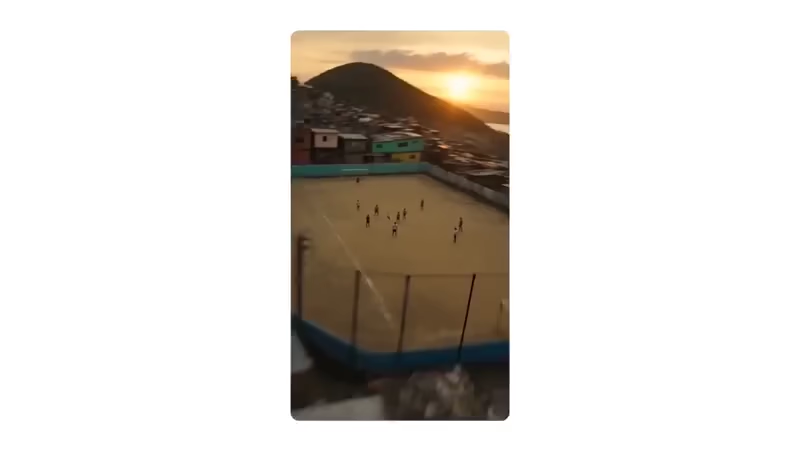
Videos not only can have different resolutions but also different aspect ratios.
This fundamental need has long created challenges for creators who must adapt the same footage for platforms that favor vertical mobile formats, square social media posts, wide cinematic screens, or anything in between. Runway has introduced a new video editing capability powered by its Aleph 2.0 editing model that addresses this by allowing users to take an existing clip and automatically adjust it to any chosen aspect ratio through the generation of additional content around the original footage.
Instead of cropping important elements or stretching the image unnaturally, the tool keeps the central part of the scene exactly as shot while creating seamless extensions on the sides, top, or bottom.
The system relies on Aleph 2.0 to ensure visual consistency throughout the frame.
Lighting, motion, textures, and overall style remain matched so that the newly generated areas blend without noticeable seams or artifacts.
One video, now made for every feed and format. Upload your existing video, choose your desired aspect ratio and watch our editing model, Aleph 2.0, fill in the rest of the scene as if you made it that way from the start.
Try it on our desktop web app at the link below. pic.twitter.com/EdPkUEc2BS— Runway (@runwayml) June 8, 2026
The workflow is straightforward.
Users upload a video, select the target ratio, and the tool fills in the missing space.
Early demonstrations show it working well on everyday scenes such as outdoor sports, urban environments, and natural landscapes. A wide sunset shot on a soccer field can become a tall vertical clip suitable for phone viewing, while a portrait style interview can expand into a horizontal version for larger displays, all without losing key subjects or requiring additional filming.This feature proves useful in many real world situations.
Content creators who produce material once can efficiently repurpose it across Instagram Reels, YouTube, TikTok, website headers, and traditional broadcast formats. Filmmakers restoring or updating archival footage can bring older aspect ratios into modern standards while preserving the original aesthetic. Advertising teams benefit when they need to create variations for billboards, digital banners, social campaigns, and video ads from the same source file.
Educators preparing lecture videos or documentary producers can reformat content for students watching on laptops, tablets, or phones without compromising framing.
Creative possibilities extend further than simple reformatting.
A travel videographer might expand a horizontal beach scene vertically to reveal more sky and ocean, adding atmosphere for storytelling on mobile platforms.
In music videos or artistic projects, directors can experiment with alternative compositions that emphasize different visual elements by extending edges to include more environment or subtle background action. Independent filmmakers operating with limited budgets gain flexibility to stretch single shoots across festival submissions, online trailers, promotional teasers, and behind the scenes content.
Newsrooms can quickly produce both landscape and portrait versions of the same report to serve online desktop audiences and mobile readers simultaneously.
Small businesses creating promotional material no longer need separate filming sessions for each platform.
Get started: https://t.co/FwTEevQ31L
— Runway (@runwayml) June 9, 2026
A single product demonstration video can be adapted into tall stories, square posts, and wide website embeds with minimal effort.
The technology also supports thoughtful scene enhancements, such as adding contextual background details to an interview or extending crowd elements in a public event shot, always while protecting the integrity of the main action.
As video consumption habits fragment across devices and platforms, tools of this kind reduce the repetitive work that once demanded hours of manual editing or costly reshoots.
Success depends on the quality of the original footage and the complexity of the scene, yet the overall effect simplifies a task that has frustrated video professionals for years.
It contributes to a broader shift in how creators manage the demands of multi format distribution, making adaptation more practical for hobbyists, freelancers, and larger production teams alike.




















































































































































































































































































