

Advertisers that advertise on the internet want their ads to center around the audience. With ad targeting, the amount of user data collected has proven to be useful to carefully pinpoint specific viewers.
However, this kind of targeting uses algorithms that work automatically. Advertisers tend to have less control over where exactly their ads will or will not appear next to.
One example was when advertisers flee YouTube because they realized that their ads are showing on extremists' pages.
Snapchat wants avoid such disaster by providing advertisers the control to there their ads will appear and not appear on its mobile app.
Advertisers buying Snapchat's vertical video Snap Ads through its self-serve ad-buying tool or advertising API, can choose to have their ads to only run between regular users' Stories, or only within the Stories and Shows created by Snapchat and media companies.
Additionally, these advertisers can also opt to exclude their ads from appearing alongside certain types of contents. This should help maintain contextual relevance and avoid the YouTube apocalypse.
There are three placement controls that Snapchat is offering:
Content Category Exclusions
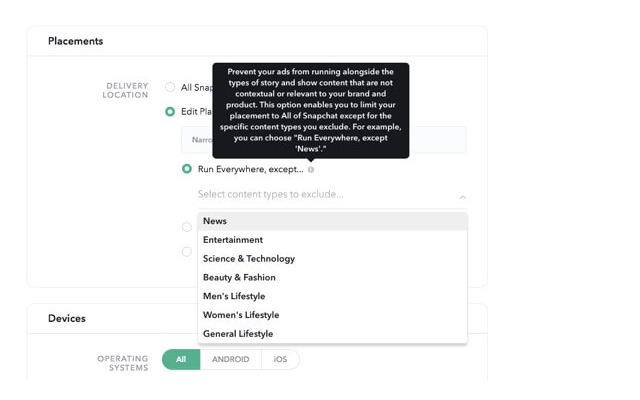
If advertisers want their campaigns to span across Snapchat, but don't want their ads to be associated with certain type of contents, they can pick up from seven content categories to exclude: news, entertainment, science and technology, beauty and fashion, men’s lifestyle, women’s lifestyle and general lifestyle.
For whatever reasons, this choice is mainly for advertisers that concern their brands' safety or contextual relevance.
Curated Content Only
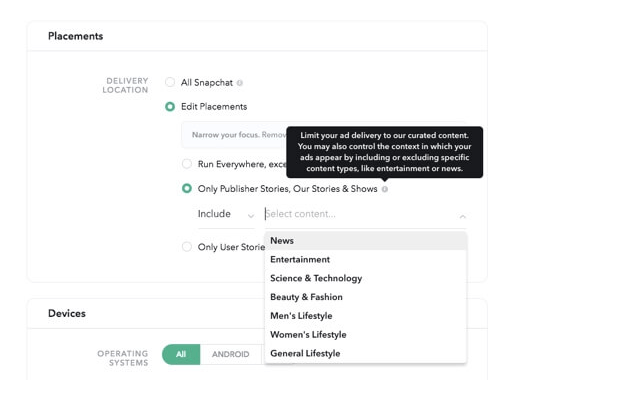
Advertisers that want to have their ads included in Snapchat’s most brand-safe environments, like on Our Stories, Publisher Stories and Shows, they can select that option to only have their ads appear alongside content curated by Snapchat or its media partners.
Among those placements, advertisers can select any of the previously mentioned content categories to include or exclude.
Non-Curated Content Only
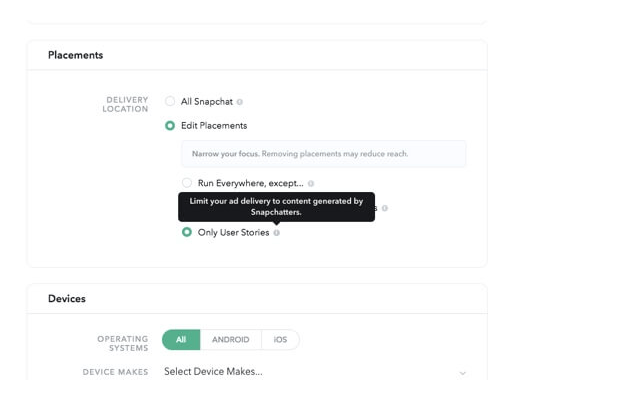
If advertisers only want their ads to appear between users' Stories, they also have the option to do so.
Ads are relatively cheaper here, and also safe because the audience will less likely to associate the ads with the surrounding contents. Advertisers can also limit their campaigns to that placement, but unable to choose among the seven content categories for exclusion or inclusion.
Making A Safer Platform For Advertisers
The issue for Snapchat started back in March when WPP-owned GroupM reportedly sent clients a memo warning them about "explicit adult content" on Snapchat after an advertiser was concerned about its ads running before or after a pornographic image. GroupM advised brands that were concerned about their brands' safety to run ads only within Snapchat's Discover.
However, Snapchat's Discover editions and contents are difficult to maintain. This led to brands becoming less comfortable with their ads on the platform.
Previously, advertisers have had limited placement control and can either buy placements across all Snap Ads inventory or across all of Snapchat’s premium content, which includes Discover, shows and Our Stories.".
By adding three ways to limit ad placement, Snapchat wants to join YouTube, Twitter and Facebook to be the platform that concerns their advertisers' brand safety. As advertisers demand more transparency into where their ads are running, Snapchat's strategy should make advertisers feel safer on its platform.