Snap has officially introduced Specs, its first consumer-focused augmented reality glasses, marking the culmination of more than a decade of investment in wearable computing.
The launch represents the company's most ambitious effort yet to move beyond social media and advertising by establishing a new hardware platform centered on augmented reality. Chief executive Evan Spiegel has repeatedly argued that smartphones will eventually be replaced by devices that can blend digital information directly into the physical world, and Specs are designed to serve as Snap's first large-scale attempt to turn that vision into a commercial product.
The announcement was made at the Augmented World Expo 2026 in Long Beach, California, where Snap positioned Specs as a standalone wearable computer rather than an accessory for smartphones.
The idea is to make computing more human.

Unlike many existing augmented reality products that rely on external processing units or require a wired connection to another device, Specs perform all computing functions directly on the glasses themselves. The device is scheduled to launch later this year in the United States, the United Kingdom, and France.
Customers can preorder the glasses with a refundable $200 deposit.
Investor reaction to the announcement was cautious.
Snap shares declined following the unveiling as analysts and market observers questioned whether consumers would embrace a premium augmented reality product priced at $2,195.
The launch also renewed concerns about the company's long-term spending on hardware development at a time when Snap continues to rely heavily on digital advertising revenue.
The road to Specs began well before the product received its current name.
Snap entered the wearable technology market in 2014 through the acquisition of Vergence Labs, a startup that had developed connected eyewear.
The company launched its first Spectacles camera glasses in 2016 and released several follow-up versions over the following years. More advanced generations introduced augmented reality capabilities, but those devices remained limited to developers and creators rather than the general public.
In early 2026, Snap established a separate subsidiary called Specs Inc. to focus exclusively on bringing the new platform to market.
Introducing @SPECS, our new augmented reality glasses built to bring AI assistance, work tools, entertainment, and shared experiences into the world around you. Pre-order starts today at https://t.co/Q28W9Si9IE. Learn more: https://t.co/7HPm2G4mBY. pic.twitter.com/Rspy3KtfUL
— Snap Inc. (@Snap) June 16, 2026
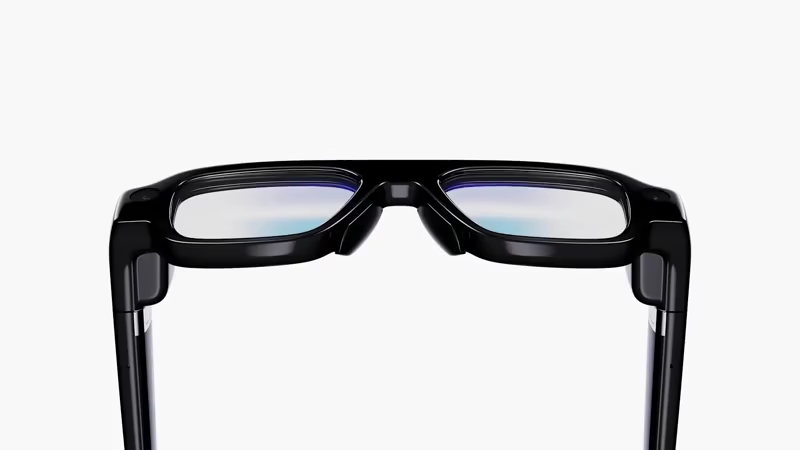
From a hardware perspective, Specs aim to bridge the gap between lightweight smart glasses and larger mixed reality headsets.
The glasses are built using Swiss TR90 polymer, a lightweight and durable material commonly used in premium eyewear.
Snap offers two frame sizes, measuring 47 mm and 52 mm, with weights ranging from 132 to 136 grams depending on the model.
Although considerably lighter than most mixed reality headsets, the glasses remain noticeably heavier than conventional eyewear and current smart glasses focused primarily on audio and camera features. Meta's Ray-Ban smart glasses, for example, weigh roughly half as much.
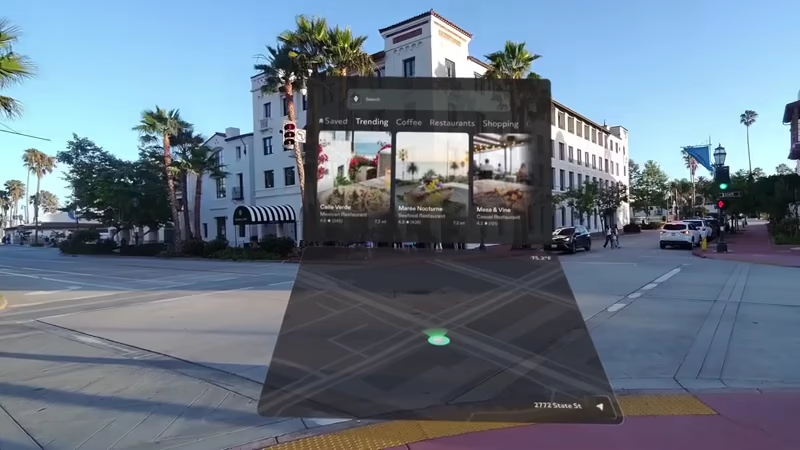
The glasses incorporate a stereo waveguide display system with a 51-degree field of view, allowing digital content to appear within the user's surroundings without obstructing their entire vision.
Snap says the viewing experience is comparable to watching a 115-inch screen from a distance of 10 feet. The display uses liquid crystal on silicon miniature projectors and includes automatic lens tinting that adjusts to changing lighting conditions. This approach is intended to improve visibility in both indoor and outdoor environments.
Powering the device are two Qualcomm Snapdragon processors.
One chip manages the operating system and applications, while the second handles computer vision, spatial tracking, and augmented reality rendering. The dual-chip architecture allows Specs to process information directly on the device without relying heavily on cloud computing or a paired smartphone. Snap and Qualcomm recently expanded their long-term partnership to support future generations of the platform.
Specs use a range of sensors to understand and interact with the surrounding environment.
The hardware includes two high-resolution color cameras, two infrared computer vision cameras, and multiple six-axis inertial measurement units that track movement and orientation.
The glasses support hand tracking, voice recognition, and spatial awareness, enabling users to interact with digital objects through gestures and natural language commands. Stereo speakers provide spatial audio, while an integrated microphone array captures voice input for calls, commands, and artificial intelligence features.
Battery life remains one of the main technical challenges for augmented reality glasses.
Snap estimates that Specs can deliver up to four hours of mixed-use operation on a single charge. The glasses ship with a charging case that extends total usage time to approximately 20 hours.
Users can also charge the device while wearing it through a magnetic cable connection. While the battery life is significantly longer than previous developer-focused Spectacles models, which offered less than one hour of use, it still falls short of all-day usage expectations associated with smartphones.
Watch @evanspiegel's full keynote as he shares our vision for making computing more human with @SPECS: https://t.co/ZK0exjZdA6 pic.twitter.com/0eCIPVjD5n
— Snap Inc. (@Snap) June 18, 2026
At launch, Snap demonstrated several use cases for the glasses, including real-time translation, turn-by-turn navigation, gaming, streaming video, web browsing, virtual collaboration, and spatial productivity tools.
Specs can also function as an external display when connected to a computer, smartphone, or gaming device through USB-C. The company believes these experiences will help establish a software ecosystem that extends beyond Snapchat's traditional social media audience.
"Almost 20 years since the launch of the iPhone, people are ready to think about computing differently," Spiegel said in an interview.
Despite the technical advancements, Snap faces significant challenges in convincing consumers to adopt augmented reality glasses.
First, Snap's core user demographic consists largely of teenagers and young adults. This audience is highly engaged with the platform but is also among the least likely to afford a $2,195 device. While early adopters and technology enthusiasts may be willing to pay a premium for new hardware, the price places Specs well beyond the reach of many of Snap's existing users.
Second, the market for augmented reality glasses remains unproven. Despite years of development across the technology industry, no company has yet demonstrated sustained mainstream demand for standalone AR wearables. Previous products, including developer-focused headsets and smart glasses, have struggled to move beyond niche audiences due to limitations in cost, comfort, battery life, and practical use cases.
Third, Specs enter an increasingly competitive landscape. Meta has gained traction with its Ray-Ban smart glasses by focusing on a familiar eyewear design and a lower price point, while Apple continues to invest in spatial computing through Vision Pro. Google is also expanding its Android XR platform through partnerships with hardware manufacturers. Compared with these rivals, Snap faces the challenge of building both a hardware business and a broader software ecosystem at the same time.
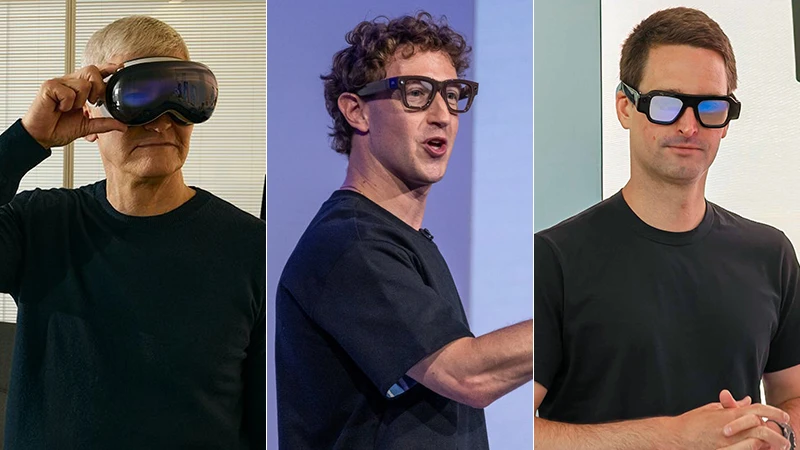
Fourth, the hardware itself presents several adoption hurdles. Although Specs are lighter than most mixed reality headsets, they remain significantly heavier than traditional eyeglasses and many existing smart glasses. Battery life is estimated at around four hours of mixed use, which may limit the device's usefulness for all-day wear.
Fifth, the success of Specs depends heavily on developer support. Snap has invested in Lens Studio and artificial intelligence integrations to encourage the creation of new experiences, but attracting developers requires a sufficiently large user base. At the same time, consumers are unlikely to purchase the device without compelling applications. This creates a familiar challenge for emerging platforms, where hardware adoption and software availability depend on each other.
Finally, investor concerns extend beyond the product itself. Snap generates most of its revenue from advertising, and hardware development requires substantial long-term investment with uncertain returns. The company's decision to continue investing in augmented reality reflects its belief that wearables could eventually replace smartphones as the primary computing platform, but the timeline for such a transition remains unclear.
The relatively high price, limited battery life, and bulkier design compared with conventional eyewear lead to the market to question the profitability path for this new product.

Spiegel argues that Specs occupies a unique space in the AR market between glasses like Meta's Ray-Bans, which cost a lot less but provide significantly less compute power, and bulkier headsets like the Apple Vision Pro, which are more powerful but very expensive.
Regardless, Snap is now entering a competition where others also pursue similar ambitions. Meta, for example, continues to expand its smart glasses portfolio through its partnership with Ray-Ban, Apple has now played a unique niche with its Vision Pro, whereas Google is also investing in the technology through Android XR software for future wearable devices.
For Snap, the immediate success of Specs may be measured less by unit sales and more by the growth of its developer ecosystem and the broader adoption of augmented reality experiences.
The company is betting that advances in artificial intelligence, computer vision, and semiconductor technology have finally made practical augmented reality glasses possible. Whether consumers are ready to embrace a post-smartphone future remains an open question, but the launch of Specs marks Snap's clearest attempt yet to define what that future could look like.




















































































































































































































































































