What began as a private moment between Venezuelan influencer Isabella Ladera and Colombian pop singer Beéle has escalated into a high-stakes legal showdown, and a cultural flashpoint.
Ladera, a Miami-based content creator with millions of followers, alleged that a deeply personal video she and Beéle recorded during their relationship was leaked without her consent and quickly went viral across social platforms.
The footage began circulating online, and in response she filed a lawsuit in Miami-Dade County Circuit Court on September 15, claiming Beéle ignored her requests to delete the recordings and ultimately bears responsibility for their unauthorized release.
Initially, the leak didn't spark the massive reaction many now associate with it. It floated quietly through niche corners of the internet. But once news of the lawsuit broke, curiosity surged. The legal filing itself acted like a catalyst, sending users searching for the clip, and turning the incident into a trending topic.
Ironically, the attempt to regain control over her privacy is what pushed the story into the mainstream, and pushed her name into millions more timelines. Recognizing the momentum, Ladera made a calculated pivot. Rather than retreat from the attention, she stepped into it.
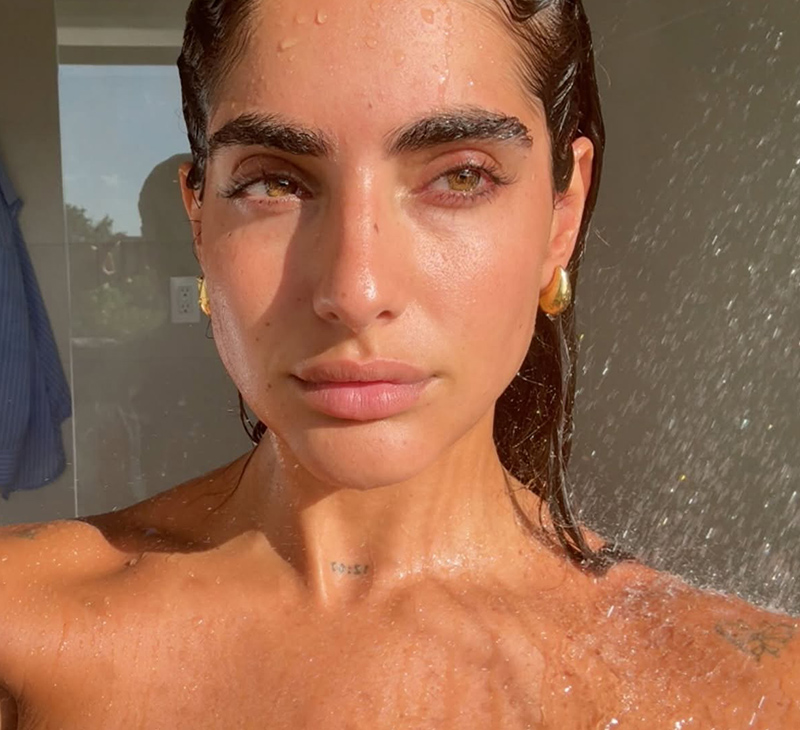
Isabella Ladera, born Andrea Isabella Ladera Ceresa on August 23, 1999 in Anzoátegui, Venezuela, is a Miami-based influencer who built her following through fashion, beauty, lifestyle, and motherhood content.
Before her rise online, she spent her teens competing in tennis and eventually earned a scholarship to Broward College in Florida in 2018, which led to her settling in the U.S. Over time, she expanded her presence through brand partnerships, appearances in Latin music projects, and even entrepreneurship, opening a beauty business while balancing her role as a mother to her daughter, Mía Antonella, born in 2020.
By the time she reached a multimillion-follower audience, she had become a recognizable face in Miami’s influencer and entertainment circuit.
As for Beéle, born Brandon de Jesús López Orozco in Cartagena, Colombia in 2003, entered the Latin music scene as a breakout young artist, gaining recognition with "Loco" in 2020 and steadily building a career in pop and dancehall. His visibility grew through collaborations, festival performances, and award-show appearances, positioning him as one of the newer voices in Colombia’s rising generation of pop acts.
Their paths crossed in December 2023 at a party in Miami, during a moment when Beéle was navigating a separation from his wife, Camila "Cara" Rodríguez.
What began as a friendly connection evolved into a relationship, and soon they were appearing publicly at events, red carpets, and festivals throughout 2024.

For a while, they became a recognizable couple across social media and the Latin entertainment scene, their personal and professional visibility feeding into each other as their profiles continued to grow.

According to court documents, the two's relationship turned romantic during which Beéle asked to record their intimate moments.
Ladera said that she trusted him and shared the videos privately. But by May 2024, she became uncomfortable and asked him to erase the footage; she says he declined and questioned her trust. She then deleted her own copies, believing the matter closed.
The real crisis began in September 2025, when a video from that archive was shared widely on WhatsApp and other social sites.
In it, Ladera is seen in a bedroom, giving Beéle oral sex, before receiving him from behind, and later, missionary.
"When the sex tape surfaced September 7 and went viral, 'the earth stood still' for her," the lawsuit noted. Ladera said she had been warned weeks earlier that someone might publish the material, and that copies were circulating as screenshots, but she never expected it to reach millions online.
In her public statement after the leak, Ladera wrote she was "deeply devastated.
"A moment intimate and private was exposed without my consent, in an act that represents one of the cruelest betrayals I've ever lived."
"Ladera suffered damages, shame, humiliation, and mental anguish as a result of the public disclosure of her private affairs and activities," reads the lawsuit.
She also framed the incident as a form of digital violence against women, decrying the barrage of judgment and harassment she faced while her partner remained silent.
Her lawsuit accuses Beéle of invasion of privacy, sexual cyberharassment, intentional infliction of emotional distress, and negligence, seeking at least $50,000 in damages and a court determination of responsibility for the leak. Ladera's attorneys argue that because she had deleted her own copies and Beéle retained his, his phone was effectively the only source from which the video could have been shared, though they do not rule out third-party access.
Beéle’s legal team has firmly denied the allegations, asserting he did not leak the material or participate in its distribution and calling himself "also a victim of the nonconsensual exposure" of the video.
They've publicly said they are pursuing legal action in both the United States and Colombia against anyone responsible for obtaining, hosting, or monetizing the content online.
Beyond the lawsuit itself, the fallout has rippled through social media and celebrity circles.
Now that Ladera's personal life has come under intense scrutiny, including comments from friends and past partners as well as unfounded rumors about her role in the dissemination, the controversy has also pushed conversations about digital rights, image-based abuse, and legal protections into the spotlight. Legal analysts note that while states like Florida now have statutes addressing cyberharassment and nonconsensual image distribution, civil remedies and enforcement can vary widely, leaving victims to navigate complex and often slow legal pathways for justice.
For Ladera, the suit represents a personal grievance.
To her, it was a fight for accountability in an era where private moments can become public spectacle in an instant. Her case has drawn support from followers and women’s rights advocates alike, who see it as emblematic of the broader challenges faced by individuals whose intimate lives are broadcast without their permission.
Amid the legal battle, Ladera has continued to engage with her audience.
But realizing the sudden boost in fame, Ladera lleveraged her increased visibility into opportunities within the entertainment industry. What began as a scandal has, for some observers, she reframed the narrative, using the spotlight not just to tell her side of the story, but to expand her platforms, her visibility, and her opportunities.
In doing so, she transformed a moment of violation into a moment of agency, turning scrutiny into strategy and controversy into career leverage.
About a month after the leak, the Venezuelan influencer shifted from crisis to comeback.
Instead of shrinking from the attention, she's taken the moment head-on: filing a lawsuit in Miami and simultaneously using the unexpected notoriety to accelerate her entry into the music and entertainment space. That pivot appears to be materializing, with her profile set to rise even further at the 2025 Latin Billboard Awards.
Her first big step came over the weekend at the III Points Festival in Miami, where Ladera shocked the crowd by taking the stage with Sean Paul. The appearance marked her debut at a major international event and signaled that she's not just weathering the storm.
Her repositioning draws comparisons to celebrities who turned controversy into capital: Paris Hilton redefining her image after her sex tape was leaked, and Kim Kardashian launching an empire from her scandal.
Ladera appears to be following a similar blueprint, intentionally or not.
Now with more than six million followers, partnerships in beauty and fashion, and a growing presence in the music scene, she stands as part of a new generation of influencers fluent in survival and strategy. What began as a leak has become a lever. What started as exposure became a platform.
From scandal to stage, Isabella Ladera isn't just responding to the narrative. She's rewriting it.






















































































































































































































































































