It's reported that the streaming platform Apple TV, is reportedly making Apple lose $1 billion annually as it contends with fierce competition and increasingly selective consumers.
According to reports, Apple has consistently invested over $5 billion per year in content since launching Apple TV+ in 2019. However, that figure saw a dramatic drop to just $500 million in 2024.
The shift reflects a broader industry trend, as media giants prioritize profitability over aggressive spending.
Many streaming platforms are now cracking down on password sharing and bundling services to reduce subscriber churn.
Back in 2024, Apple joined forces with Netflix and Comcast’s Peacock to introduce StreamSaver, a $15-per-month bundle available exclusively to Comcast broadband customers.
A standalone Apple TV+ subscription costs $9.99 per month, though Apple offers bundle options with services like Apple Arcade and Apple News+.
Despite these efforts, it's unclear if bundling has curbed subscriber losses.
Data from subscription analytics firm Antenna indicates Apple TV+ had one of the highest churn rates among major streaming platforms, second only to Starz.
In February, 7% of Apple TV+ users canceled their subscriptions, compared to 4% for Disney+ and just 2% for Netflix.
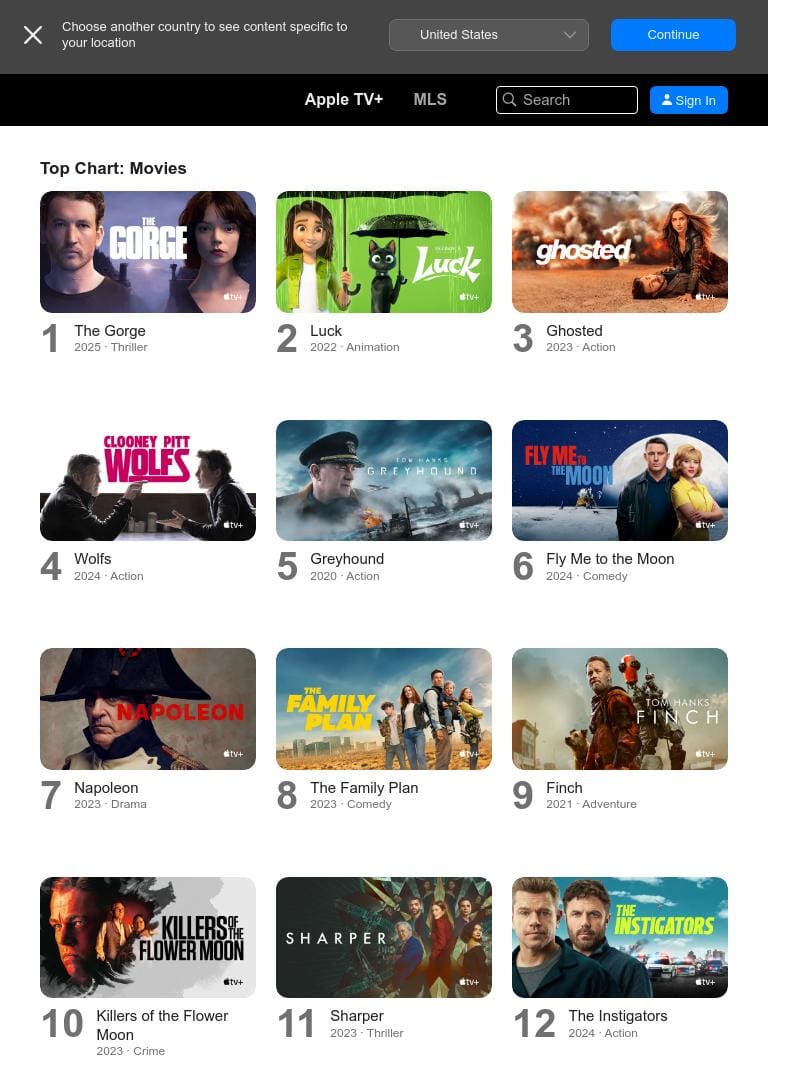
Apple’s streaming strategy differs from its rivals, focusing on a more curated content library rather than sheer volume.
The platform boasts critically acclaimed titles such as Severance, Shrinking, and Ted Lasso, and it became the first streamer to win an Academy Award for Best Picture with CODA.
At this time, Apple TV+ productions have amassed over 2,500 nominations and 538 wins, and this is by no means a small feat.
The thing is, the platform's only issue is its struggle with gaining a more global reach.
The iPhone maker does not break down the number of subscribers, but according to estimates, Apple TV+ is estimated to have between 30 and 40 million users at the end of 2024.
In comparison, Netflix commands over 300 million subscribers worldwide.
Its limited penetration in emerging markets—key growth areas as North American streaming adoption plateaus—remains a significant hurdle.






















































































































































































































































































