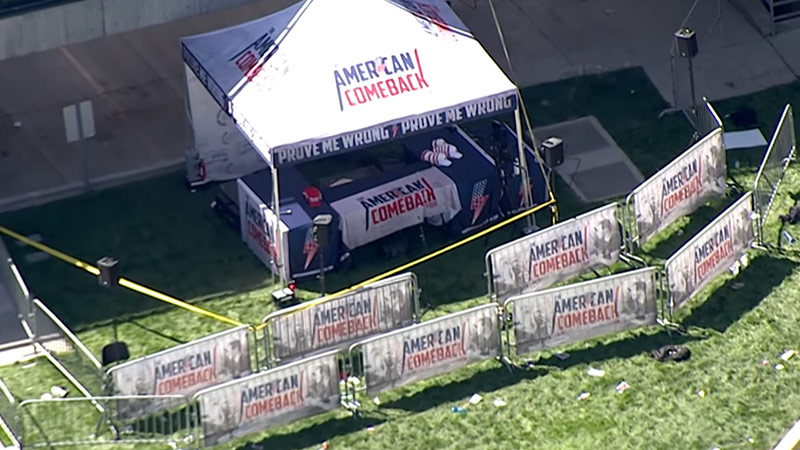
On September 10, 2025, Charlie Kirk, a prominent conservative activist and co-founder of Turning Point USA, was fatally shot while speaking at Utah Valley University.
At the time, he was delivering a debate on mass shootings, before a bullet struck him in the neck. He was 31. A suspect, 22-year-old Tyler Robinson, was arrested and now faces multiple charges, including aggravated murder.
As authorities are investigating the man's motive, and that many questions remain, the news broke to social media and turned the internet into a frenzy.
From videos of the shooting that spread quickly, people on both sides expressed grief, blame, fear, anger, and outrage. Utah’s Governor Spencer Cox was among those who pointed to social media not as merely a tool for information, but a contributor to a climate of fear and violence. He called platforms “conflict entrepreneurs,” arguing that they amplify division and incentivize outrage because that’s how engagement grows.
The aftermath has raised major questions about free speech, accountability, and how institutions respond when employees’ social media behavior intersects with major political events.
Read: The Killing Of Iryna Zarutska, And Later, Charlie Kirk: Dividing America Over The Internet
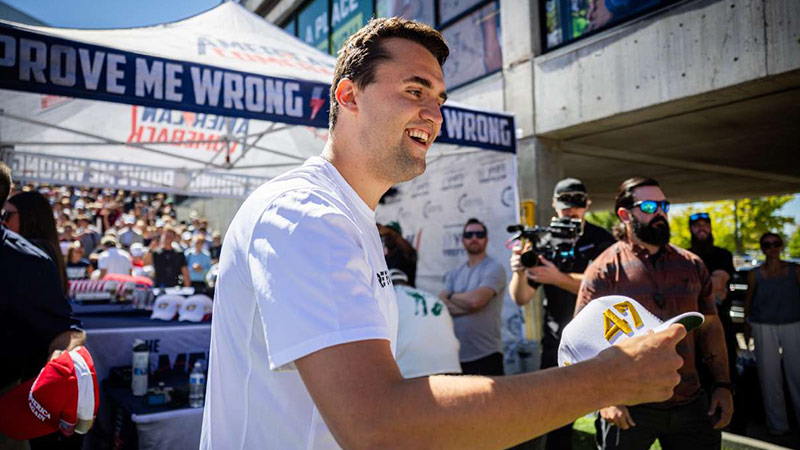
Charlie Kirk became a deeply controversial figure due to the combination of his domestic and international positions, his rhetorical style, and his methods of activism.
Domestically, he was known for his strong opposition to progressive social movements and "woke" culture, frequently criticizing diversity, equity, and inclusion initiatives on college campuses, as well as movements like Black Lives Matter. He framed these efforts as harmful to American values and societal cohesion, which drew accusations from critics that he was dismissive of racial and social justice concerns.
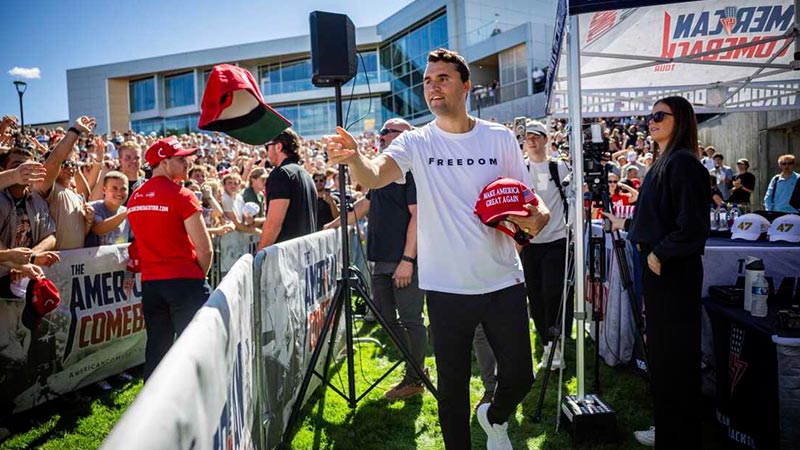
His staunch support for Donald Trump and the MAGA movement further fueled polarization, as he defended some of the most contentious policies and rhetoric of the former president, aligning himself with a highly divisive political faction.
Kirk’s approach to college activism also contributed to his controversial image.
Through Turning Point USA, the organization he co-founded, he promoted tactics that often included publicizing professors’ political affiliations or statements in ways that critics viewed as intimidation or harassment.
This aggressive style made him a polarizing figure in educational settings, admired by supporters for courage and boldness, but criticized by opponents for fostering fear and conflict. His outspoken stances on immigration, nationalism, and cultural traditionalism reinforced this image, as he argued for strict border enforcement and warned that immigration and liberal policies threatened American culture and stability.
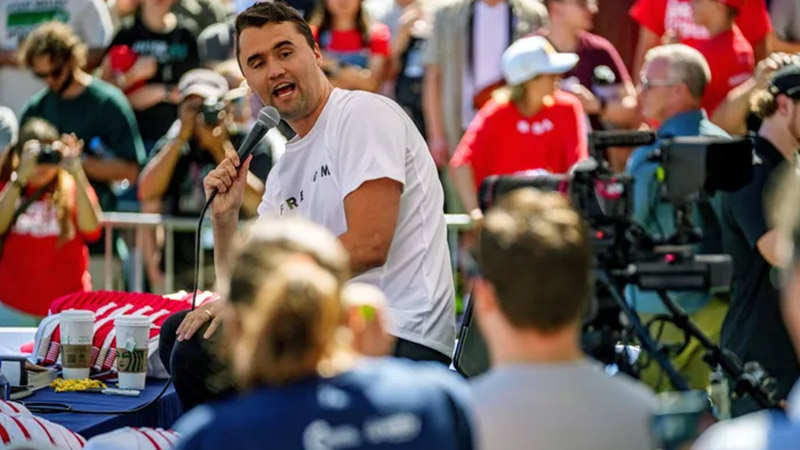
Internationally, Kirk also drew attention and criticism for his positions on the Israel-Palestine conflict and Islam.
He consistently framed himself as a strong supporter of Israel, often highlighting violent incidents and criticizing Palestinian leadership, which many saw as an oversimplification of a complex conflict.
His commentary on Islam, particularly regarding terrorism and radicalization, was viewed by critics as generalizing and potentially Islamophobic. While Kirk presented these stances as part of a broader fight against extremism, detractors argued that his framing contributed to stereotyping and fear, further deepening his polarizing reputation.
Together, these elements, and his confrontational domestic policies, aggressive campus tactics, strong partisan alignment, and provocative international commentary, made Kirk a figure both influential and intensely disliked.
Supporters praised him for his courage, clarity, and unwavering defense of conservative values, while critics viewed him as inflammatory, divisive, and emblematic of the political polarization gripping the U.S..
His style ensured that he was at the center of attention, generating both admiration and outrage.
At the same time, this also set the stage for the highly charged reactions following his death.
Upon receiving the news about Kirk's assassination, and that he died after being shot, two polarizing comments swarmed social media.
On one side, people were celebrating, posting mockery towards Kirk, making fun of him, ridiculing him, and seemingly happy for his unfortunate demise.
On the other side, people were expressing genuine grief and anger, mourning the loss of a figure they saw as a defender of conservative values. Many tributes framed Kirk as a martyr who died while standing up for his beliefs, and his supporters used the moment to highlight concerns about rising political violence.
They condemned not only the shooting itself but also the online mockery, calling it proof of how deeply divided the country has become.
For them, the ridicule wasn’t just tasteless: it was emblematic of a culture that dehumanizes political opponents and normalizes hate.
As a result of this, multiple companies, including major airlines, have suspended or disciplined workers for social-media posts related to Kirk’s death.
Some posts were celebratory or justifying the violence; others were controversial because they were insensitive or deeply polarizing. Employers have cited violations of policy or codes of conduct.
Workers commenting on this case are learning real limits to what speech is tolerated, especially when it becomes public and tied to their professional identity.
In some instances, speech outside of work that might have been personal is being judged through a lens of public perception. Courts in the U.S. generally allow employers quite a lot of leeway here, depending on contracts, company policy, state law, and whether the speech harms the employer or violates workplace rules.
There’s a pattern: public tragedy → rapid and extreme reactions online → institutional response (firings, suspensions, policy reminders).
The tension is between protecting free speech and maintaining a public standard (or brand reputation, or safety in workplaces).
People who once thought social media was a place of relatively consequence-free political expression are increasingly discovering that words online can have workplace consequences.
The political dimension can’t be ignored. Charlie Kirk was not just any public figure: he was deeply polarizing.
And because of that, his death is also reflected to his legacy.
He was beloved by many on the right, reviled by many on the left. His rhetoric and work were part of a broader culture war. So his death functions as a symbol, a trigger for those who think political violence is spreading, for those who think speech is being punished unfairly, and for those who think things are finally spiraling too far.
There’s also a downstream effect: debates over how social media algorithms work, how they might reward conflict, how polarized content is surfaced, and how public platform companies moderate or don’t moderate.
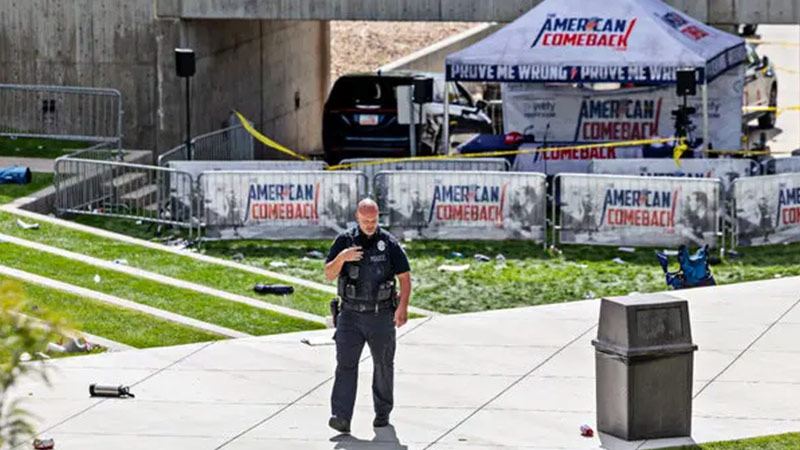
In broader terms, the internet sees this case as perfect illustration of how divided America has become over not only politics, but the boundaries of speech, respect, and accountability.
Social media allows voices to circulate instantly, and the free speech it has long promised is increasingly shown to come with real-world consequences.
What people once treated as consequence-free expression, like political commentary, ideological debates, or even offhand jokes, can now impact reputations, careers, and personal safety.
Platforms amplify conflict and reward outrage, often without context or nuance, which can escalate tensions and blur the line between opinion and incitement. In this environment, every post carries weight, and the boundaries of acceptable speech are constantly tested, forcing individuals, institutions, and society as a whole to grapple with questions of accountability, ethics, and the limits of expression.
This moment may mark a turning point. How institutions handle discipline over speech from employees, how law treats online comments tied to real-world violence, how social media platforms decide what content stays up or gets removed: all of that is being tested.
The death of Charlie Kirk is also showcasing an era where speech online can have immediate offline consequences, not just in terms of polarization, but in terms of jobs, social standing, safety.
His death and the fallout lay bare that what many assumed was free expression in the digital space may carry higher costs than they thought.
As for the killer, Tyler Robinson, is a young man from St. George, Utah.
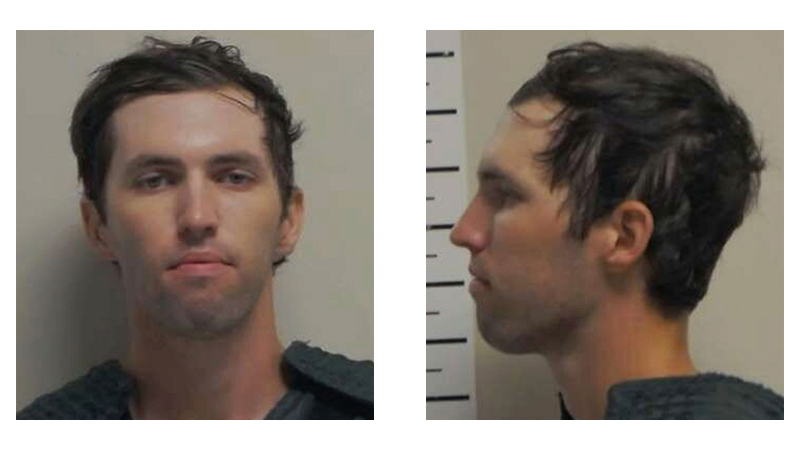
He was arrested on September 12, 2025, as the primary suspect in the fatal shooting of conservative activist Charlie Kirk at Utah Valley University. Robinson had previously enrolled at Utah State University but dropped out after one semester. His family, members of The Church of Jesus Christ of Latter-day Saints, were reportedly conservative, with his grandmother stating they were all Republicans and Trump supporters.
The investigation into Robinson's involvement began when his father recognized his son in the released suspect images.

After confronting Robinson, his father informed a youth pastor, who then contacted the U.S. Marshals Service. Robinson was arrested at his residence in Washington County, Utah, about 33 hours after the shooting.
Evidence linking Robinson to the crime includes surveillance footage showing a person climbing off a roof at Utah Valley University, where Kirk was speaking. Dispatch audio described an individual on the roof wearing black clothing and carrying a long rifle, which investigators discovered was an imported .30-06 Caliber Mauser.

The bolt-action rifle, known as a powerful long-range sniper-style gun, was found wrapped in a towel in a wooded area, not far from where Kirk was shot.
Additionally, bullet casings found at the scene were engraved with messages linked to “transgender and anti-fascist ideology,” according to early law enforcement reports.
During the investigation, it was revealed that Robinson had expressed strong opposition to Kirk and had previously discussed his upcoming visit to Utah Valley University. He was reportedly influenced by online subcultures associated with Reddit and gaming. Despite his family's conservative background, Robinson had adopted a more radical ideology.
Following his arrest, Robinson was transferred to a Utah County Jail in Spanish Fork, where he was held without bail.

















































































































































































































































































