It was estimated that in early 2020, Rich Communication Services or RCS, was available from 88 operators in 59 countries with approximately 390 million users per month.
Even so, the many operators and users on Android cannot communicate with Apple's ecosystem by sharing the same protocol, simply because Google supports RCS and Apple doesn't.
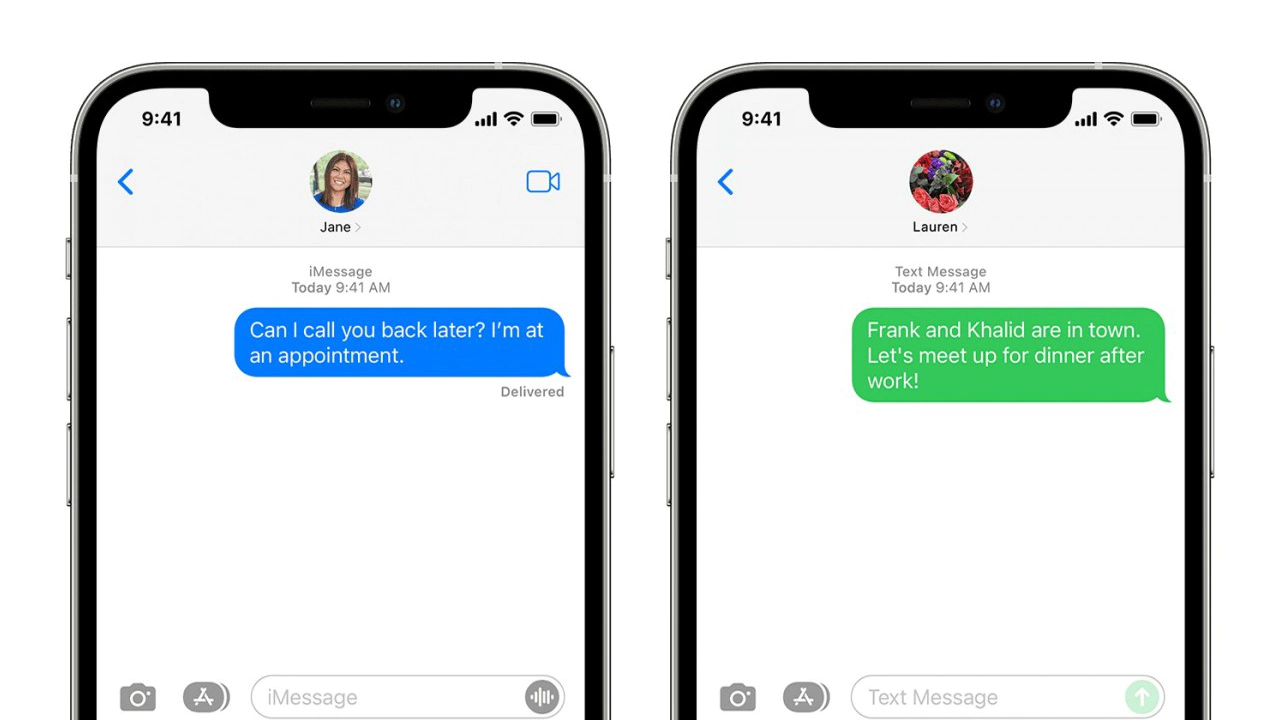
And in the world where the green bubble phenomenon, which refers to iMessage color-coding messages as blue if sent from Apple devices and green if sent from a blocked number or Android phone, Google is quite unhappy.
Google is no stranger to criticizing the green bubble phenomenon in iMessage, but this time, it's going a step further by embracing a bit of the pop culture.
In its attempt, in the wake of U.S. rapper Drake releasing a song titled Texts Go Green, Google has taken its thoughts to Twitter to criticize the green bubble issue and advocate for Apple to embrace the RCS messaging standard for Android users.
The search giant posted an “unofficial lyric explainer” video for the song, explaining what a green bubble is before outlining the solution:
#TextsGoGreen hit us different, that’s why we had to drop this unofficial lyric explainer video #GetTheMessage pic.twitter.com/dPxt9yZjCG
— Android (@Android) June 18, 2022
RCS is a communication protocol between mobile telephone carriers and between phone and carrier.
With the goal of replacing SMS messages with a text-message system that is richer, provides phonebook polling (for service discovery), RCS can transmit in-call multimedia, and offers features like higher quality media sharing, read receipts, typing indicators, location-based capabilities, and more.
As the successor to the SMS standard, RCS is also marketed as Advanced Messaging, Chat, joyn, SMSoIP, Message+, and SMS+.
Ironically, in the mobile industry that is so huge, it only needs Google and Apple to conquer it.
Google is the operator of Android. The other one is Apple, which controls iPhones.
But since Google supports RCS and Apple doesn't, Google is on its own.
With RCS but without Apple, one cannot play this game.
Google's senior vice president of Android, Hiroshi Lockheimer, has repeatedly tried to persuade Apple to adopt support for RCS, but has always return empty handed.
It's worth noting though, that RCS is not hugely adopted yet, because not all markets support it.
RCS is also not certified on all phones, and all carriers.
Concerns were initially shown when Google decided to run its own RCS service to the possibility of antitrust scrutiny, but it was acknowledged that Google had to do so in order to bypass the carriers' inconsistent support of RCS.
Apple is the last major RCS holdout, as U.S. carriers that include Verizon, AT&T, and T-Mobile have adopted RCS support for Android devices.
Apple successfully cultivated iMessage as a must-have texting tool for teens in the U.S., and many youngsters are switching their Android phones with iPhones just to look cool with the green bubble.
While Apple rarely publicizes usage or subscribers for certain apps, including its iMessage, Google went to all the troubles because it wanted to have a service more comparable to Apple's iMessage service available on Android.
Apple's messaging service is much more polished and mature than Google's, which include Hangouts, Chat, Allo and more.






















































































































































































































































































