The internet, and the social media platforms thriving within it, form the backbone of modern communication. People turn to them to exchange information: to speak, to listen, to buy, to sell, in whatever ways the tools allow.
But information online is infinite and largely unfiltered. It flows freely, crossing boundaries of geography, legality, and morality. What begins as harmless interaction can quickly blur into something darker, because there is no universal gatekeeper. Algorithms cannot spot or filter everything bad; instead, they often amplify what attracts attention the most.
The internet gives anyone a voice and a pair of ears, without ever needing to show a face.
In that world of faceless connection, digital familiarity often replaces real trust. And in this chaotic ecosystem, a casual message can become a transaction, and a simple click can bridge the distance between the innocent and the malicious.
That’s exactly how a simple Facebook interaction turned into a real-world crime that nearly destroyed a family. The same network that connected them as "friends" became the bridge through which a child was stolen, sold, and trafficked across islands.
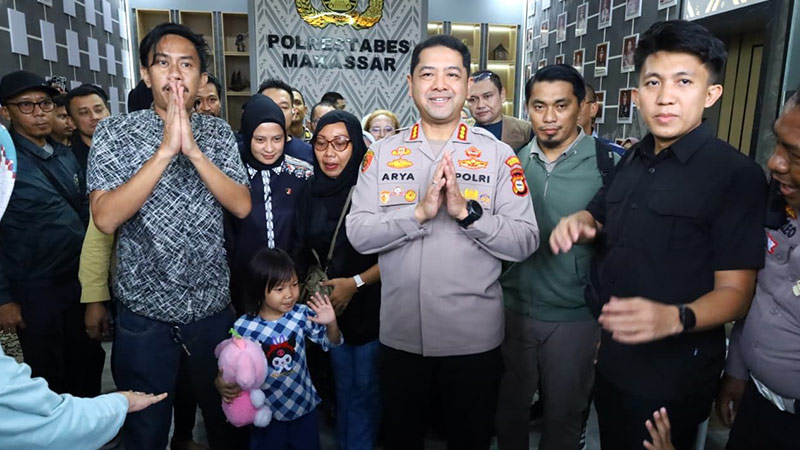
It happened on a peaceful morning in November 2025, in Makassar, South Sulawesi.
A young girl named Bilqis Ramdhani accompanied her father, Dwi Nurmas, to the green expanse of Taman Pakui Sayang. Dwi was playing tennis on the courts while Bilqis played nearby in the children’s playground. It was supposed to be a routine outing, until the moment she vanished without a trace.
"I often take her along to the court. I always keep an eye on her while she plays. I’d call out to her often, and she’d always respond. But during the third game, I called her, and she was gone," Dwi recalled later.
Panic set in instantly. After searching the park and finding no sign of her, Dwi called the police.
CCTV footage from the area proved crucial.
One clip showed a woman with long hair, dressed casually, walking with three children, one of whom was believed to be Bilqis. The woman led them out of the playground and toward Pelita Raya Street. Dwi confirmed that one of the girls in the footage was indeed his daughter, but he had never seen the woman before.
The investigation began immediately. During the search, the family received cryptic phone calls from strangers claiming to know Bilqis’s whereabouts and demanding ransom money. Not much, and only small sums. But still, that only deepened the confusion. Dwi and his family suspected these were opportunistic hoaxes, not real leads.
As the days passed, the search intensified online. Social-media users speculated that Bilqis might have been taken out of Makassar, perhaps to Jakarta, perhaps even farther. What began as scattered concern on Facebook soon became a national conversation.
The police worked around the clock, tracing CCTV footage, tracking phone records, and interviewing witnesses. Then, a breakthrough came.
The suspect, Sri Yuliana, was identified and taken into custody. She admitted to taking Bilqis but denied kidnapping her.
She claimed she was merely “helping” someone who wanted to adopt the girl.

"On November 3rd, I took the child. The woman who wanted to buy her said she needed to see the child first but would buy the plane ticket in advance," Sri told officers at the Makassar Police Headquarters on November 9.
After reaching an agreement, the woman transferred Rp 3 million (about $185). Sri insisted she didn’t even know the buyer’s name. "I don’t know who she was," she said. "She was the one who mentioned the price: three million."
But the case only grew darker.
Police later discovered that Bilqis had been taken first to Jakarta, just like what Sri said, supposedly for adoption by a childless family. But further investigation revealed that she had then been sold again, and this time to someone in Yogyakarta. When officers followed the trail there, they found the trail had already moved on.
By then, the four-year-old had been sold to a couple named Mery Ana and Ade Frianto Syahputra in Jambi.
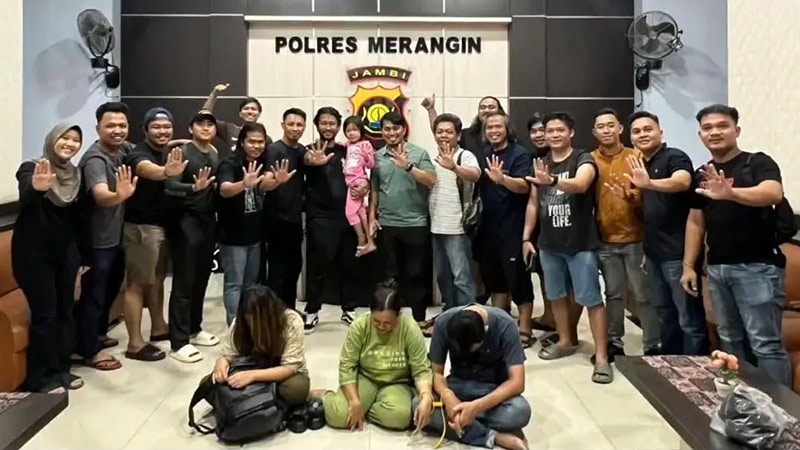
After surveillance and days of fieldwork, police arrested the couple on Friday, November 7th, in Sungai Penuh District, Jambi.
During interrogation, they confessed to selling Bilqis to members of the Suku Anak Dalam community in Mentawak Village, a secluded plantation at Merangin Regency, for Rp 80 million (around $5,000).
It took time and a persuasive approach before the people holding the child finally agreed to release her, because they thought they adopted Bilqis legally.
In other words, by the time authorities found her, Bilqis was in a remote area, thousands of kilometers from Makassar, across islands and jurisdictions. This is an evidence of how wide the trafficking chain had spread.
The police are now investigating whether the case was part of a larger child-trafficking network spanning multiple provinces.
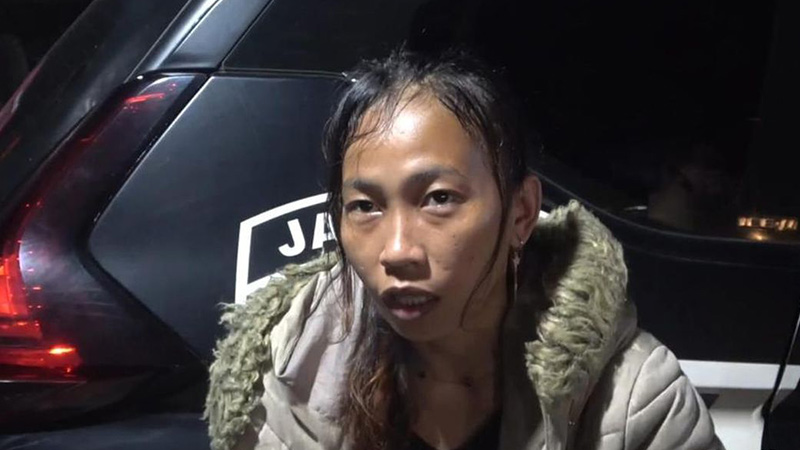
In total, three people were arrested: two women and one man, in Makassar and Jambi.
When officers finally reached Bilqis, she was alive and physically unharmed, though visibly shaken. At first, she refused to approach them, frightened by the strangers who claimed to be rescuers. It was only after a video call with her father that she began to calm down.
For Dwi and his family, the reunion brought immense relief, though not without scars. Child-protection agencies have since provided counseling to help her recover from the trauma, emphasizing that emotional wounds often outlast the visible ones.
Law enforcement officials called the case a reminder of how the digital world can magnify human vulnerability. A child taken from her city, transported across islands, and sold, all because someone could connect with anyone, anywhere, without oversight.
Facebook, like many digital platforms, was never built to nurture evil.
Yet its very design, which is frictionless communication, infinite reach, algorithmic intimacy, can become dangerous in the wrong hands. The kidnappers didn’t need advanced tools or a sophisticated network. All they needed was a Facebook account, a believable profile, and the trust of a stranger willing to talk.
The tragedy of Bilqis’s abduction wasn’t just that it happened, but how it happened. Quietly. Casually. Through a platform billions use every day.
And in the end, it was the same platform that exposed her kidnappers. Conversations, friend connections, and location trails pieced together a digital breadcrumb path that led investigators from Makassar to Jambi, revealing not just where Bilqis was, but how far a single act of trust could travel online.
Facebook helped a kidnapper sell a child... but it then helped catch her.
Dwi Nurmas, the victim’s father, expressed deep gratitude for the safe return of his daughter.
"We are thankful to the police for their efforts in finding and bringing our child back to us. I can’t say much for now. We’re still focused on being by Bilqis’s side," he said.






















































































































































































































































































