In an era where digital banking has become the backbone of everyday financial life across Southeast Asia, the constant hum of automated probes and scans against critical infrastructure rarely makes headlines until the volume draws attention.
This time, a particular incident happened in Indonesia.
According to reports, unusually concentrated activities were directed at the archipelago, with a recorded roughly 350,600 threat detections aimed at the country's systems in just 24 hours.
Averaging about four detections every second nationwide, targets include banking, finance, and insurance firms accounted for approximately 210,000, or 61% of the total, more than all other sectors combined, with government and vital infrastructure trailing at around 79,000.
These numbers represent detections by Fortinet's global sensor network, and not confirmed successful intrusions.
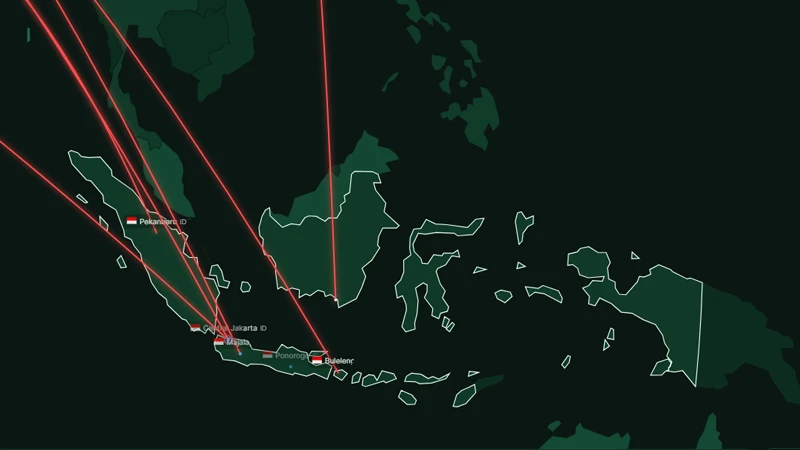
The activity consisted largely of automated reconnaissance, vulnerability scans, and blocked attempts, including probes for remote code execution flaws, web application weaknesses, and network device exposures.
Numbers on the public dashboard shift dynamically as new data streams in; later checks on November 8 showed the financial sector figure rising toward 255,000 in one view while other sectors fluctuated, underscoring that the tool provides a real-time picture of blocked noise rather than a fixed tally of breaches.
Indonesian locations appearing in some visualizations included Jakarta and areas such as Karanganyar, Telukjambe, and Kendal, though the map origins listed for traffic do not reliably indicate where operators actually sit.
When the news broke, the Indonesian government, banks or financial intitution didn't report any confirmed compromise linked to this window of activity.
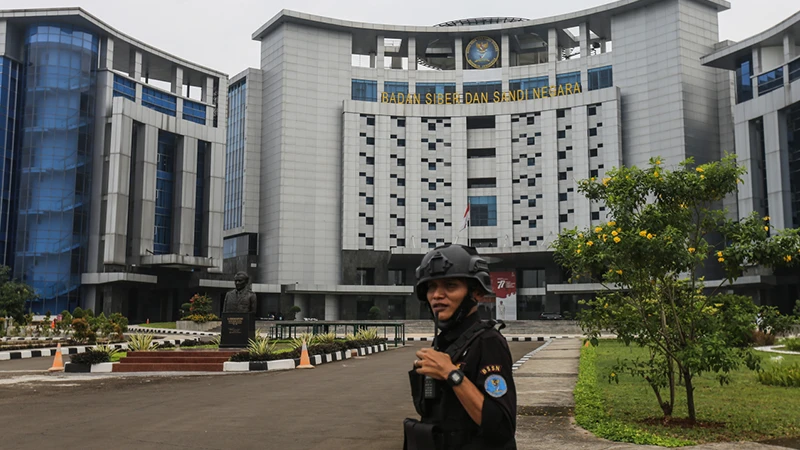
But what's certain the data aligned with longer-running national trends tracked by the Badan Siber dan Sandi Negara (BSSN), which had logged roughly 5.5 billion cyber anomalies or attacks across 2025 and about 1.52 billion in the early months of 2026.
Experts noted that hundreds of thousands of daily detections can fall within expected ranges given those annual volumes, and that most activity involves bots scanning for unpatched systems rather than sophisticated, targeted campaigns that penetrate core banking platforms.
Cybersecurity commentator Alfons Tanujaya publicly cautioned against panic, arguing that isolated daily snapshots without year-over-year context, average baselines, or confirmation of successful breaches can overstate risk; he compared the numbers to security cameras logging attempts to open a locked gate.

The same weekend brought a more tangible, if limited, incident next door in Malaysia.
Late on Friday, November 6, pages on Bank Rakyat's third-party-managed corporate website, including sections tied to its iRakyat online banking login, were briefly defaced.
Bank Rakyat initially described the outage as a technical issue with a third-party provider, stating that core banking systems, customer deposits, personal data, and transaction capabilities remained unaffected. Customers were redirected to the bank's own iRakyat portal and mobile channels.
Malaysia's Communications Minister Datuk Seri Fahmi Fadzil later confirmed the event as website defacement confined to the externally managed site, with no data theft and no disruption to online banking operations; the bank blocked the affected server and restored access through its controlled systems. Authorities characterized broader attempts as coming from non-state actors, and national cyber threat levels were adjusted as a precaution.
Across both countries, the aftermath stayed measured.
Indonesian media and social media users shared FortiGuard screenshots and expressed support for bank IT teams working through the volume of blocks, while some voices linked the activity to wider regional pressures including AI-assisted scanning and known vulnerabilities such as older Log4j exposures still being probed.
No official statement from BSSN specifically validated or expanded on the precise FortiGuard totals for that day, consistent with the agency's general posture of monitoring and issuing advisories on emerging flaws rather than reacting to every vendor dashboard spike.
The episode illustrates how the expanding digital footprint of banking and payments in Indonesia creates a broad attack surface that automated tools continually test.
While defenses appear to have held against the bulk of the recorded probes, the concentration on the financial sector and the concurrent Malaysian website incident serve as reminders that third-party dependencies, unpatched systems, and the speed of automated tooling keep pressure constant.
Public guidance circulating after the reports emphasized routine steps such as enabling multi-factor authentication, accessing services only through official applications or typed URLs, monitoring account activity, and keeping software updated.
For institutions, the volume reinforces the value of layered monitoring, rapid patching, and coordination with national responders even when individual detections do not escalate into confirmed compromises.