It was back in 2015 that Microsoft opened its flagship physical store on 5th Avenue, just a few blocks away from the iconic Apple cube in Manhattan, a borough in New York City, U.S..
With the store, the company can feature both its Surface products, as well as a curated set of partner hardware, like from Acer, Dell, HP, Lenovo, and VAIO.
More or less, the physical Microsoft Store retail was its bet on getting serious against rival Apple. With its retail presence, Microsoft wants to mimic Apple, where people could go try some new Microsoft products.
Less than five years later, in 2020, Microsoft said that it is closing all of its physical stores.
Microsoft said it will focus online through Microsoft.com and stores on Xbox and Windows, where customers can go for support, sales, training and more, with its retail team members working remotely and at Microsoft corporate locations.
The company also wants to "reimagine" four locations - New York City, Redmond, London and Sydney - as what it calls "experience centers", or showrooms, rather than actual physical stores.
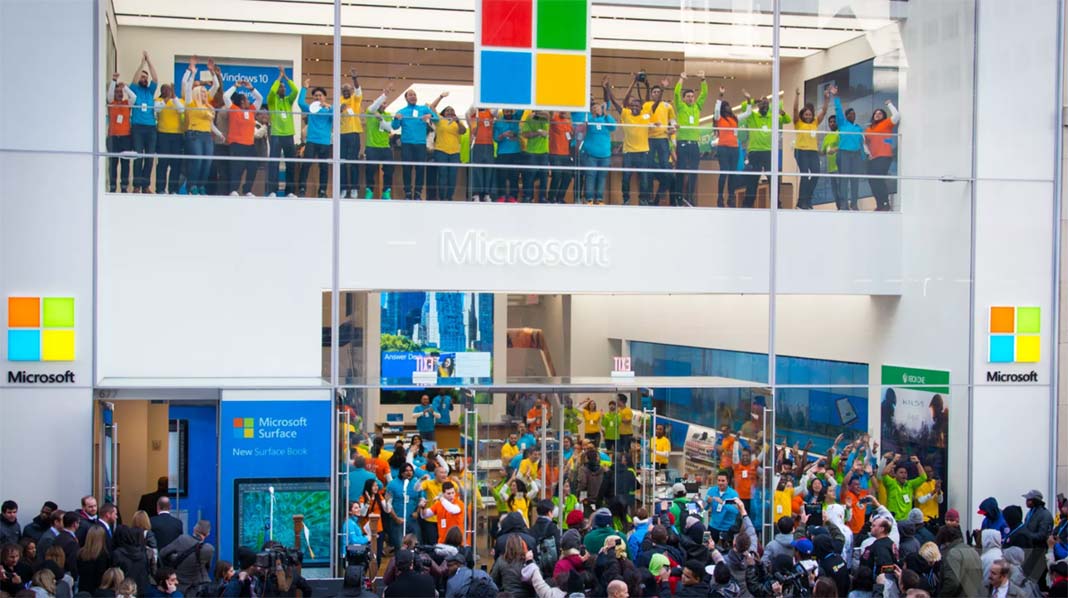
According to Microsoft Corporate Vice President David Porter, as quoted in the announcement:
"We are grateful to our Microsoft Store customers and we look forward to continuing to serve them online and with our retail sales team at Microsoft corporate locations."
Microsoft said the closing of its physical locations will "result in a pre-tax charge of approximately $450 million, or $0.05 per share," which it will record in the current quarter that ends on June 30. "The charge includes primarily asset write-offs and impairments," Microsoft said.
The decision follows Microsoft's previous decision, which temporarily closed its stores in March due to the spread of the 'COVID-19' coronavirus.
The company didn't explicitly say anything about the pandemic as the reason why it is closing its stores. But since the company did say that since it closed its stores at the outset of the pandemic, its retail team has been working to help customers transition to the New Normal where people are connected through the internet more than ever.
"Since the Microsoft Store locations closed in late March due to the COVID-19 pandemic, the retail team has helped small businesses and education customers digitally transform; virtually trained hundreds of thousands of enterprise and education customers on remote work and learning software; and helped customers with support calls. The team supported communities by hosting more than 14,000 online workshops and summer camps and more than 3,000 virtual graduations," the company said.
"We deliberately built teams with unique backgrounds and skills that could serve customers from anywhere. The evolution of our workforce ensured we could continue to serve customers of all sizes when they needed us most, working remotely these last months,” added Porter.
With its decision to close its stores and having "showrooms", Microsoft also plans to invest in services such as 1-on-1 video support, more tutorial videos, and virtual workshops.






















































































































































































































































































