Before Windows, Microsoft developed MS-DOS (Microsoft Disk Operating System), which was released in 1981. Then, the first Windows, was released in 1985, designed as an extension that runs on top of MS-DOS.
In other words, Windows was not an operating system.
Windows first became an operating system when Windows 95 was released.
When it came out, it officially replaced Windows 3.1 and MS-DOS
Since then, periodically, Microsoft would release new upgrades to the operating system, pushing forward new enhancements and capabilities, and sending some hardware setup obsolete.
And this time, that time has come again.
Microsoft announced that it would end support for its Windows 10 operating system in 2025.
The date is clearly stated on the Microsoft Support documents that lists "products retiring or reaching the end of support in 2025."
The schedule is defined by Microsoft's Modern Lifecycle Policy, which is documented on the Microsoft Lifecycle page: "Windows 10 will reach end of support on October 14, 2025. The current version, 22H2, will be the final version of Windows 10, and all editions will remain in support with monthly security update releases through that date."
This news shouldn't come as a surprise to anyone, but the consequences should.
This is because the decision could threaten the usability of numerous existing devices.
Phasing out Windows 10 support, users of the operating system who wish to use Windows and receive support would need to upgrade their hardware.
Multiple key barriers prevent Windows 10-compatible PCs from running Windows 11.
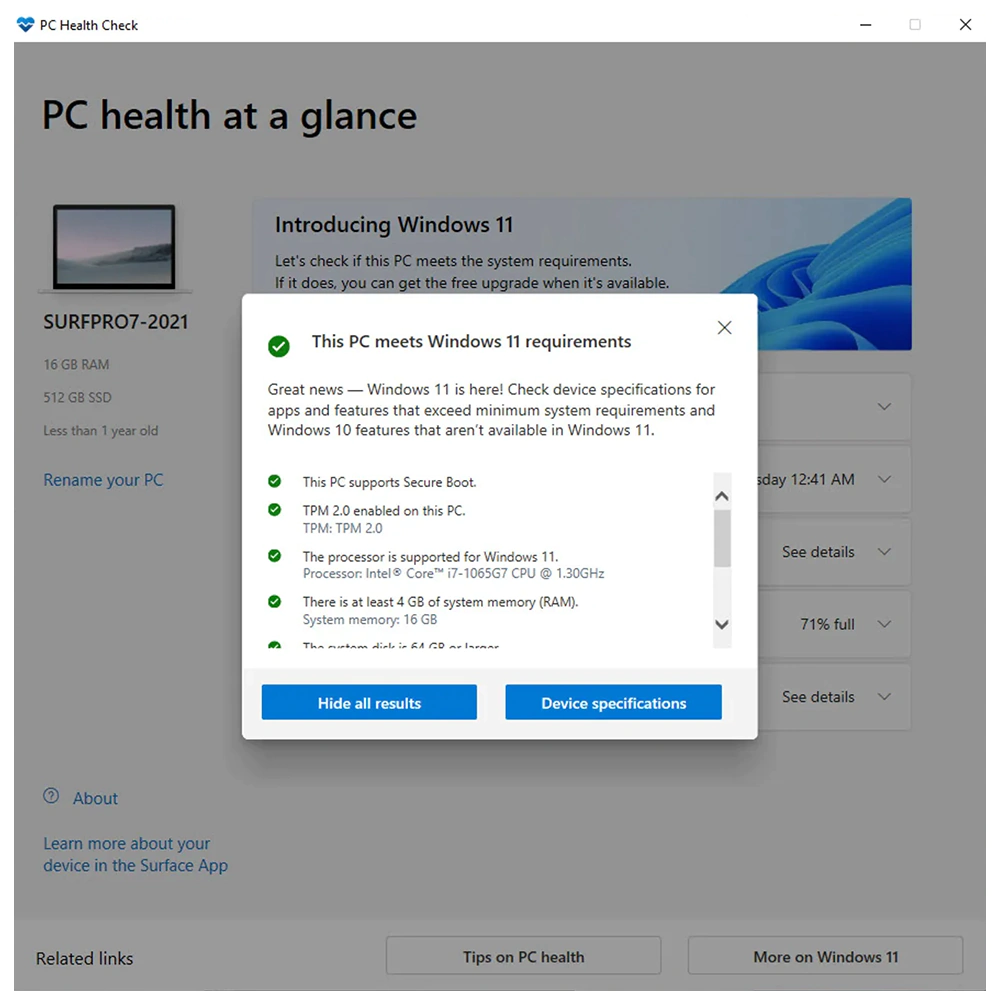
They include the need for a 64-bit processor listed by Microsoft as a 'supported CPU,' at least 4 GB of RAM, a minimum of 64GB storage, and UEFI firmware with Secure Boot capability instead of the older BIOS.
Additionally, Windows 11 also requires a crucial TPM version 2.0 for enhanced security, which supersedes the TPM 1.2 version supported by some Windows 10 devices.
In addition, Windows 11 also demands a DirectX 12-compatible GPU with a WDDM 2.x driver, which leaves out many older iGPUs.
At this time, many PC systems are still running outdated CPUs and using BIOS instead of UEFI with no SecureBoot support.
It's worth noting that the arrival of Windows 11 in late 2021 did not encourage massive PC sales, and that Windows 10 kept its pace as the most popular operating system after Microsoft ceased support for Windows XP.
Knowing that Windows 10 rules more than 60% of the global operating system market, Microsoft's decision to could mean a massive upgrade cycle for PC owners and PC makers.
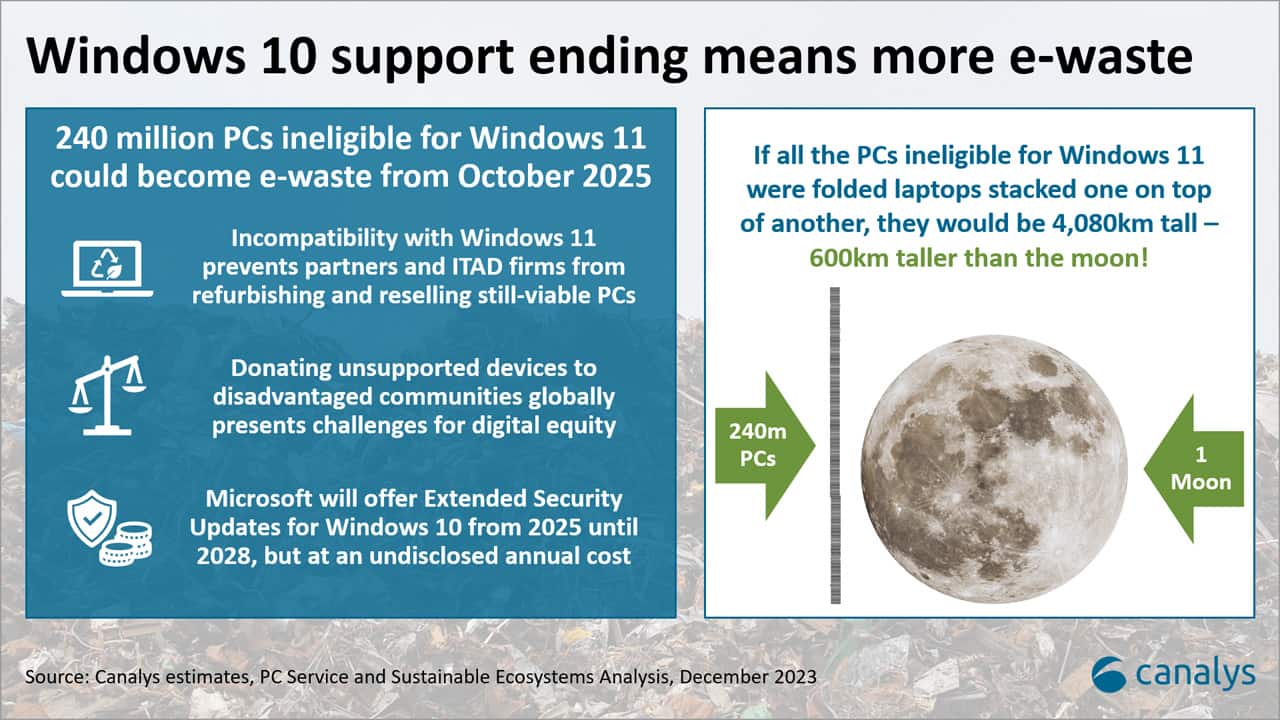
According to a report from Canalys, about 240 million PCs do not comply with Windows 11's requirements and are set to be rendered obsolete by Windows 10's October 14, 2025 support deadline.
If those many PCs are going to be upgraded to be able to run Windows 11, the obsolete hardware they leave may result in a massive electronic waste filling up landfills.
While recycling e-wastes is possible, and that it remains a viable option for these systems, the lack of compatibility with the latest Windows iteration significantly devalues them, making refurbishment less feasible.
Consequently, despite growing capabilities in the refurbishment sector, many of these devices are still destined for landfills.
This situation highlights a critical challenge in managing and disposing of electronic waste, Canalys believes.
In response to these concerns, Microsoft has announced the availability of Extended Security Updates for Windows 10 until October 2028, but with a cost.
This move mirrors previous strategies for Windows 7 and Windows 8.1, where Microsoft offered a temporary reprieve for users of older PCs.
Paying Microsoft means that users are just buying themselves some more time. In the end, the inevitable will happen, and they too need to upgrade.






















































































































































































































































































