Create a compelling mobile app, and sit back while users download, and wait for them to sign up for a paid subscription. Then, later, update the app, add a bunch of new features, and repeat the whole process. That, would be a dream to most developers.
But that, is also an achievement next to impossible for most to complete.
Just like all other businesses, the mobile industry is harsh, and that many of them fail to even see the slightest sight of success.
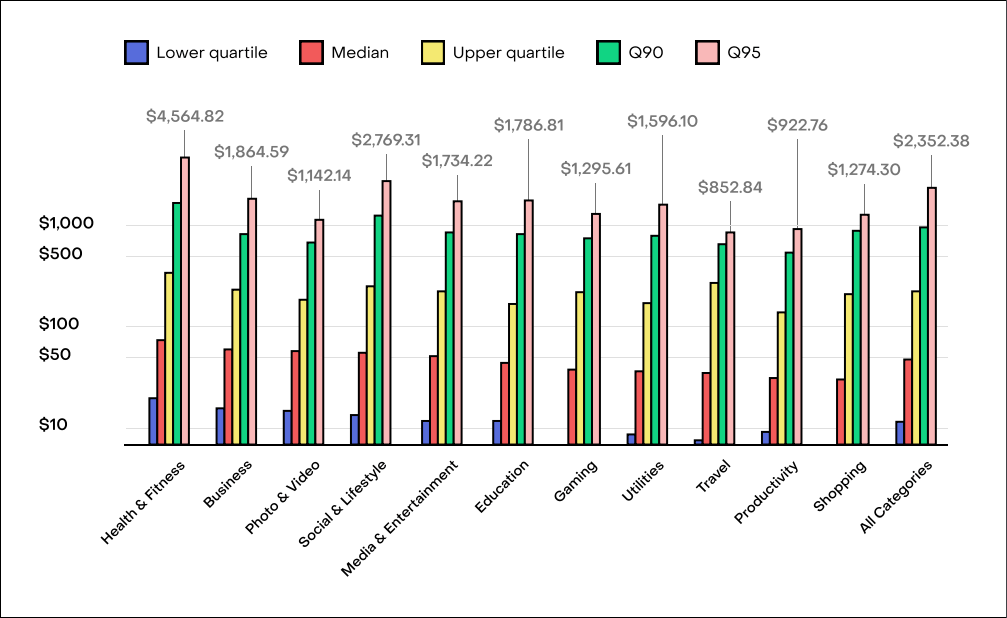
According to an analysis of the subscription app economy from mobile subscription toolkit provider RevenueCat, the top 5% of apps generate 200 times the revenue of the bottom quartile after their first year, while the median monthly revenue an app generates after 12 months is under $50.
In other words, most mobile apps make no money.

RevenueCat made this conclusion after analyzing over 29,000 apps that are using its platform’s tools to manage their monetization, and over 18,000 developers who collectively generate over $6.7 billion in tracked revenue and have over 290 million subscribers.
In a report titled "State of Subscription Apps", the company said that only 17.2% of apps will reach even $1,000 in monthly revenue, but after they hit that point, the odds of them growing further increase.
For example, 59% of the apps that reach $1,000 will one day reach $2,500, and 60% of the apps that reach $1,000 will make it to $5,000.
Only 3.5% of apps will reach $10,000 in revenue, a rough figure that an indie developer may need to hit in order to devote themselves full-time to app development or their mobile-first startup.
Breaking them down, health and fitness apps generate more revenue after a year, performing at least twice as well as all the other categories combined, both at the bottom quartile and in the top 5%.
Travel and productivity apps on the other hand, struggle the most, with even the top 5% of apps in the category making less than $1,000 per month after a year on the app stores.
RevenueCat also found that the most common price for a monthly subscription remained the same this 2024 at $10, but the average price for a monthly subscription has increased 14% from $7.05 to $8.01.
The weekly price grew a little under 2% to $5.55, and the yearly average decreased a little over 1% from $32.94 to $32.53.
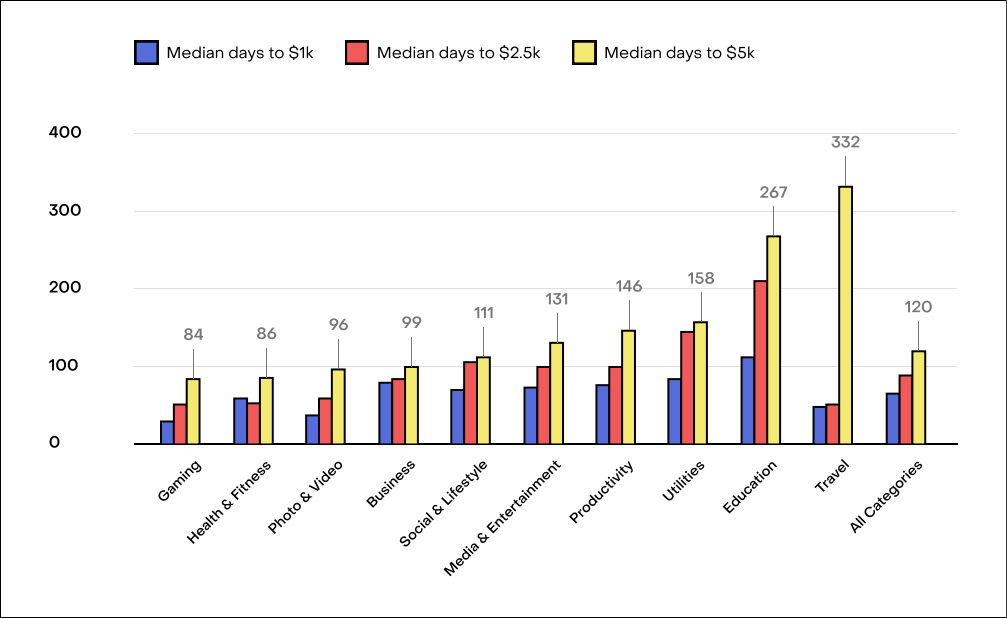
In addition, RevenueCat also found that over 10% subscribers will continue their subscription after one year, with categories like Media & Entertainment seeing even higher reactivation rates.
"We definitely saw a tightening, which would make sense, because a lot of apps were raising prices — inflation-induced price raises — which then, of course, would lead to people churning as well," said RevenueCat CEO Jacob Eiting.
"Overall, the whole ecosystem seems to have grown pretty well, but there has been some readjustment."
Investors know that most startups fail, but something that may be less understood is how few of the mobile apps in the market actually make money.
It’s perhaps not as surprising that many apps don’t make money, given by how many of them are launched as side projects.
Most developers. mainly indies, create apps just for fun, and try their chances with little to nothing to lose.
The report highlights other aspects of the race to subscription app monetization, as well, including that North America-based apps have 4x the monetization of the global average. That is, the North American 14-day RLTV (Realized Lifetime Value, a figure indicating that the money generated by the average user, in this case, in the 14 days after the app’s installation) is $0.35, while the global average is $0.08.
Japan and South Korea also monetize better on Android than iOS, which is not usual.






















































































































































































































































































