In the shadows of northeast Nigeria's ongoing conflict, a chilling new dimension has emerged in the tactics of Boko Haram.
According to a field study from Cambridge University researcher Antonia Juelich, the terrorist group and its splinter factions have turned to mainstream artificial intelligence chatbots not just for propaganda or recruitment, but for direct operational advantages on the battlefield.
This shift marks a departure from earlier assumptions that extremists primarily used AI for information operations, revealing instead how generative tools are now embedded in planning, execution, and analysis of attacks.
"God has helped us, and so will AI."
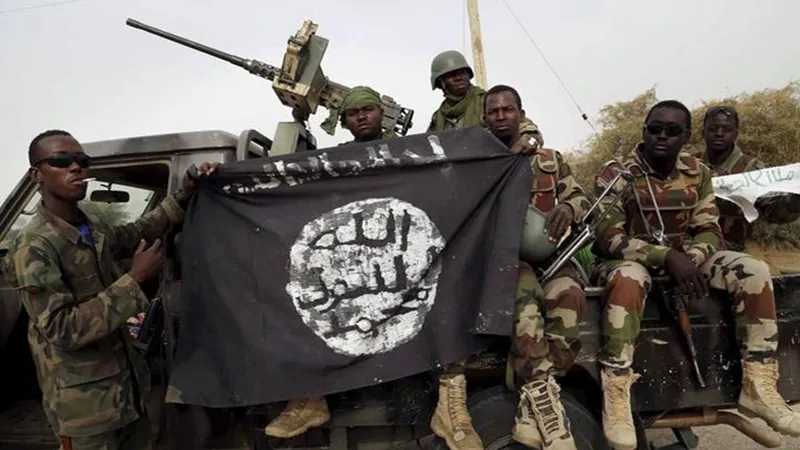
Defectors interviewed by Juelich over nearly 60 sessions described consulting AI platforms like ChatGPT, Claude, Gemini, Grok, and DeepSeek at every stage of military activity.
And in one striking account, after a motorcycle assault on a Nigerian military base stalled due to defensive trenches, fighters drew inspiration from action movies.
They fed details about their bikes and the required jump distance into chatbots, receiving step-by-step guidance on modifications for faster acceleration and better liftoff.
With that information, their mechanics upgraded the vehicles accordingly, and the group practiced the maneuver repeatedly, sometimes at fatal cost, before successfully breaching defenses in a later raid.
"We saw in a movie how motorcycles can jump over bridges," a former Boko Haram commander told Juelich.
"We used AI to learn how to do this. We gave it information, like what motorcycles we use and the distance we need to jump and so on, and it gave us steps on what we have to do."
The use extends far beyond mobility.
Former commanders recounted querying AI directly for bomb-making instructions.
"You type in the question or use your voice, and it gives you a detailed answer, like 'How can I build a bomb?,' and then it tells you how. It is like a human robot! We used it a lot," the person continued.
According to Juelich’s study, the jihadists consistently reported benefiting from AI.
"Trial-and-error can kill you. AI gives you accuracy," one of the members said.
One described the technology as akin to a human robot that provided detailed answers on chemicals to make explosives more destructive. Previously reliant on risky trial-and-error methods that could prove deadly, fighters praised AI for delivering accuracy and reducing losses.
They also used it to repair or upgrade weapons, gather intelligence, troubleshoot equipment, and even review missions afterward to refine future operations.
What makes this development particularly concerning is the institutionalization within Boko Haram.
The group has established dedicated AI units staffed by technical specialists and bomb-makers who focus solely on extracting and disseminating information from these tools, rather than participating in frontline fighting.
Training sessions, often facilitated through transnational jihadist networks linked to the Islamic State, teach operatives how to prompt effectively, evade safety guardrails by framing requests as film production or academic exercises, and cross-reference responses across multiple platforms for the most useful details.
This organized approach has allowed knowledge to spread systematically between factions.
AI companies have responded by emphasizing their safeguards against harmful requests, noting violations of usage policies and ongoing improvements to models. Y
et researchers and defectors indicate that persistent users, especially experienced ones, continue to circumvent these barriers.
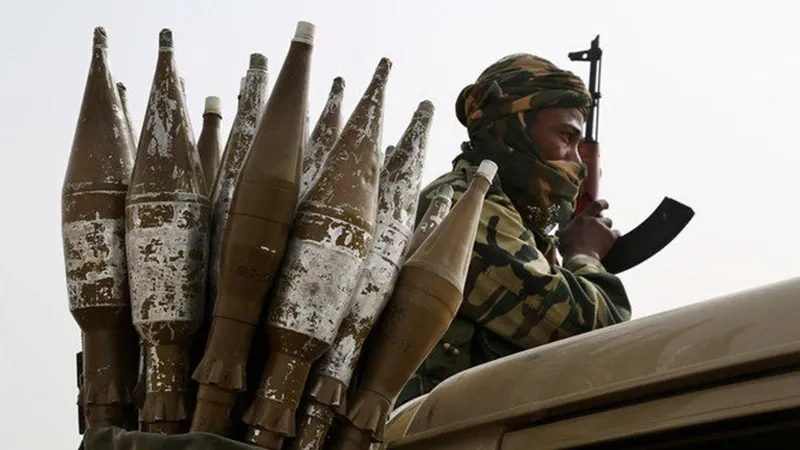
Broader studies align with these findings, showing AI's potential to aid in reconnaissance, target planning, and even improvised explosive device design, though experts caution that the technology supplements rather than replaces traditional terrorist skills like coordination, financing, and real-world experience.
It may modestly boost the competence of lower-level actors without sparking a wave of dramatically more sophisticated attacks.
This evolution underscores a broader challenge for the AI industry and global security.
As chatbots become more powerful and accessible, their dual-use nature means information that helps everyday problem-solving can also empower those intent on violence.
For Nigeria, the West African nation on the Gulf of Guinea, as well as the wider counterterrorism community, the reports serve as a stark reminder that terrorists adapt quickly, blending frontier technology with battlefield pragmatism.
It's worth noting that Boko Haram was officially split in 2016, resulting in the rise of hostile faction known as the Islamic State's West Africa Province.
Further reading: From Propaganda To Terror To Chatbots: Reports Show How Extremists Are Adapting To The AI Era






















































































































































































































































































