In an era where "AI" is everywhere in conversation, occupying news headlines, marketing blurbs, boardrooms, and social feeds, people may assume that most people are using it daily, the same way they use Google, or social media platforms.
This, is where they're wrong.
A study challenges that assumption, drew from more than 14 million website visits, found that AI-related browsing accounts for less than one percent of online activity for most people. The researchers from Cyberpsychology, Behavior, and Social Networking found that while AI receives a lot of attention and development, and also hype, the technology is actually far less frequently used for daily, frequent online activities.
To escape the limitations of self-reports (which people often misremember or overestimate), the authors collected up to 90 days of web history from two groups: university students (499 participants) and a more general public sample (455 participants). They then catalogued which visits came from known AI platforms (ChatGPT or Microsoft Copilot) and used a content classification system, powered by large language models, to label other visited sites.
What they found is something what most people wouldn't have expected.
According to the study author Emily McKinley, a PhD candidate at the University of California, Davis:
"Despite widespread concerns and excitement about tools like ChatGPT, we had almost no baseline understanding of actual usage patterns. We wanted to measure what’s really happening, examining not just usage frequency, but also the psychological profiles of AI adopters and how AI integrates into their broader digital behaviors."
First of, among students, AI visits made up about 1 % of all site visits (from a total of ~4.1 million sites). In the general public sample, that share dropped to about 0.44 % (of ~9.9 million visits).
Then, AI usage was found to be highly skewed. For example, most participants rarely visited AI sites, but a small subset of "prolific users" drove much of the traffic.
The researchers also found that users of the AIs came from search engines or authentication/login pages, then proceeded afterward to education, computer, or productivity sites. This suggests many AI visits are embedded within workflows and not merely casual browsing.
"We were genuinely surprised by how infrequent AI use was, even among students who typically serve as early adopters of emerging technologies," said the study author Emily McKinley, a PhD candidate at the University of California, Davis.
Another key finding: self-assessments of AI use were only moderately correlated with actual usage (ρ ≈ 0.329).
While there are inconsistencies, one pattern emerged.

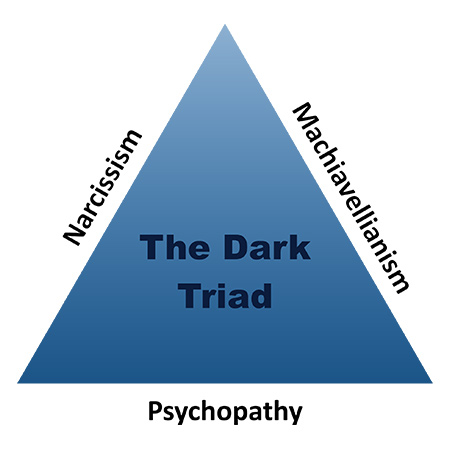
Among those who used AI more, have certain dark or "aversive" personality traits that tended to be stronger predictors than basic demographics.
For example, traits like Machiavellianism, narcissism, and psychopathy showed modest but detectable associations with heavier AI usage, especially in the student sample.
"Interestingly, people who use AI more tend to score higher on aversive personality traits, particularly Machiavellianism, narcissism, and psychopathy, though these patterns were stronger among students," said McKinley.
In the general public sample, the associations were weaker but still present (e.g. Machiavellianism had a modest link).
Meanwhile, age and ethnicity were not significantly related to AI use, and only weak ties emerged for gender or income.
It's worth noting that the statement is not entirely true, despite having kernels of truths.
This is because things are more nuanced.
What's certain, for example, usage of AI is rising, and that it's rising fast.
Then, the data is mostly gathered from web browsing of certain sites, and doesn't account for mobile apps, workstation tools, browser plugins, or people using AI in embedded ways. It also gathered data from only web-based AI use (not mobile apps), includes only Chrome users (excluding those using other browsers), and does not measure how long people stayed on AI pages or exactly what they did there.
There are also weak but measurable correlations with certain "dark personality traits."
Long story short, AI usage is still a relatively small share of total web activity for many users. Some studies show that those who use it more frequently tend to score higher on certain dark personality scales, but it’s not accurate to say most AI users are narcissists or psychopaths. The picture is far more mixed, and context matters a lot.
Many people overestimate or underestimate their AI engagement, reinforcing suspicion that survey data alone can mislead.
Results like this offer a grounded, somewhat surprising baseline: most people don’t (yet) integrate AI heavily into their day-to-day web habits. And among those who do, psychological factors may play a subtle role. As AI becomes more woven into apps, tools, and platforms, usage patterns might shift. But for now, the reality is quieter, more modest, and more selective than the hype suggests.
The researchers acknowledge these gaps and call for future work to explore content of interactions, longitudinal changes in usage, and more nuanced psychological and social predictors.
The study, titled Evaluating Artificial Intelligence Use and Its Psychological Correlates via Months of Web-Browsing Data, was authored by Emily McKinley, David M. Markowitz, Rui Zhu, and Brandon Van Der Heide.














































































































































































































































































