Death is inevitable.
Life, fleeting and fragile, moves swiftly—each moment carrying us closer to the end people cannot outrun. But death does not arrive the same way for all. For some, it whispers quietly in sleep. For others, it strikes without warning, cruel and sudden. It doesn’t ask. It doesn’t wait. It simply comes—and takes.
And when it comes too early, too violently, it tears through the fabric of what people call fair.
It leaves behind questions that echo louder than silence, grief that settles like fog in the chest, and a name—now frozen in time.
Sana Yousaf was young. Too young.
She was only 17 years old. Or to be exact, she just turned 17.
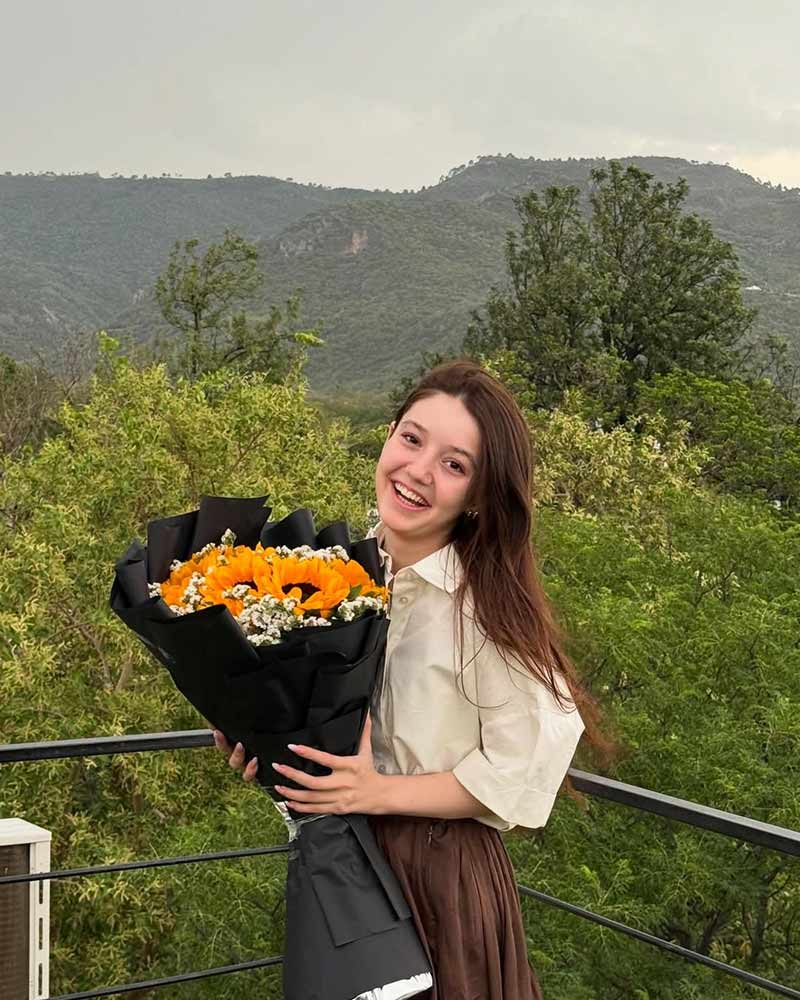
Seventeen years of life, laughter, and dreams woven through pixels and stories shared online.
Hailing from Upper Chitral in Pakistan’s Khyber Pakhtunkhwa province, Sana Yousaf rose to fame on TikTok and Instagram, where her videos drew thousands of views. She also built a strong following on Instagram, with over 500,000 followers, steadily growing her influence as a digital creator.
But Sana was more than just a social media influencer—she was a beacon of inspiration for many who followed her brief, bright journey.
The unfortunate incident happened on June 2, when Sana was at her home in Sector G-13/1, Islamabad, with her aunt.
She had recently celebrated her birthday, sharing a video of herself cutting a birthday cake on Instagram.
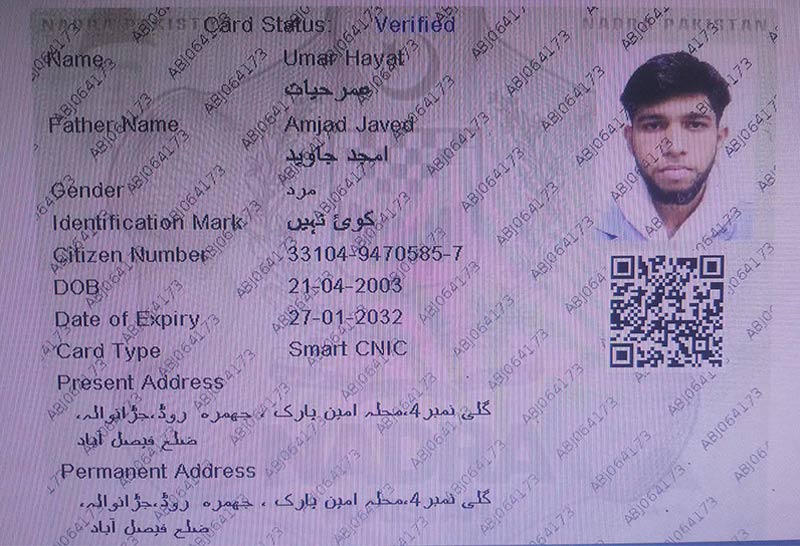
At approximately 8:00 p.m., her cousin, Umar Hayat, also known as "Kaka," arrived at her residence. He had been attempting to contact her repeatedly, but she had declined his advances.
"Go away from here. There are cameras all around," she said, according to her aunt's account.
But despite her attempt to dismiss him, 22-year-old Umar barged in and entered the house. He grabbed a gun he had with him, and without hesitation, shot Sana twice in the chest at close range.
Sana died instantly.
Umar fled the scene immediately after the shooting.
After the police was informed, Inspector General of Police (IGP) Syed Ali Nasir Rizvi swiftly mobilized a robust investigative response.
Seven dedicated police teams were formed under the leadership of DIG Operations Jawad Tariq to spearhead the inquiry. These teams conducted a thorough technical investigation, meticulously analyzing Sana’s social media accounts and over 300 call records.
Investigators also gathered crucial video evidence from Safe City Islamabad’s extensive CCTV network, as well as private security cameras, to piece together the events leading to the crime.
This comprehensive investigation eventually led to the rapid identification and tracking of the suspect.
The police found that Umar, the prime suspect, went to Chungi No 26, and later boarded a passenger vehicle to Faisalabad.
Geofencing of the area also confirmed Umar's presence at G-13/1 and later at Chungi No 26.
Within just 20 hours of the murder, the police conducted a raid in Faisalabad, and Umar was apprehended.
The authorities also recovered both the victim’s mobile phone and the murder weapon from his possession.
Umar was arrested and charged with murder.
"The ruthless killer took the phone with him after the murder to destroy evidence. In order to apprehend the accused, raids were conducted at over 11 locations in three cities. The accused is a 22-year-old unemployed man who repeatedly attempted to contact the victim. Upon her refusal to respond, he committed the murder," said Syed Ali Nasir Rizvi.
Sources close to the investigation revealed that Sana Yousaf and the suspect, Umar, had known each other for about a year.
Umar, the son of a retired grade-16 officer, reportedly traveled from another city to Islamabad on the night between May 28 and 29 to personally wish Sana a happy birthday. He reached her home in Sector G-13, but the two did not meet that night.
Frustrated, Umar later called her, expressing his disappointment over her unavailability. Despite the tension, they agreed to meet on June 2, the day of her birthday.
Umar returned to Islamabad on that day and made his way to her residence. But this time, when he arrived, Sana neither came outside nor opened the door.
Obsessed and unhinged, Umar somehow managed to gain entry into the house. An argument erupted between them—and in a sudden, horrifying act of violence, he pulled out a weapon and shot her.
The bullets struck vital organs, killing her on the spot.
At the time of the shooting, only Sana’s aunt was at home. Her parents were away, never imagining that the day meant to mark their daughter’s birth would instead become the day she died—her life stolen by someone she once knew.
Pakistan is witnessing a disturbing surge in child abuse cases, with over 7,000 incidents reported in 2024—including abduction, rape, and murder. Women and girls remain particularly vulnerable, facing harassment both online and offline in a climate of impunity.
The brutal murder of 13-year-old Sana has sent shockwaves across the nation, reigniting anger over systemic failures in child protection. The case serves as a grim reminder of the dangers faced by minors, especially girls, in a society where their mere visibility is sometimes seen as provocation. Activists are demanding urgent legal and social reforms to combat abuse and dismantle the toxic attitudes that enable such violence.
But in a sickening twist, some individuals even mocked the tragedy, and some ridiculed Umar for not raping Sana, reflecting a deeply troubling societal mindset that often blames victims rather than perpetrators.
The National Commission on the Status of Women (NCSW) strongly condemned the act, calling it a "cold-blooded murder" and a stark reminder of the deep-rooted patriarchal violence that continues to deprive women and girls of their most basic right: the right to life.
NCSW Chairperson Ume Laila Azhar demanded an immediate, transparent, and thorough investigation.
"We will not let this case be buried under social stigma, false narratives of honor, or procedural loopholes. This senseless killing highlights the vulnerability of women and girls, even in their own homes. We demand justice for Sana and her family, and expect the state to ensure accountability of the perpetrators," she said.
Sana’s body was transported back to her ancestral home in Chuinj village in Upper Chitral, where she was laid to rest in the family graveyard. The scene was heartbreaking—villagers and relatives openly wept, mourning a young life stolen far too soon.
Before the burial, hundreds of people gathered at a hotel in Chitral city to pay their respects to the bereaved parents. Her father, Yousuf Hassan, a government employee in Islamabad, expressed rising concerns over the safety of the Chitrali community in cities like Islamabad, Rawalpindi, and Peshawar, where violence against women has become increasingly alarming.
As the funeral procession moved to the village, grief traveled with it—heavy, painful, and unjust. A daughter, an influencer, a friend, a dreamer—now remembered not just for her presence online, but for the tragic way she was silenced.