In quiet corners of daily life unexpected relics from earlier eras sometimes linger far longer than anyone anticipates, tucked away inside spaces that now serve purposes far removed from their original intent.
In rooms meant only for brief private escapes people rarely notice the quiet traces of past decades that remain embedded in the fixtures and furniture, yet those overlooked details can still preserve technology that once sat at the center of popular culture and now survives only in the most specialized collections.
An unnamed hourly love hotel somewhere in Japan continues to keep fully working commercial Famicombox units installed in every room except one.
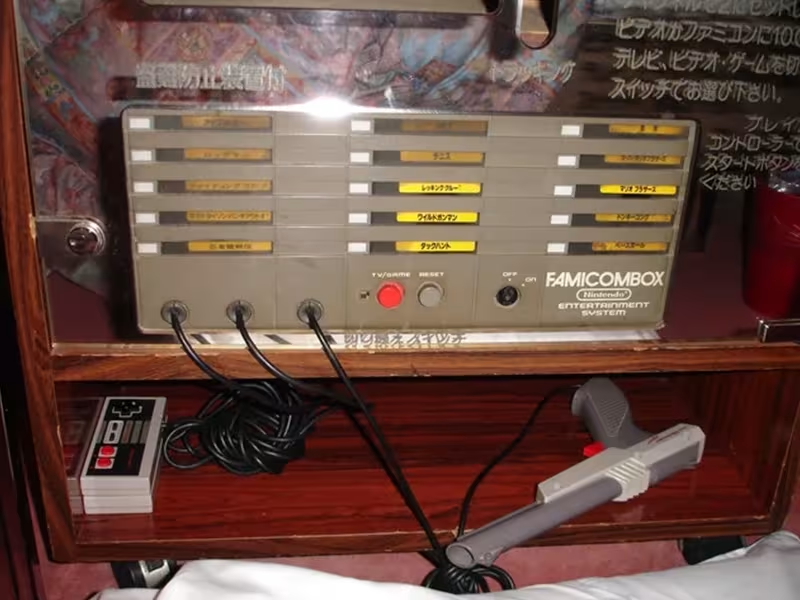
When the Famicom Archivist known as Orochi posted photographs and a firsthand account of the discovery, and it quickly went viral for a good reason.
The Famicombox is a commercial-use 8-bit console Nintendo produced exclusively for the Japanese market in 1986.
Unlike the familiar home Famicom that accepted top-loading cartridges unique to Japan, the Famicombox was built for institutional use in hotels and resorts. It employs a front-loading cartridge mechanism similar to the Western NES, often incorporates 15 built-in game slots, and was engineered so that play sessions could be activated by room key, coin mechanism, or added surcharge.
Because the machine was never offered for ordinary retail sale, production remained limited and distribution stayed confined to commercial buyers.
Years of continuous operation in public or semi-public settings further reduced the number of intact survivors, and fully functional examples with original circuitry and complete software libraries have become exceedingly scarce among collectors and museums.
The units still operating inside the love hotel run almost every available title without difficulty when connected to modern LCD televisions, although the light-gun accessory cannot function on the flat screens.
The sudden visibility pulled the rare hardware into wider gaming conversations and prompted waves of comments from enthusiasts astonished that so many working Famicombox machines could still operate side by side in a single building.
Media coverage followed within hours, spreading the story across forums and social platforms while collectors debated the historical value of the find and the importance of leaving the consoles undisturbed as living examples of commercial Nintendo hardware that almost never surface in private collections.
Orochi refrained from naming the establishment's specific name and precide location, in order to not draw crouds of collectors or curious visitors.
Love hotels of this kind operate throughout the country on short-stay rates known as rest periods that typically last one to three hours at lower daytime prices or as overnight stays that begin later in the evening.
They offer discreet accommodations designed around maximum anonymity, with features such as covered or concealed parking lots, separate entrances and exits that minimize chance encounters, automated room selection through button panels or touch screens, and payment systems that often use pneumatic tubes, vending machines, or staff hidden behind frosted glass so guests never need to interact face to face.
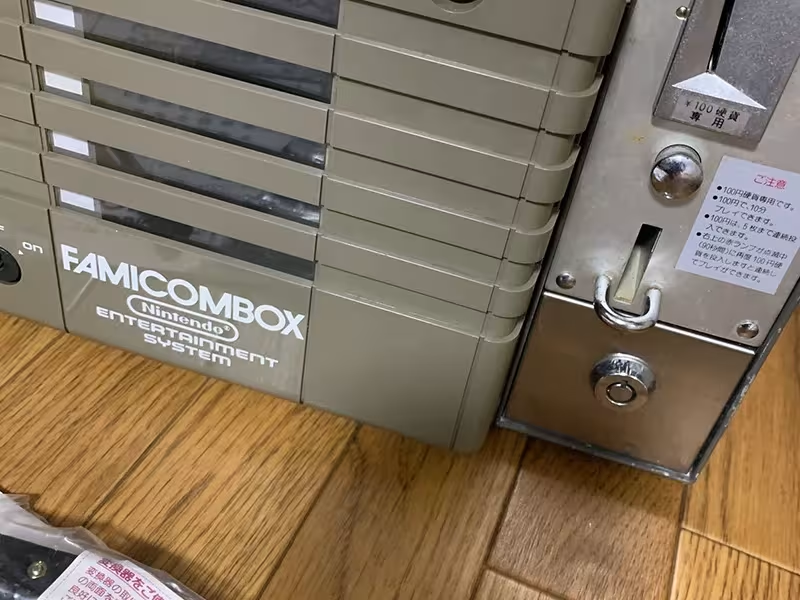
Many buildings display playful or extravagant exteriors shaped like castles, boats, or even UFOs and lit with neon, while interiors range from simple functional layouts to elaborately themed spaces complete with rotating beds, ceiling mirrors, karaoke machines, oversized baths or jacuzzis, unusual lighting effects, and in some cases fantasy or anime décor along with optional adult accessories.
These quirks, and probably the rare vintage Famicombox availability, stem from Japan’s dense living conditions where home rooms often serve multiple daytime purposes, leaving little private space for couples, which has made the hotels a longstanding cultural fixture used by everyone from young pairs to married people seeking temporary seclusion.
It's worth noting here, that the Nintendo FamicomBox units have been discovered in various hotels and resorts in Japan over the years.
But this one makes virality because this particular hotel has retained the vintage hardware as a standard amenity across nearly its entire inventory of rooms.

















































































































































































































































































