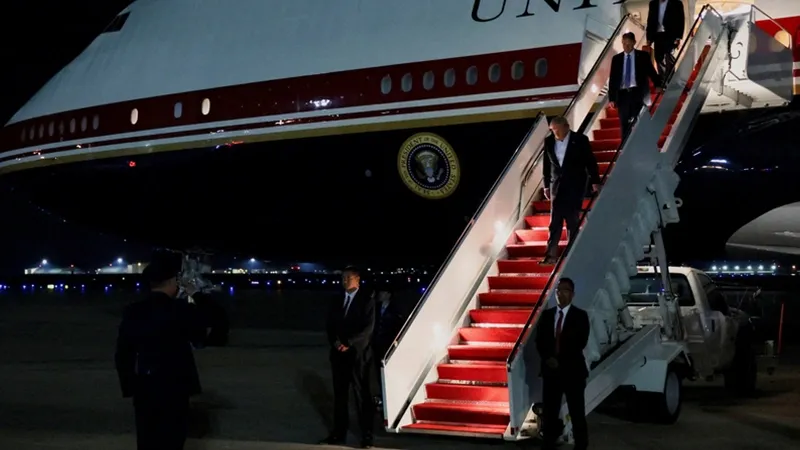
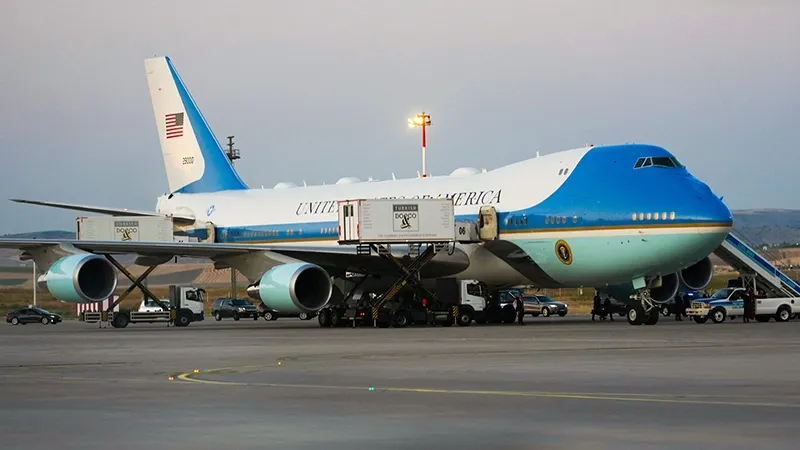
After the NATO summit in Ankara, cameras captured President Donald Trump climbing the stairs of the familiar blue-and-white Air Force One, waving briefly before disappearing inside.
What those cameras did not show was the quiet operation unfolding on the far side of the aircraft.
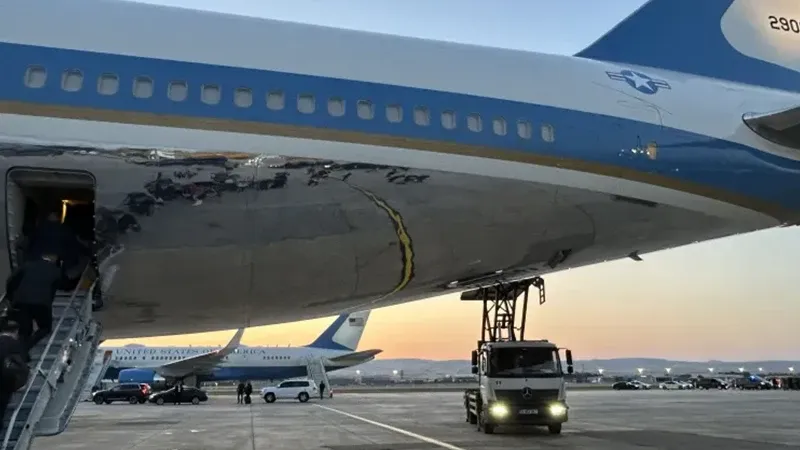
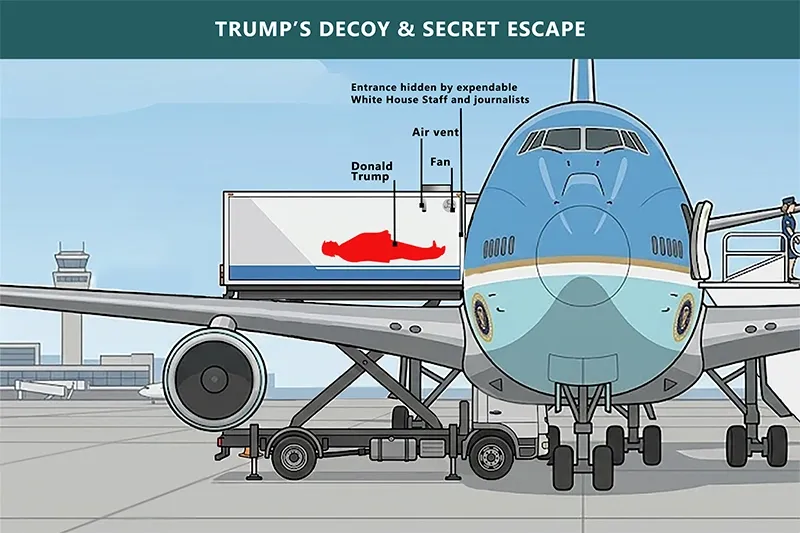
Within minutes, Trump and a handful of close aides stepped into an empty airport catering truck, the kind usually loaded with meals and supplies, that had been raised on hydraulics to a service door.
The container lowered, the truck drove across the tarmac for roughly two and a half minutes, and the president transferred to a smaller military jet, an Air Force C-32A, a modified Boeing 757.
That smaller plane carried him to RAF Mildenhall in Britain while the larger aircraft, still bearing the Air Force One call sign and filled with journalists and White House staff who believed the president was aboard, served as a decoy.
The elaborate switch was set in motion by intelligence warnings of an Iranian threat.
Israeli information shared with the CIA indicated that Iranian operatives knew the hotel where Trump was staying, details of his motorcade movements, and that a shoulder-fired missile might be used against Air Force One near the airport.
American officials described a steady stream of chatter about targeting the president, and some reports mentioned a person spotted in the area with a man-portable air-defense system.
The CIA and other intelligence elements viewed parts of the Israeli reporting with skepticism and low confidence.
No militants were detained and no physical evidence of a missile plot was recovered after the departure.
Still, the Secret Service and military leadership judged the risk serious enough in the short time available to warrant extreme precautions, especially given the proximity of Turkey to Iran and the broader state of hostilities at the time.
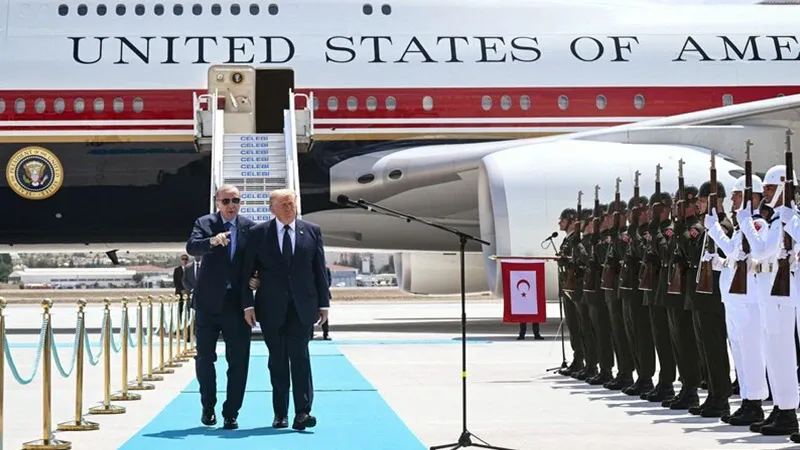
Trump had arrived in Ankara aboard a newer Boeing 747-8 donated by Qatar.
Public statements and a Truth Social post framed the return flight differently: the new plane would head to Mildenhall so service members could tour it, while Trump would take the older jet for old time's sake.
In reality, neither of those aircraft carried him on the first leg.
The Qatari plane left earlier. Trump boarded the older Air Force One in full view, then exited via the catering truck with executive assistant Natalie Harp, Oval Office operations director Walt Nauta, and deputy chief of staff Dan Scavino. Defense Secretary Pete Hegseth joined the group on the C-32A.
Left on the decoy jet were senior figures including Secretary of State Marco Rubio, top policy adviser Stephen Miller, and other aides, along with the press pool.
Reporters were instructed to close their window shades, an unusual request that later made sense as part of the concealment.
Both planes reached Britain safely.
Trump eventually reappeared in a way that maintained the appearance he had been on the larger aircraft the entire time before the final Atlantic crossing.
Read: How Qatar's Boeing 747 Gift For Air Force One Sparks Internet Debate
When The Washington Post first reported the full sequence more than a month later, Trump confirmed the basic facts.
He said he had simply followed the guidance of the Secret Service and the military. "I think actually the plane that I flew on was at greater risk," he told reporters, arguing that the less conspicuous aircraft might have drawn more attention from potential attackers.
He also acknowledged long-standing Iranian threats, remarking to the press pool during the earlier confusion, "But if I go, you go. Right?"
Critics, including Senate Minority Leader Chuck Schumer, argued that Congress should have been briefed and that leaving staff and journalists unaware on a plane that intelligence suggested might be targeted crossed a line, as if they were expendables.
Iranian state media seized on the story with mockery, while some Turkish officials later expressed doubts that the original Israeli warning had been entirely reliable.
The episode was not without historical precedent.
In 2000, President Bill Clinton used an unmarked plane as a decoy when flying from India to Pakistan amid security concerns, though selected journalists were informed off the record beforehand.
Then, in 2023, President Joe Biden was sneaked in to Ukraine, during its war with Russia, without anyone noticing.
Trump's version involved tighter operational secrecy and the distinctive visual of a catering truck. Comedian Bill Maher later offered a characteristically irreverent take, suggesting the choice of Hegseth as a companion made sense because he would be the perfect roommate, with Trump handling the snacks and Hegseth the complimentary beer and wine.
Once the details hit the public in mid-August, the internet transformed the serious security operation into pure viral comedy almost overnight.
The image of the president of the United States being wheeled across a tarmac inside a catering vehicle proved irresistible.
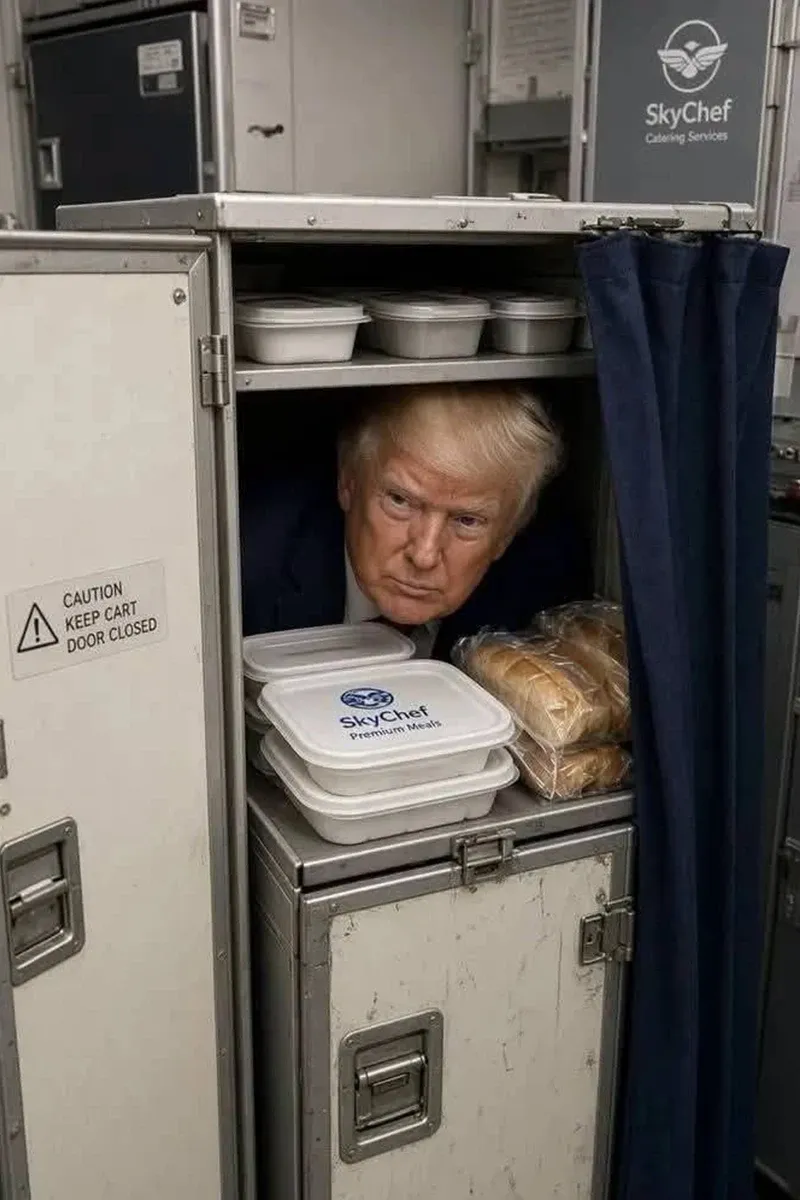
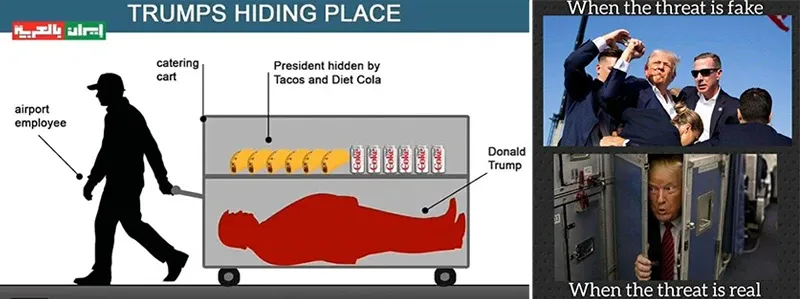
AI-generated memes flooded X, Bluesky, and other platforms showing Trump crouched among McDonald's fries and Diet Coke bottles, peering from a service cart, or riding in a truck painted in Air Force One colors and labeled "Food Truck One" or "Catering Truck One."
Posts racked up tens of thousands of likes within hours. Users joked about needing a bigger cart in Jaws style, compared it to Taylor Swift's laundry cart escapes, and coined lines like "you live by the sword, you end up in a food cart."
Iranian accounts and state media amplified the mockery for propaganda, framing it as a coward's flight. Supporters pushed back by calling the maneuver James Bond clever, but the dominant tone online was ridicule that turned a classified protective detail into the week's biggest meme cycle.
Know Your Meme quickly documented the phenomenon, and roundups of the jokes appeared across entertainment sites.
What remains clearest is the tension between the genuine protective instincts of the Secret Service and the incomplete public picture that persisted for weeks.
No attack occurred. The president and everyone else arrived home safely. Yet the decision to treat a large group of aides and reporters as unwitting participants in a high-stakes shell game, combined with the lingering questions about how solid the underlying intelligence really was, left an unusual mark on an already tense chapter of presidential travel.
In the end, the story of how a U.S. president left Turkey that night reads less like routine protocol and more like a carefully staged vanishing act performed under the bright lights of an international summit, one that the internet refused to treat with any solemnity.

















































































































































































































































































