Netflix is already a name synonymous with online streaming.
And following the popularity of 'Squid Game', there are tons of money to be made.
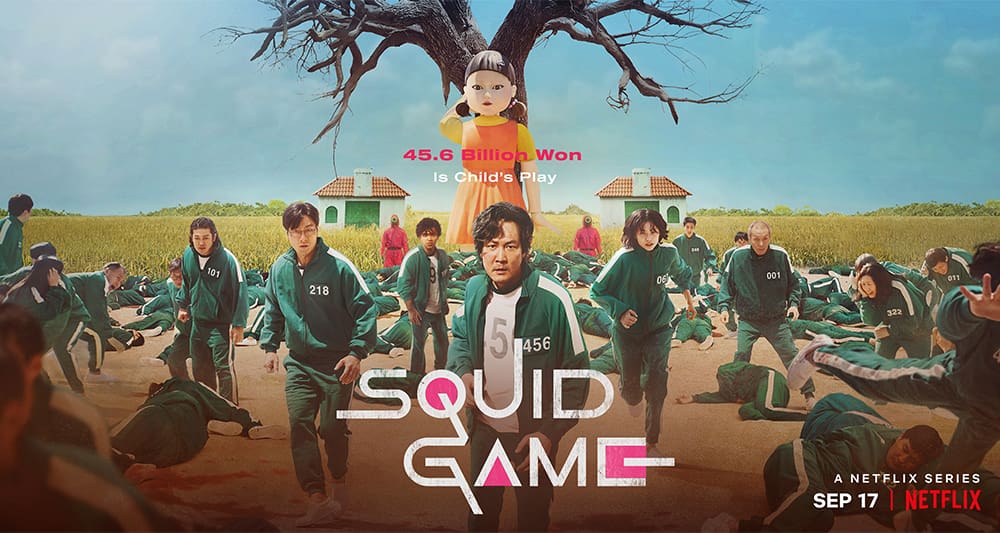
The South Korean survival drama television series revolves around a secret contest where players, all of whom are in deep financial difficulties, risk their lives to play a series of deadly children's games for the chance of winning a ₩45.6 billion prize. The series' title draws from a similarly named Korean children's game.
Squid Game was released worldwide on September 17, 2021, and has since received critical acclaim and international attention.
It became Netflix's most-watched series and the most-watched program in 94 countries, attracting more than 142 million member households and 1.65 billion viewing hours in its first four weeks,
While Netflix is definitely benefiting, the internet service providers that helped Netflix streamed the series to users aren't happy.
This is because the increased network traffic and the increased maintenance work due to the surge of viewers to the U.S. firm's content.
In particular, South Korean's SK Broadband has sued Netflix to pay for the costs, said an SK spokesperson.
The popularity of the hit series Squid Game and other offerings has made Netflix the country's second-largest data traffic generator after Google's YouTube.
SK Broadband said that Netflix's data traffic handled by SK jumped 24 times from May 2018 to 1.2 trillion bits of data processed per second as of September, all of which happened during the Squid Game.
The provider also said it lodged a lawsuit against Netflix, in order to force it to pay for using its dedicated line to deliver its increasingly larger amounts of data-heavy, high-definition video content to viewers in South Korea from its servers in Japan and Hong Kong.
The move comes after the Seoul Central District Court ruled against Netflix in June, saying that SK Broadband is seen as providing "a service provided at a cost," and wants Netflix to be "obligated to provide something in return for the service".
After all, the internet service provider didn't receive anything when helping stream Squid Game for Netflix.
SK Broadband estimated the network usage fee Netflix needed to pay was about 27.2 billion won ($22.9 million) in 2020 alone, the court document said.
In its legal fight with SK Broadband over payments for using its network, Netflix said that it is reviewing the claim, and wishes to seek dialogue and explore ways for a mediation.
Netflix then appealed against the ruling, saying that it contributed to the creation of about 16,000 jobs in South Korea.
Later, Netflix brought in its own lawsuit, arguing it has no obligation to pay network usage fees.
The company said that it's already Netflix's duty ends with creating content and leaving it accessible, and that SK Broadband's expenses were incurred while fulfilling its contractual obligations to internet users, and delivery in the internet world is "free of charge as a principle", according to court documents.

However, Netflix knows how to make things up for the 'troubles' it has caused.
This is why in 2023, the company, among others, promised to back cultivate South Korean showrunners and studios, and has also outlined its plans to spend some of the $2.5 billion over the next four years in the country.
Co-CEO Ted Sarandos said that his company plans to bankroll training programs for the next generation of auteurs and entertainers, both in front of and behind the camera, where Netflix plans to work with local organizations to identify young talents.
This should help many people who wish to enter the entertainment industry, to be seen and make a career.
In return however, this is no surprise, since South Korean dramas have been one of the major catalysts for Netflix, which needs hot original content to differentiate itself from rivals such as Walt Disney and Apple.
With more than half of all Netflix users have watched at least one Korean drama, viewing time for those programs has grown six-fold in just four years, Sarandos said.
About 90% of the viewers for Korean romance-genre content hail from abroad, added Sarandos.

Netflix pledged to spend quite a lot of money, knowing that the move would help fuel the surge in global subscriptions as more consumers tune in to Korean dramas and reality shows.
The company knows that Korean drama boom has caused protests from a number of local content creators.
Netflix’s sales in South Korea jumped by 22% to ₩773.3 billion ($600 million) in 2022, and many complained that they haven't receive any share of Netflix's success.
To do so, Sarandos is visiting Seoul to discuss Netflix's investment plans with Korean production partners and government officials, including Prime Minister Han Duk-soo. The Netflix executive argued that investing broadly in creators and production should generate far bigger ripple effects in the economy than simple profit-sharing.
“I wouldn’t say conflict, I’d say that there’s opportunity as businesses evolve,” Sarandos said, responding to a question about a parallel dispute with Korean telecom network providers. “There’s a clear and direct symbiotic relationship between creative companies like ours and internet industries.”






















































































































































































































































































