The internet, or particularly social media, allows anyone to voice their thoughts, opinions and concerns. As people's disposal, social media has become the powerful tool that can move millions if not billions of people to act.
And this time, India is struggling against the 'COVID-19' coronavirus pandemic. After previously reporting a decreasing daily infections, the second wave hits India extremely hard.
This results in a clash over free speech that happens on social media networks.
People started commenting about the effectiveness of India's attempts to curb the virus. With the devastating second wave of COVID-19 sweeping across the country, as oxygen supplies are very limited, people's voice on social media can cause catastrophe to both political and public health crisis.
The government said that social media posts could create panic. Besides an increasing number of people pleading for help, others use social media to embed contents that are used out of context. This can fuel fake news, and ultimately hinder India's response to the pandemic.
Because of this, India’s government said it ordered Facebook, Instagram and Twitter to take down hundreds of social media posts critical of its handling of the pandemic.
From gruesome images, and videos showing people's fury over the pandemic, the orders were particularly aimed at social media posts that have critics from opposition politicians and calls for Prime Minister Narendra Modi to resign.
For example, Moloy Ghatak, a labor minister in the opposition-ruled West Bengal state, accused the Prime Minister for “mismanagement,” and held him directly responsible for the deaths. His tweet included images of Modi and his election rallies beside those of the cremations and compared him to the Roan Emperor Nero, for choosing to hold political gatherings and exporting vaccines during this “health crisis.”
Another tweet, was from Revanth Reddy, a sitting member of the parliament, who used a hashtag that blamed Modi for the “disaster.”
Jitender Singh Shunty who runs a non-profit medical service, said that the government is not doing anything. "Only you can save your family. You are on your own," he said.
Facebook the company that owns both Facebook and Instagram, complied with India's request. Twitter also followed, by making posts invisible to those using the sites inside India.
“This has been a trend, which is enforced with increasing frequency and severity for online media spaces,” said Apar Gupta, the executive director of the Internet Freedom Foundation, a digital rights group. He said that the orders from the Indian government are being used to “cause censorship,” and make the U.S. social media companies more “accountable.”
For the government, this can severely restrict the flow of information the officials deem a misinformation.
The goal, is to shift the online debates to favor its own, or in just one political party's favor.
For several days at this time, India reported more than 300,000 infections and more than 2,000 daily deaths.
Happening consecutively, India broke the world record in daily infection statistics, with experts warn that the true numbers are probably much higher. At this time, India accounts for almost half of all new cases globally.
This happens because India's health system is crumbling.
India succeeded in pioneering its vaccine programs and quickly vaccinated around 10% of its population. But seeing that the infection trends were lowering, India weakened its vaccination programs, and started to disregard social distancing.
With loosened restriction, even Modi held large political rallies with very minimum COVID-19 protocols.
As a result, in under a month, more new COVID-19 cases were recorded, with each coming day having higher number of infections than the previous day.
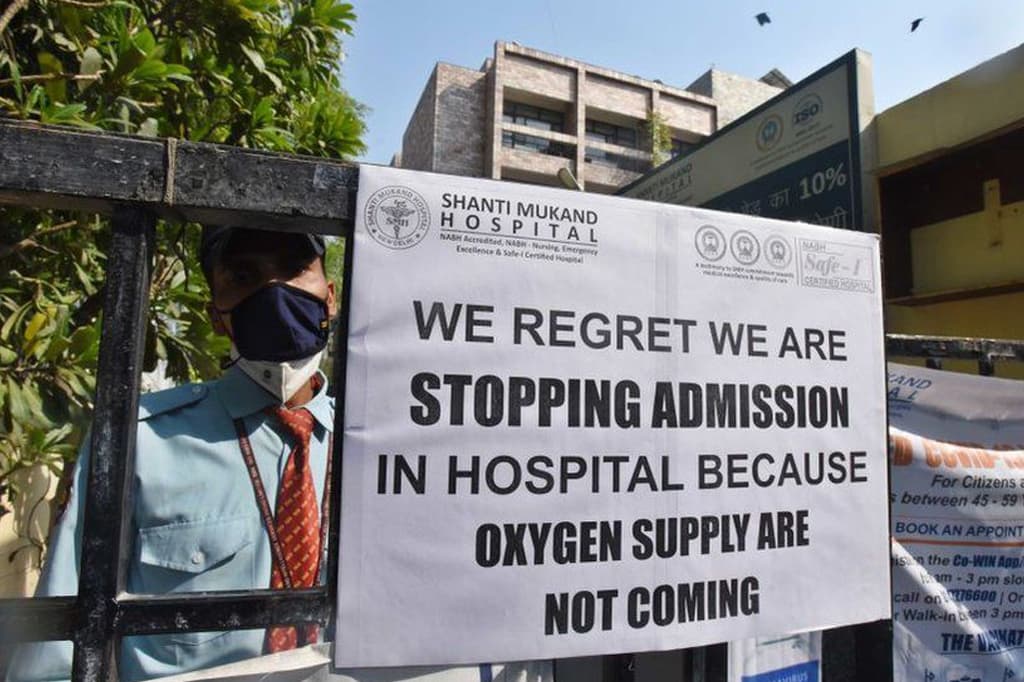
Quickly, hospitals across the country ran out of rooms and beds. Worse, many were running out of oxygen supplies.
In New Delhi, the capital, a number of hospitals turned away patients after running out of oxygen and beds. A week before this, many died in a hospital in the city of Nashik, after a leak cut off their oxygen supplies.
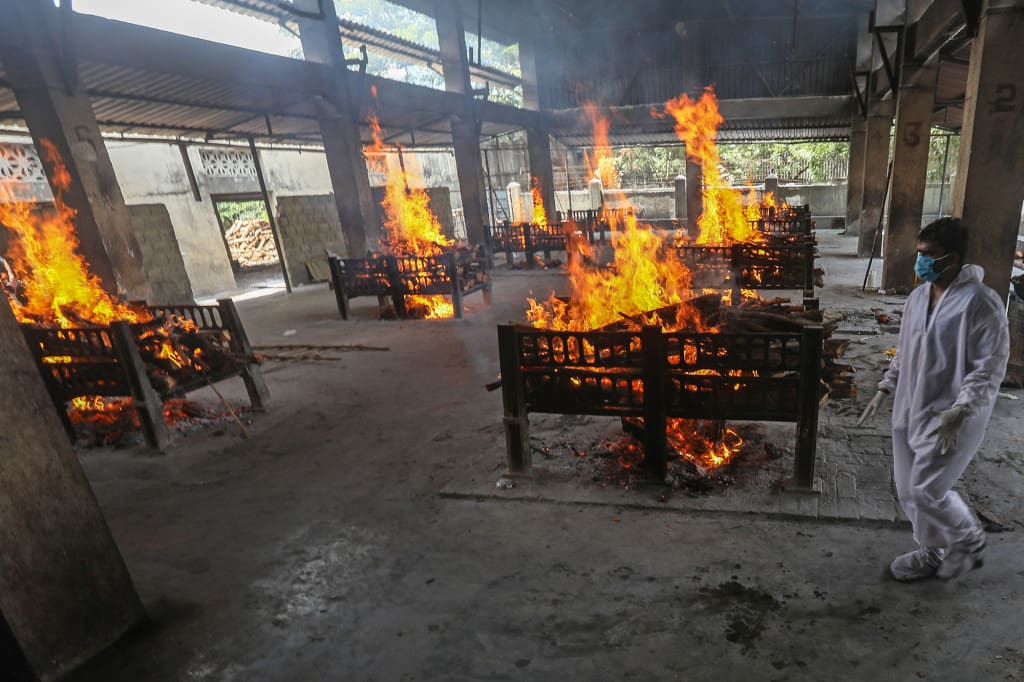
People in India started posting photos of people lying on hospital beds, and anything that can lie on.
Other photos that have gone viral, include workers trying to cremate the deceased.
Others' voices came from desperate patients and their family members and colleagues, who pleaded on social media for the government's help.
The world is watching India, and India is not liking the attention.
This is why its officials choose to curb the free speech.
It should be noted though, that tech companies in responding to governments' requests for take downs of certain types of information have been very inconsistent.
Both Facebook and Twitter have fought their users' rights for free speech. But in this pandemic case in India, the two companies agree to the inquiry.
India is a huge market for those tech companies. In the country, they need to follow the laws and follow the government, or ignored the requests and face punishments. Dealing with country with a population that exceeds 1 billion, the tech companies chose the former.