Mobile phones have security features, which lock outsiders from seeing what's inside, using various methods, including encryption.
For users, this is to safeguard their data, in case that their phones get to the wrong/unwanted hands. But for governments who want to curb terrorism and extremist, security features on phones pose problems.
Mobile OS makers, like Apple and Google, have long denied governments' requests for a backdoor into their respective operating systems. For reasons like protecting users and their brands, these companies are not giving the way for officials, nor assisting them in unlocking locked phones or extracting data from those phones.
This is why governments started seeking help elsewhere.
And here. the U.S. Immigration and Customs Enforcement (ICE) has partnered with Israeli digital forensics firm Cellebrite.
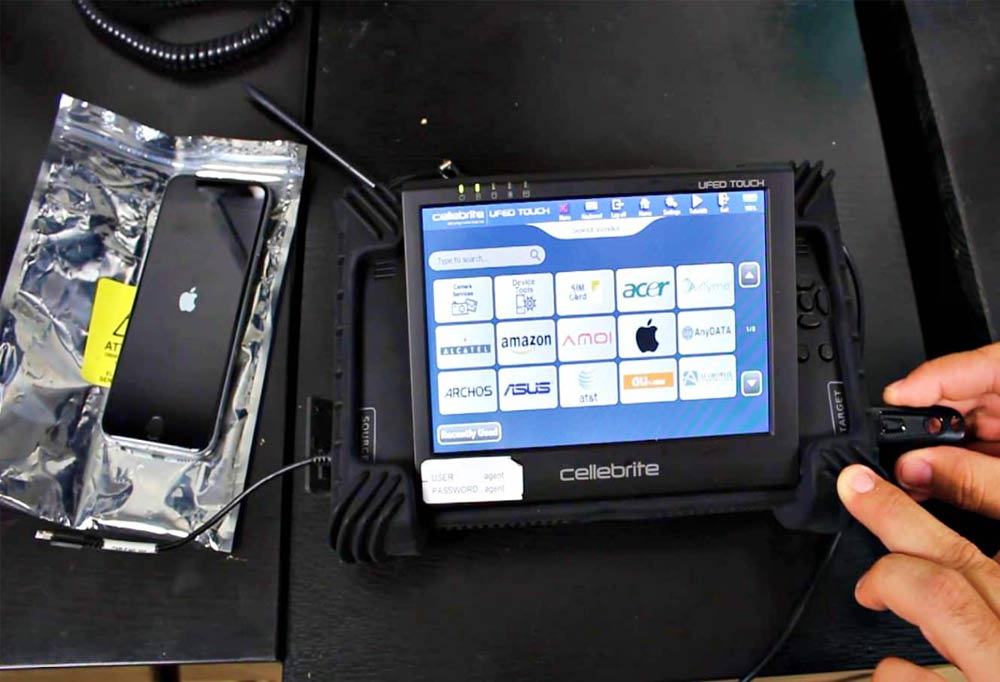
Cellebrite, according to a report from Motherboard, has paying customers from Russia, Turkey, and the United Arab Emirates.
The company is also known for helping the FBI in unlocking the San Bernardino shooter’s iPhone in 2016, and has later stepped up its capabilities by providing tools to allow law enforcement to unlock and extract crucial mobile phone evidence from all iOS and high-end Android devices.
And according to a federal filing dated June 24, ICE is expecting Cellebrite to provide "universal forensic extraction devices (UFEDs), accessories licenses, training and support services."
Using these, the authorities should be able to unlock locked phones, and harvest sensitive information, including text messages, pictures, videos, and internet browsing histories, among other personal details.
With a contract expected to last up to five years, ICE that is targeting undocumented immigrants without criminal records under the Trump administration, is expected to pay the company anywhere between $30 million and $35 million.
The order that was made from ICE‘s Dallas office, stated that the law enforcement agency’s Homeland Security Investigations (HSI) and Cyber Crimes Center (C3) can also benefit from Cellebrite’s tools.
Related: Facebook, Twitter, Google, Microsoft Support Apple Against FBI
The hacking tool order came as ICE has been closely scruntized for its partnerships with tech giant Amazon and data-mining company Palantir, both of which have faced criticism for their work with the department in detaining undocumented immigrants.
By partnering with Cellebrite, ICE is expected to ramp up its abilities even further.
Cellebrite’s tools include UFEDs, which according to the company, can unlock any device running iOS 7 to iOS 12.3, as well as high-end Android smartphones such as Samsung Galaxy phones and the likes of Huawei, LG, Motorola, and Xiaomi, among others.
ICE made the order less than two weeks Cellebrite made a public announcement about its tools.
The UFED is sold as an “on-premise” tool, which means that law enforcement can purchase the device and use it as they see fit.
For government agencies, this is an attempt to fight bad actors. But for regular users, they are expecting smartphone makers to continuously upgrade their products' defenses, and render such hacking tools useless.