Jakarta, the capital of Indonesia, is the country’s political, economic, and cultural center. Covering an area of about 661 km², it is home to roughly 11 million people in the city proper, while the greater metropolitan area, known as Jabodetabek, houses around 34 million.
As the nation’s core hub, Jakarta drives Indonesia’s finance, trade, government, and infrastructure, making it a bustling, densely populated urban heart.
In short, Jakarta is a city that never sleeps.
In one fateful weekend, its population's restless energy erupted into an unprecedented storm of outrage that would shake its elites to the core, viral videos, and political upheaval. What began with a controversial decision by the Indonesian House of Representatives to increase allowances for its members. This move was perceived by many as a blatant disregard for the economic struggles of the common people.
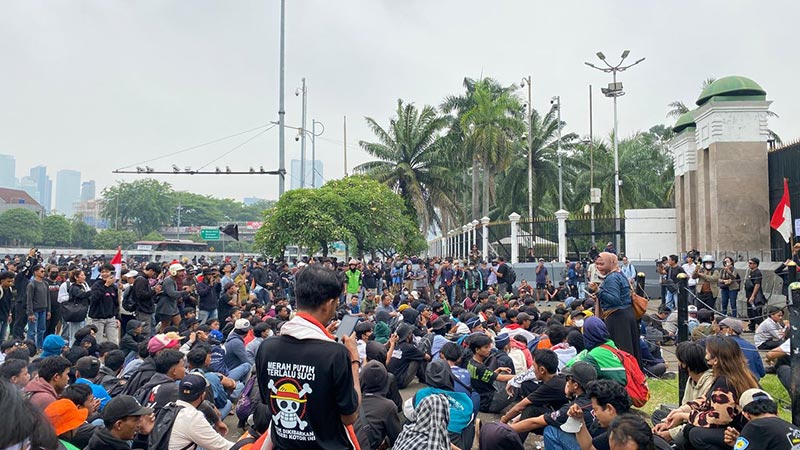
Then, on August 30, 2025, the anger of the masses turned into action, as crowds mobilized across the city, targeting those who they feel are betraying them.
They entered the residences like a storm, tearing through doors and windows, scattering possessions in their wake, and filling their arms with plundered treasures. The scenes were chaotic, and the combined value of the damaged property and stolen items could easily climb into the hundreds of thousands, if not millions of dollars, based on rough estimates.
And in this digital age, the internet played its pivotal role, amplifying the anger, coordinating the response, and ensuring that every moment of the unrest spread like wildfire across social media.
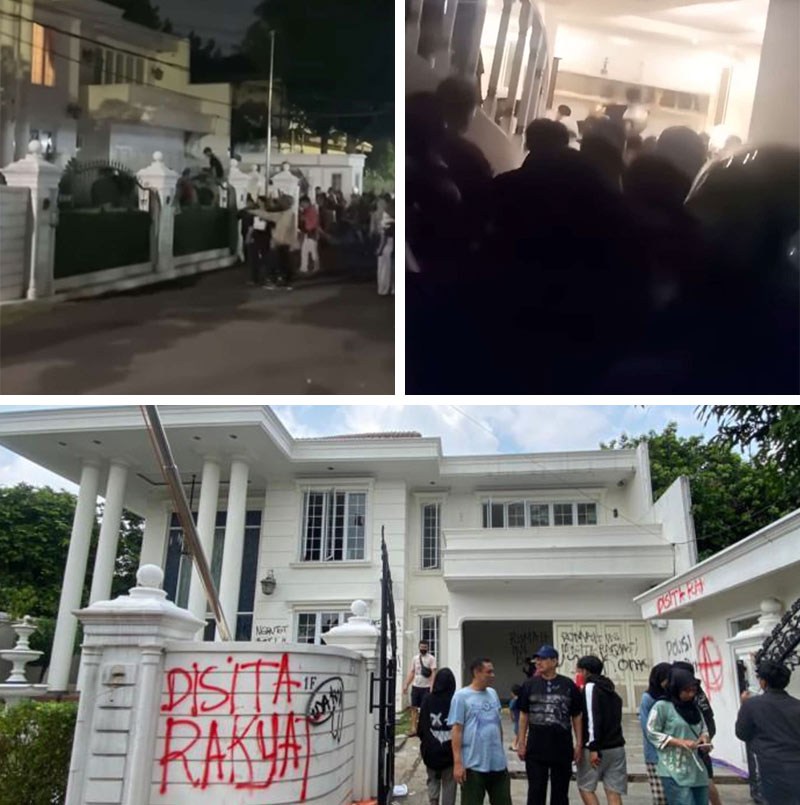
The first member of the parliament targeted was Ahmad Sahroni’s residence at Jalan Swasembada Timur XXII Number 52, Kebon Bawang, Tanjung Priok, North Jakarta.
The house, located at a narrow road, became a stage for an almost cinematic chaos: protesters targeted not only his home but the symbols of his wealth he frequently shared on his Instagram account.
From the moment they broke down the front gates, they smashed Sahroni's vehicles, including a Tesla Model X75D and Lexus RX450h+. They then continued destroying his Ford Mustang and Porsche 356. Looters then entered the house, smashed the windows, and took everything they can get their hands on.
Prized items like Sahroni's iconic life-sized Iron Man statue, a 2023 Formula 1 Red Bull Racing RB19 miniature, his collection of expensive watches, branded handbags, and more, were all raided. Looters also got their hands on personal items, which they then mocked and made fun of. They include: his boxers, many women underwear, allegedly belonged to his wife, a box of pornographic DVDs, and more.
Personal memorabilia, like his old school report cards were rifled through by looters. One such card reportedly had all 6s (assuming a 1–10 grading scale, with 6 being one above passing grade), and it was found tossed among the chaos.
Some individuals were caught swimming in Sahroni’s private pool, while others distributed foreign currency, like SG$1,000 bills, among the crowd.
Even household items, like a piano, fans, air conditioning units, a bathtub, a water pump, a washing machine, Sony PS5, chairs, and pretty much everything else imaginable a family can have inside their homes, were either looted or vandalized.
As neighbors watched in disbelief, every moment of the ransacking was captured on cameras and instantly circulated across social media, magnifying the spectacle and amplifying outrage nationwide.
What pushed public anger through the roof was the allegation that Sahroni had fled to Singapore amidst the unrest he helped created.

The wave of fury was then carried on to Uya Kuya's residence in Duren Sawit, East Jakarta.
The house of the n Indonesian TV personality, magician, actor, and YouTuber was also ransacked, with looters taking everything, even a broomstick and his pet cat.
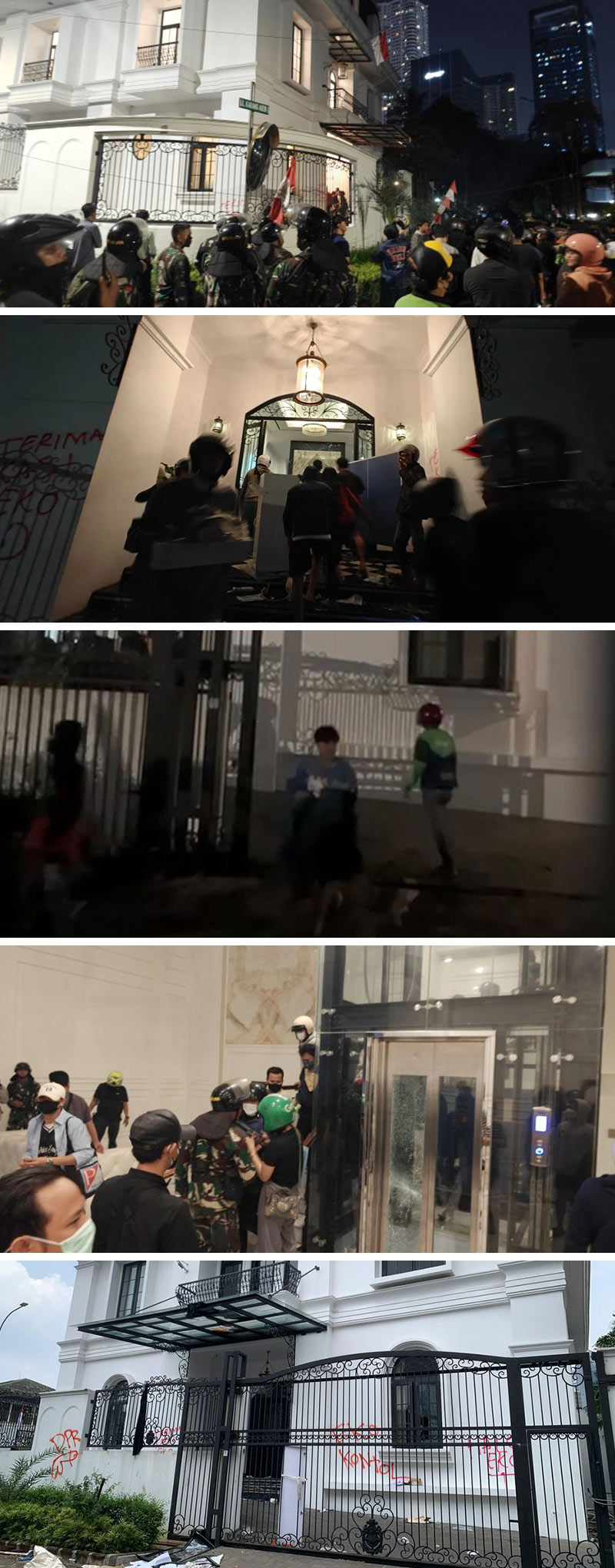
At Eko Patrio’s home in Karang Asem 1, Kuningan, Setiabudi, South Jakarta, looters also broke through the gates, raided appliances, electronics, footwear, and personal items.
But things at Eko Patrio' house was far less dramatic than at Uya Kuya's. Things looked more organized, less chaotic, and no anarchic behavior.
While people did enter the huge white-painted corner estate and took things from there, and also vandalized the property, the activity was more in an orderly manner, and far quieter.
Presumably, the presence of the Army and police was less about protecting the residence itself and more about safeguarding the neighborhood, which is an upscale district in Jakarta, home to embassies and many foreign dignitaries. Unable, or perhaps unwilling, to fully disperse the furious crowd, the security forces seemed to strike a bargain: the protesters could enter, as long as they kept the chaos contained.
In three waves, around 500 protesters entered the three-floor house and took whatever they can carry.
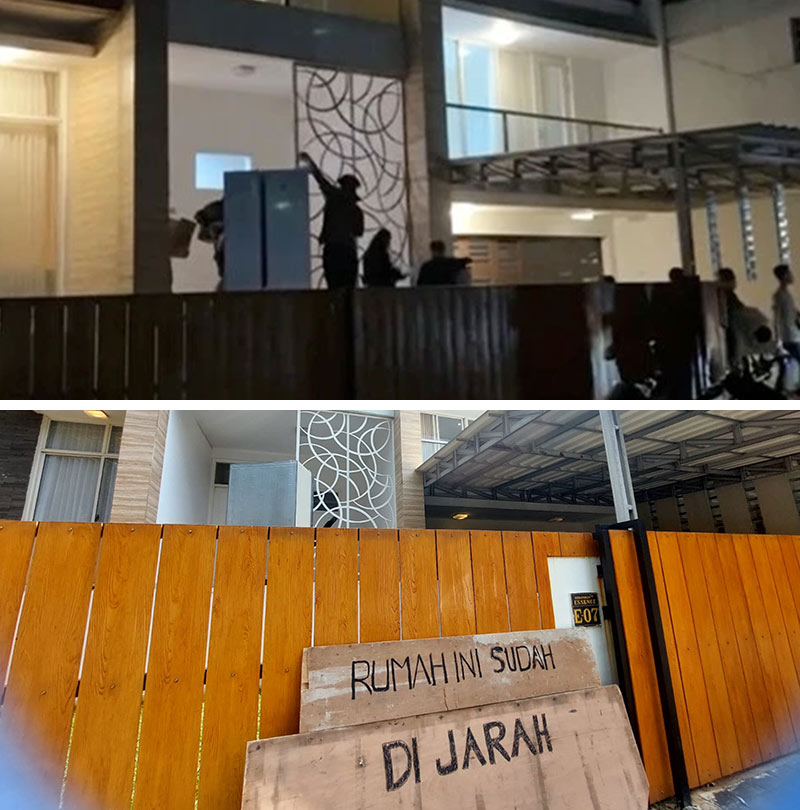
Then, early in the morning of August 31, the wave of unrest reached Nafa Urbach’s house in Kebayoran Essence E-07 Bintaro Sektor 7, Pondok Aren, South Tangerang, where security was quickly overwhelmed.
Things were less dramatic, too.
According to her neighbor in an interview at the next day, among the things the looters didn't take, was the refrigerator because it was too large and heavy for them to carry.
Sri Mulyani, the Minister of Finance, was also targeted.
The prominent architect of the nation's fiscal policies, became a focal point of this anger due to her role in implementing budget cuts to regional governments, which led to local authorities raising taxes drastically, further fueled public resentment.
Critics argued that these measures undermined regional autonomy and disproportionately affected the lower-income population.
Her home at Mandar, Bintaro Sektor 3A, South Tangerang, was also looted.
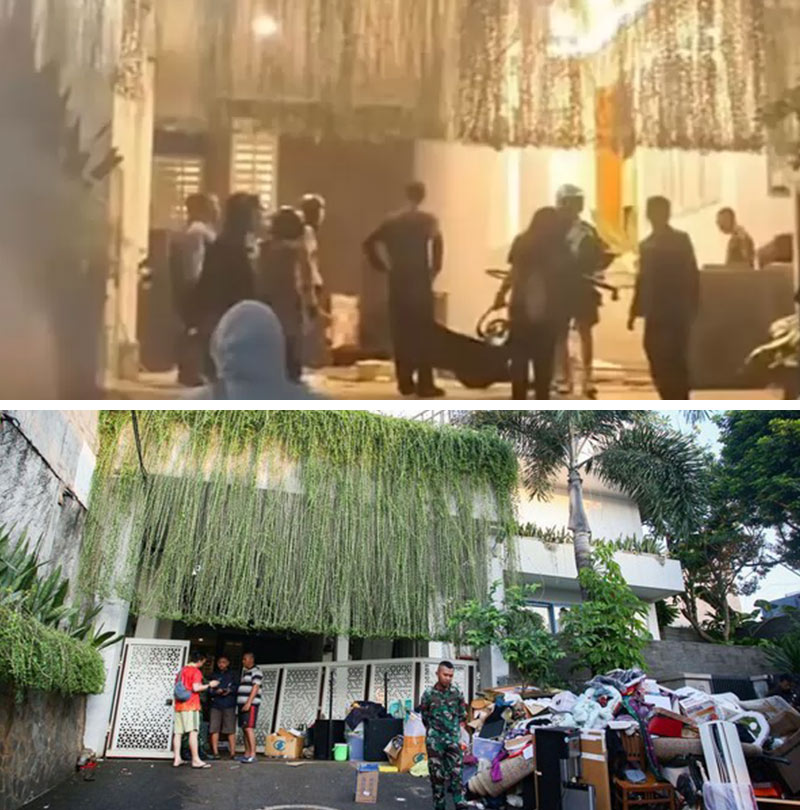
It's worth noting that when the mob arrived at the homes, the owners weren't anywhere in sight.
In incidents that could go down in history as the first time in Indonesia that civilians raided the homes of their representatives, sparked not only from the increased household allowance the parliament members asked, but also how they behaved and spoke to the public.
Ahmad Sahroni, a prominent member of Indonesia’s House of Representatives, ignited the tinder.
Amidst growing calls to curb the lavish allowances of lawmakers, he referred to protesters advocating for the dissolution of the DPR as “the dumbest people in the world,” suggesting that whoever wishes to dissolve the parliament is an "idiot." What was meant as a dismissive remark quickly became a rallying cry for the disenchanted.
Citizens saw it not just as arrogance, but as a symbol of a political class out of touch with everyday struggles.
As for Eko Patrio, the former comedian turned legislator, offered another spectacle. During a parliamentary session, he was caught on camera performing a lighthearted "aura farming" dance, a spontaneous moment following a performance by the Symphony Praditya Wiratama Orchestra. While Eko defended it as harmless fun, social media was merciless.
The video went viral, sparking debates over decorum, empathy, and the disconnect between lawmakers and citizens struggling through daily hardships.
Then came Nafa Urbach, a former actress and lawmaker. People were furious for her comments regarding the proposed allowance, arguing that commuting from her home in Bintaro to Jakarta was burdensome and that a housing allowance would compensate for the long, grueling journeys. While perhaps sincere from her perspective, the public saw it as tone-deaf.
Why should lawmakers receive perks for challenges ordinary citizens face without compensation?
Social media became both battlefield and amplifier.
Videos of looting, Eko’s dancing, and Sahroni’s infamous insult spread like wildfire. A lot of new hashtags were created and shot up in trend, new accounts created to parody and make fun of the representatives. Netizens expressed fury, ridicule, and disbelief at lawmakers’ perceived disconnect.
The internet ensured that no misstep went unnoticed, and public sentiment quickly coalesced into a digital wave that couldn’t be ignored.
The repercussions were swift and severe. Sahroni was stripped of his deputy chairman role in the third commission, reassigned as a regular parliamentarian, and recalled from his party representative position alongside Nafa Urbach. Eko Patrio, Uya Kuya, and Nafa Urbach issued public apologies.
But the trust of the populace had already been shattered. In mere days, a combination of careless words, viral antics, and tone-deaf justifications had rocked the Indonesian political landscape.
Puan Maharani, the Speaker of the House at the time, became an unavoidable figure in the public discourse.
Pernyataan Ketua DPR RI Puan Maharani, Jumat, 29 Agustus 2025.#DPRRI #Belasungkawa #DukaCita #KeadilanUntukRakyat #Demokrasi pic.twitter.com/0fI9kGBJq4
— DPR RI (@DPR_RI) August 29, 2025
Citizens expressed outrage not only at the individual lawmakers but also at the institution itself, seeing her leadership as emblematic of the disconnect between the House and the public.
Social media posts directly linked Puan to the decisions that triggered the unrest, from the controversial allowance increases to the failure to address the growing criticism of lawmakers’ behavior.
While Puan herself was not physically targeted like the others, her public image became intertwined with the chaos. Memes, hashtags, and viral videos portrayed her as both overseer and symbol of the House’s perceived arrogance, amplifying the narrative of accountability and fueling the digital storm that mirrored the real-world looting.
These high-profile individuals have apologized and even uploaded videos to the internet, yet to the citizens, no forgiveness was granted.
It's worth noting that the chaos in Jakarta was also caused by the death of Affan Kurniawan, a 21-year-old online motorcycle taxi driver from Bandar Lampung.
He tragically lost his life on August 28, 2025, during a protest in Jakarta. While delivering a food order near the Parliament building, he became entangled in a demonstration and was struck, and ran over by an Brimob (Mobile Brigade Corps) armored vehicle.
In a video captured by witnesses, the vehicle, which weighs several tons, continued moving after crashing into the unsuspecting Affan. In the hit-and-run incident amid the chaos, Affan succumbed to his injuries shortly thereafter. Affan was the primary breadwinner for his family of seven, including his parents and siblings, and had previously worked as a security guard before joining Gojek for more flexible hours.
His death ignited widespread outrage across Indonesia, fueling protests that had already been sparked by public discontent over lawmakers' lavish allowances amid economic hardships. In response, the government announced an investigation, and seven Brimob officers were detained pending further inquiry
Footage of Affan's death quickly circulated on social media, igniting widespread outrage and fueling further protests across the nation.
In the wake of his death, thousands of Indonesians took to the streets, demanding justice for Affan and accountability from the government, especially at the Mobile Brigade Corps Headquarters..
In response to the escalating protests and the role of social media in mobilizing demonstrators, the Indonesian government took decisive action to curb online activities.
For its part, ByteDance's TikTok announced the temporary suspension of its live-streaming feature in Indonesia, citing "increasing violence in protests" as the primary reason for its proactive move.
The company stated that the suspension was a precautionary measure to maintain safety on the platform and prevent the spread of harmful content.
Further reading: 'Revolusi Rakyat Indonesia,' The Symbolic Call For Accountability, And The Digital Spark Behind The Mass Movement
This saga is more than scandal. It has become a stark reminder of the power of words, actions, and the collective voice of the people.
Politicians, entertainers, and public figures are no longer insulated from public scrutiny. The internet has become a relentless mirror reflecting even the smallest misjudgments. For lawmakers, it’s a cautionary tale in humility, empathy, and connection to the very citizens they serve.
The events of August 2025 are now etched in the nation’s memory: a dance, an insult, a commuting complaint, looted homes, and a digital storm that swept across the archipelago.
A lot of people in Indonesian stayed awake at the night, following every progress the raiders took, as videos of them looting their representatives were widely shared. Every click, every share, became a spark fueling the digital wildfire.
In this age, privilege and power cannot exist without accountability, and the public is watching, always.






















































































































































































































































































