
As AI systems continue to expand into everyday workflows, classrooms, and professional environments, the question of how people actually learn to work with them has become more pressing.
Tools that once felt experimental are now routine for drafting documents, analyzing data, generating ideas, and even supporting teaching and research. Yet the speed of improvement means that yesterday’s techniques can quickly lose relevance, leaving many users either underusing the technology or relying on it without clear judgment about its limits.
This shift has prompted organizations and educators to look beyond simple tutorials that list features.
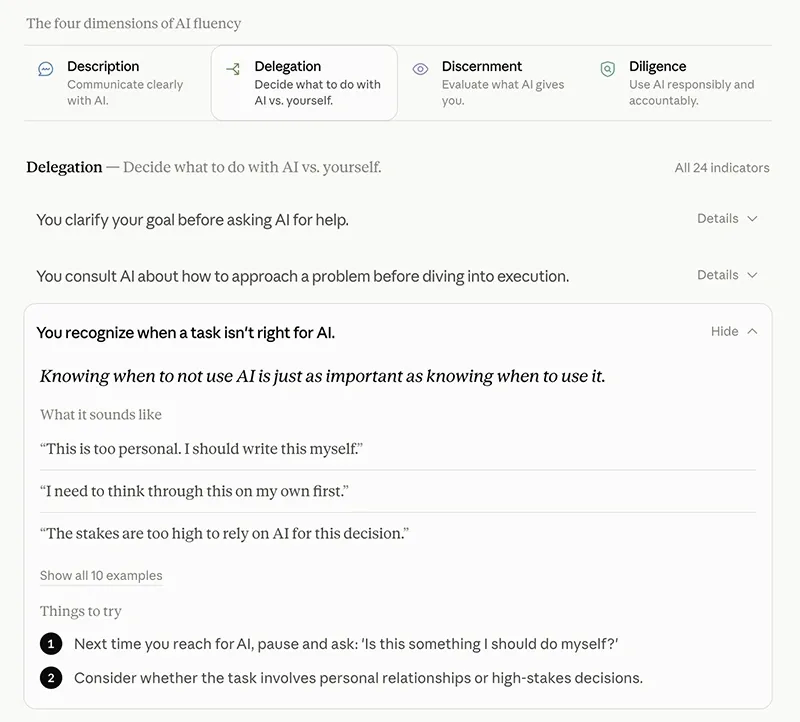
The focus is increasingly on building durable habits: deciding when an AI system is the right tool, describing tasks with enough clarity to get useful results, evaluating outputs carefully, and taking responsibility for how those outputs are used.
Without such foundations, the risk is that people either hand over too much or remain stuck in basic query-and-response patterns that capture only a fraction of the potential value.
Anthropic has formalized its own thinking on these issues through 'Claude Academy,' a free collection of courses, tutorials, and use-case materials.
Available at academy.claude.com, the platform draws directly from the company's internal practices for onboarding and continuous learning.
New employees at Anthropic begin with the 4D AI Fluency Framework, which covers Delegation (choosing what to assign to an AI system and what to keep), Description (communicating goals effectively), Discernment (assessing the quality and reliability of results), and Diligence (maintaining responsibility and ethical awareness).
Staff also learn to recognize common error patterns so they can review AI-generated work more efficiently, and they participate in ongoing "ever-boarding" sessions that explore both capabilities and limitations as the technology evolves.
The same principles shape the public materials.
Rather than centering product features that may change quickly, Claude Academy emphasizes mindsets that remain useful across model updates.
One recurring idea is that today's AI is the least capable version a person will ever use, which encourages continuous experimentation.
Another is the need to verify results in proportion to the stakes involved.
Materials are organized around real problems people face at work or in learning, not around isolated commands.
Learners practice intentional decisions about task boundaries, such as using an AI system to draft certain sections of a document while retaining control over others, and they consider questions of disclosure when AI has contributed to finished work.
Courses range from introductory overviews of AI capabilities and limitations to more specialized tracks for students, educators, nonprofit staff, and builders.
Completing modules can earn badges, and the platform offers recommendations based on a user's interests and progress. A companion skill allows Claude itself to suggest relevant paths.
The content is designed to be product-agnostic where possible, so the core ideas transfer even if someone later works with other systems.
Anthropic notes that effective AI collaboration can itself accelerate learning on other topics, turning the tool into a partner for diagrams, interactive explanations, or structured practice rather than a simple answer machine.
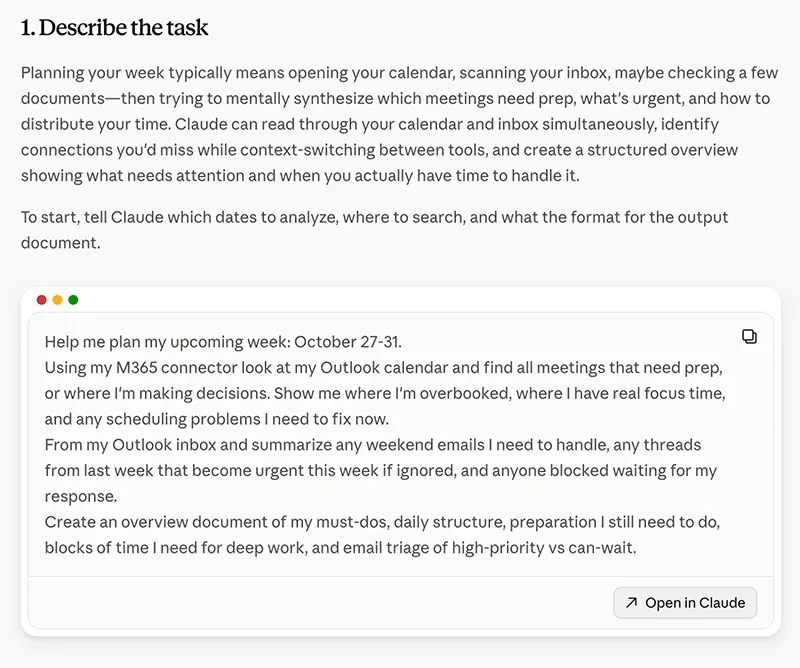
The launch sits within a wider set of education efforts by the company, including partnerships with teacher networks, research on how students and faculty actually use the technology, and features such as learning modes that prioritize guided questioning over direct solutions.
Reactions on social platforms have highlighted the practical value of free, structured pathways that meet users at different starting points, from those still figuring out the basics to those already integrating the tools into daily routines.
Some observers have pointed to the potential for certificates and shared mental models to support broader organizational adoption.
The introduction of this feature has a clear underlying premise: as AI systems grow more capable, the ability to work with them intentionally becomes a foundational skill rather than an optional add-on.
Claude Academy represents one attempt to make that skill more accessible at scale, grounded in the practices of a company that has treated internal fluency as essential from the first day of employment.

















































































































































































































































































