
 On an event on Thursday, October 16th, 2014, Apple offered few surprises. But the company revealed plenty of new hardware and software.
The company filled out its product line with two new iPads, a 27-inch iMac with Retina display, OS X Yosemite, and not to mention, Apple Pay.
2014 is seen as an iPhone-centered year. The event at Apple's headquarter had no "shocking surprises" the company is known for. But the lineup was strong.
Visitors had gathered around the company's Cupertino campus early in the morning. Apple's employees that wore teal shirts with a small Apple logo directed guests to a breakfast of strata, pastries, coffee and green juice, with the visitors grouping on brown grass due to California's drought.
Apple remained discreet about the purpose of the gathering, with signs billing just a "special event."
CEO Tim Cook opened the event by touting strong reception to the new iPhone 6 and 6 Plus.
New iPads
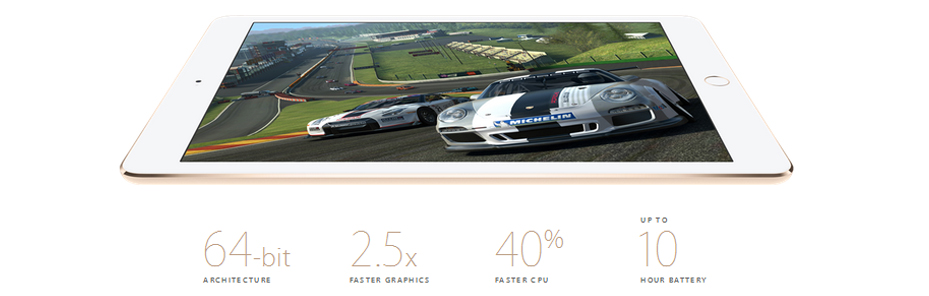
Apple's iPad Air is the thinner version of iPad. At the event Apple introduced a refreshed look with a iPad Air 2 that is even thinner by 18 percent at 6.1 millimetres. The device's rear camera is increased to 8 MP, matching the cameras on iPhones.
Similar feature from iPhones that are borrowed includes the ability to take burst shots and slow-motion video.
"What do you do when you make the best tablet in the world? How do you make it better?" asked Tim Cook asked before airing a video showing off the new iPad Air 2, which emphasized the thinness of the tablet.
By making the device thinner, the new iPad is the world's thinnest tablet. The device also includes a fingerprint-scanning Touch ID system, a new anti-reflective coating, and a new A8X chip made especially for the iPad Air, which will increase speed from its predecessor by 40 percent, making it 180 times faster than the original iPad. Battery life will also increase to 10 hours.
The tablet will be offered in gold, a color that has been a popular choice on iPhones.
Apple's Marketing Executive Phil Schiller also briefly mentioned the new iPad Mini 3, which receives similar upgrades to the iPad Air 2, including Touch ID. The new Mini features a fourth-generation Intel Core processor as well as upgraded Wi-Fi and graphic abilities.
The technology giant had got a lot of revenue from iPhones alone, which account for more than half of the company's income. By contrast, sales of iPads have not been as good. Through the first half of 2014, Apple had shipped 29.6 million iPads, a 13 percent drop from the same time last year. Sales of the tablet are down 9 percent for the year, but Apple still leads in market share, with 26.9 percent, according to market researcher IDC.
Since the first iPad's release, more than 225 million have been sold. But unlike mobile phones, millions of people rush to upgrade every couple of years or so. On the other hand, iPads have not changed as significantly and many iPad owners seem to prefer using the models they already have.
The company has been facing competition from cheaper tablets running Google's Android operating system, such as Samsung Galaxy Tab and Google Nexus. Furthermore, Google announced Android Lollipop a day prior the event. Adding to the competition is Microsoft Surface.
Besides the competition with Google's devices, there has been an overall slowdown in tablet demand. In 2014, research firm Gartner projected worldwide shipments of 229 million tablets. Although that's up 11 percent compared with 2013, it's far less than the 55 percent growth seen last year and the more than doubling in sales in 2012.
Despite the trouble, Apple is still the leader in tablets in 2014, with 37 percent of all households owning an iPad in the first quarter, according to a survey.
The company also announced that it was making earlier versions of its devices "more affordable."
New iMac

At the event, Apple also unveiled new iMacs with a sharper Retina display,. The company says the new iMacs have seven times the pixels found on standard high-definition television sets.
"There has never been a desktop display like this," Schiller said when he introduced the new 27-inch, 14.7 million pixels iMac with "5K Retina" display.
Beside being sharper than high-definition televisions, the new iMac's screen is also 67 percent sharper than the new 4K super-high-definition televisions. Despite having a crisp display, Apple said that the new iMac uses 3 percent less energy than the previous version.
Schiller also showed off a new Mac Mini, a popular beginner Mac that had not been updated since 2012. The new Mac Mini is also upgraded with a fourth-generation Intel Core processor, Intel Iris and HD graphics 5000. The device also receives a price cut.
OS X Yosemite

Apple also released its new Yosemite operating system for Macs as a free download. The Mac update includes cosmetic changes and added functionality, such as the ability to make phone calls with an iPhone nearby and a one-stop search tool for both locally stored documents and online resources.
Craig Federighi, Apple's Senior Vice President of Software Engineering at Apple, discusses the new Mac operating system update OS X Yosemite, which is available as a free download starting the day of the event.
Apple has been releasing Mac updates more frequently, in part to time them with annual changes to the iOS system for iPhones and iPads. Many of the new Mac features will complement what's found in iOS 8, including the ability to start tasks such as email on one device and finish on another.
During the OS demo, Federighi made a phone call to Stephen Colbert from his Mac. The call was actually being made through a nearby iPhone. He also used Apple smartwatch as a remote control to control a Mac presentation being projected onto a big-screen set via Apple TV.
Federighi demoed new features of iOS 8 and the updated Yosemite, calling them the "most advanced operating system on the planet."
As an addition, Federighi said the popular "Camera Roll" feature will be restored in iOS 8.1, and showed off redesigned software that will launch along with Yosemite, which launches for free in the App Store.
Apple Pay
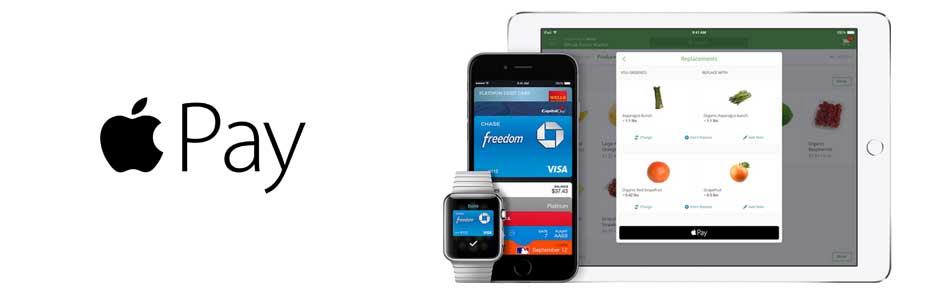
Apple has already announced its new payments system, Apple Pay, despite its iPhones aren't featured with it out of the box.
Apple CEO Tim Cook says that Apple Pay, is the company's new system for using iPhones to make credit and debit card payments at retail stores Apple has already convinced some of the biggest credit card companies and banks to support Apple Pay including Visa, MasterCard, American Express, and banks like Bank of America, Capital One, Chase, Citi, and Wells Fargo.
With Apple Pay, iPhone 6 and 6 Plus owners will be able to make payments by holding their phone near a card reader. The new iPhones have a wireless chip to transmit the information needed to complete the transaction.
The new iPad Air 2 will be able to make browser transactions, but not payments at retail stores.
"We think (Apple Pay) is going to be profound," Cook said. "It's going to change the way we pay for things."
Despite people won't be switching from plastic credit cards to Apple Pay anytime soon, the feature is very much appraised. "Apple Pay is the thing that is freaking out all the financial services companies right now," said Marc Andreessen, co-founder of Andreessen Horowitz and board member for companies like Facebook and Hewlett-Packard.
Apple Watch

At the event, Apple also said that its hoping to have a strong app store for Apple Watch in place when the company debuts it. Having heavy rivals from Android and others, Apple is confident that its wearables will have better market grip than others because its rivals are still suffering from not having many useful apps from the start.
To do that, Cook mentioned WatchKit, software for developers hoping to create apps for the new Apple smartwatch.