
Apps are at the central of smartphones, and it's almost impossible for users to literally live without them. Or can they?
Modern smartphones are pretty much a sophisticated piece of machinery packed with lots of features. But what make them really useful, is because they have apps installed. However, there is one big problem: native apps can take up too much storage space..
This is where Progressive Web Apps (PWAs) can come useful.
PWAs are web-based applications that can mimic some of the functionality of native apps, but take minimal storage space on devices. Because they're so small in size, they're great alternatives to installing apps users use less frequently.
And since discovering PWAs can be difficult, that's where Appscope comes in.
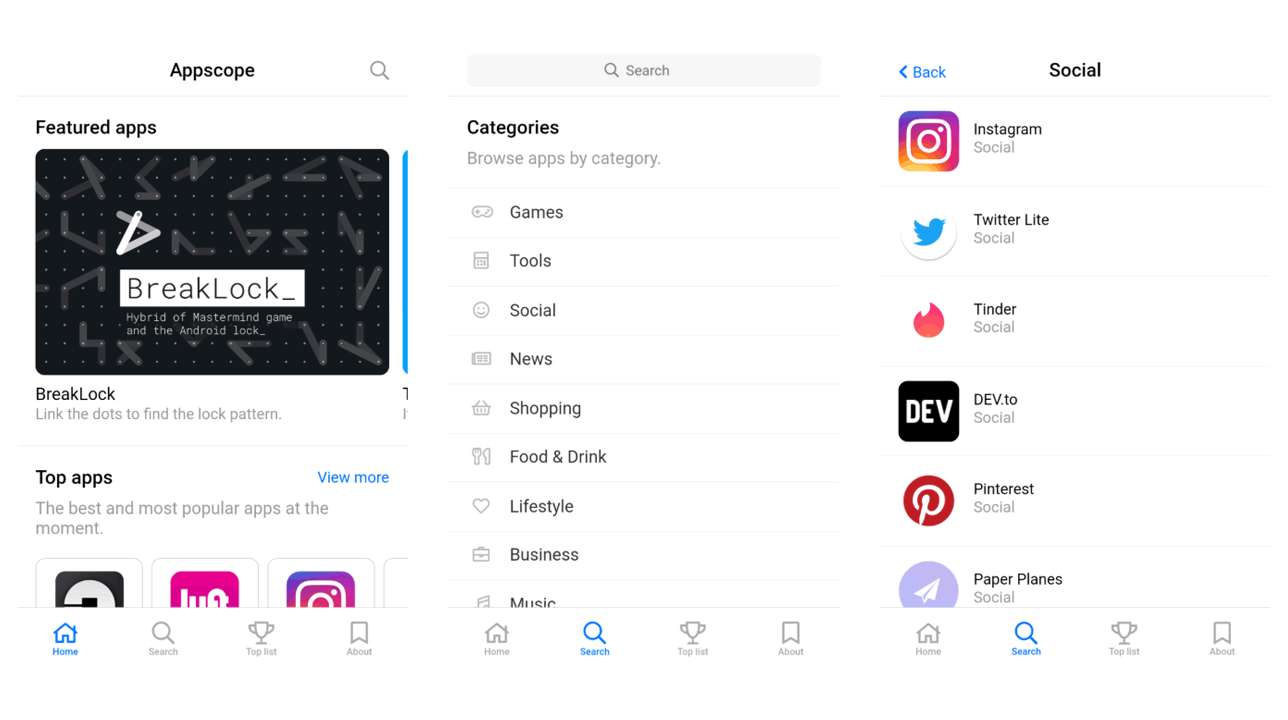
Appscope describe itself as an "app store for PWAs." It's not really an 'app store', but more like a place that acts like an 'app store' but works on mobile browsers.
Appscope is more like a directory for PWAs, with interface which gives native experience of what a regular app store should be. It's complete with categories, featured apps, a search function, short descriptions for 'apps', screenshots, and some technical information for its listings.
The big difference is that users don't use it to buy things like they do on regular 'app store'.
Requires no installation, Appscope itself is PWA. Users can use it to find other PWAs, like for Instagram and Twitter, other apps and tools, simple games, educational resources, and many more.
Because the 'apps' there are PWAs, users on mobile can simply add a shortcut of the PWAs to their homescreen for easy access later on. For users on desktop, they can use the apps like usual web apps directly inside their web browser.
If apps have more features and capabilities, why would people bother using PWAs? Simple, PWAs are much smaller in size. Native apps not only take up space when users install them, but they also store data locally, which can eat into the users' limited storage. For those who are low on storage, or are using an older device model, PWAs are great alternatives to native apps that get larger in size in every update.
PWAs are also quicker to launch, safer to use due to their limited permission requirements, and can also work offline.
The technology combines the open standards of the web offered by modern browsers to provide benefits of a rich mobile experience, and maximum user experience of native apps.
The 'PWA' terms was first coined in 2015 by designer Frances Berriman and Google Chrome engineer Alex Russell. It's described as apps which take advantage of features on modern browsers, including service workers and web app manifests, to work on users' native operating system
As for Appscope, it's only one out a few directories which offer listings of PWAs, but it's considered the first to be stylish and really app-like.






















































































































































































































































































