Large language models (LLMs) and the image generation systems derived from them operate by analyzing vast collections of text and visual data to learn statistical relationships.
Rather than perceiving the world directly, these systems generate images by drawing on patterns acquired during training. And here, 'Ideogram 4.0' is a text-to-image generation model that employs a flow-matching approach built on a fully single-stream Diffusion Transformer architecture.
The model contains 9.3 billion parameters and was trained entirely from scratch as a foundation model rather than being fine-tuned or distilled from existing checkpoints.
It processes text and image tokens within a unified framework and incorporates a vision-language component based on Qwen3-VL-8B-Instruct as its text encoder, utilizing hidden states from 13 intermediate layers to improve prompt understanding.
The model generates images from text prompts at resolutions ranging from 256 to 2048 pixels in multiples of 16 and supports aspect ratios up to 6:1. It demonstrates strong multilingual text rendering capabilities, accurately producing signage, logos, captions, watermarks, and multi-line passages directly within generated images.
Ideogram 4.0 is the #1 open-weight text-to-image model in the world on @DesignArena's third-party leaderboard. We're ahead of every foundation model except closed models from OpenAI and Google.
Frontier quality with open weights, full customization, and data privacy. pic.twitter.com/yc7IzUEzHp— Ideogram (@ideogram_ai) June 3, 2026
Ideogram 4.0 also provides extensive control over composition through structured prompting.
Features include bounding-box-based layout specification, hexadecimal color palette control, typography adjustments, lighting directives, and explicit spatial relationships between elements.
Prompts can be supplied in a native JSON format for precise placement and composition, while a built-in conversion system can transform natural-language instructions into structured layouts. The model further employs dual-branch classifier-free guidance to independently balance prompt adherence and image quality.
In independent evaluations, Ideogram 4.0 ranks among the strongest image-generation models available with open weights.
It leads open-weight benchmarks such as Design Arena, excelling in typography, layout control, spatial reasoning, object fidelity, prompt alignment, multilingual support, and native 2K image generation, while remaining competitive in human preference evaluations for graphic design and photography.
We trained Ideogram 4.0 with bounding boxes tied to region descriptions — teaching the model where every object, text region, and layout element belongs.
Richer supervision → the model learns structure faster and understands it better → you can prompt with precise bounding-box… pic.twitter.com/ck2zDs58qJ— Ideogram (@ideogram_ai) June 3, 2026
Compared with other open-weight models, including several with larger parameter counts, Ideogram 4.0 delivers particularly strong performance in text rendering, typography, and design-oriented tasks.
It also demonstrates advantages over proprietary systems such as Google Nano Banana 2, xAI Grok Imagine 1.0 and OpenAI ChatGPT Images 2.0 in text integration and compositional precision, although some closed-source models continue to achieve higher preference scores in broader photographic evaluations.
The model is available in NF4 and FP8 quantized formats under a non-commercial license, enabling local inference and fine-tuning on consumer hardware, including systems equipped with a single 24 GB GPU. NF4 is optimized for CUDA-compatible hardware, while FP8 offers broader compatibility across different platforms.
The availability of open weights allows users to run, customize, and integrate the model into private workflows without per-generation costs or dependence on external cloud services once suitable hardware is available.
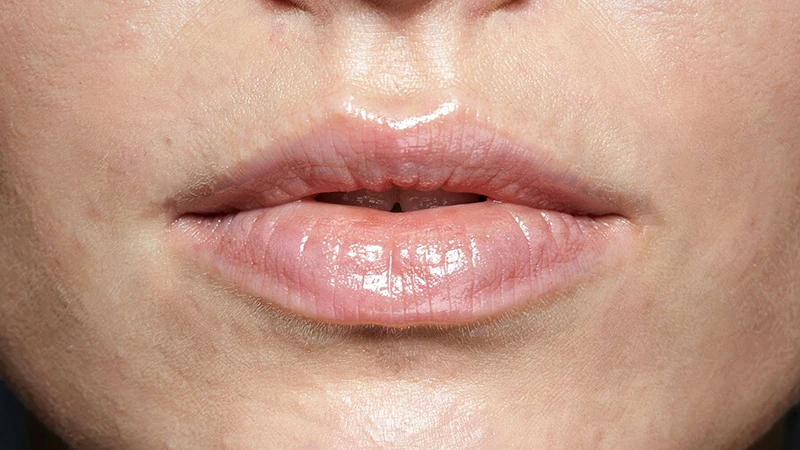
Ideogram 4.0 renders the fine texture and natural imperfections that separate a real photograph from an AI-generated image. All in native 2K. pic.twitter.com/JOopHL4PeK
— Ideogram (@ideogram_ai) June 3, 2026
This approach contrasts with proprietary image-generation platforms that are accessible only through hosted applications or APIs.
While closed systems often provide polished user experiences, integrated editing tools, and minimal setup requirements, they typically impose usage limits, subscription fees, content restrictions, and limited control over the underlying model.
By emphasizing local deployment, structured prompting, and user customization, Ideogram 4.0 offers an alternative focused on flexibility, privacy, and reproducibility.
We believe openness drives innovation, and we're excited to work with developers, researchers, and enterprises to customize Ideogram 4.0 and unlock the new frontier of generative media and design.
github: https://t.co/S7QEOaKoho
Learn more about our technical details here:…— Ideogram (@ideogram_ai) June 3, 2026
The combination of these capabilities positions Ideogram 4.0 as a practical tool for design, prototyping, research, and creative experimentation.
Its emphasis on controllability, accurate text generation, and open-weight accessibility illustrates how advances in image-generation architectures can be made available for direct use while operating within defined licensing constraints.

















































































































































































































































































