 Facebook is enduring criticisms about its real name policy. Many people and its users are complaining about how they should provide their real identity to the social network. After a year under pressure and several changes, Facebook is making a major change to how it enforces the policy.
On December 15th, 2015, Facebook users are noticing a new system for reporting fake names along with a new system to to respond to such reports. The system addresses major concerns the company had, such as support channels for LGBTQ, non-Western names, stalking and abuse.
The system is first implemented in the U.S. before being expanded to other parts of the globe based on the feedback on its initial rollout.
The system was first described in October when the company announced its ways to solve the controversial real name policy. it was designed to address the majority of false reports up front so human intervention should be minimal so the people can focus on complaints that do get through.
"We recognize that it's also important that this policy works for everyone," the company wrote in its post. "Especially for communities who are marginalized or face discrimination."
The new system requires new approach for users to report if they see someone using fake names. When someone reports using the system, the system requires more information to be filed. Once the the information are presented, the user in question will be notified, and will have a week to respond before Facebook takes action.
The two new tools aim to make it easier why users need to use an alternate name, and makes it harder to report fake names in order to prevent abuse.
Before, it was difficult, and virtually impossible to change a name on an account after it has been assigned. The two tools are aiming to guide users through the process and explaining the situation. Users are also able to use more documents to verify their name and have the ability to keep access to their account for seven days while waiting for verification.
Similar to the old system but with improvement, the new system adds a Name Verification step. This shows the reported users how they should change their names, and before making it go live, they will see now their names will appear before any changes are made.
In order to face any circumstances and report peaks, Facebook is assembling a specialized support team that is devoting themselves to help users throughout the process, providing personal assistance and attention. The once was mechanical procedure is made more human.
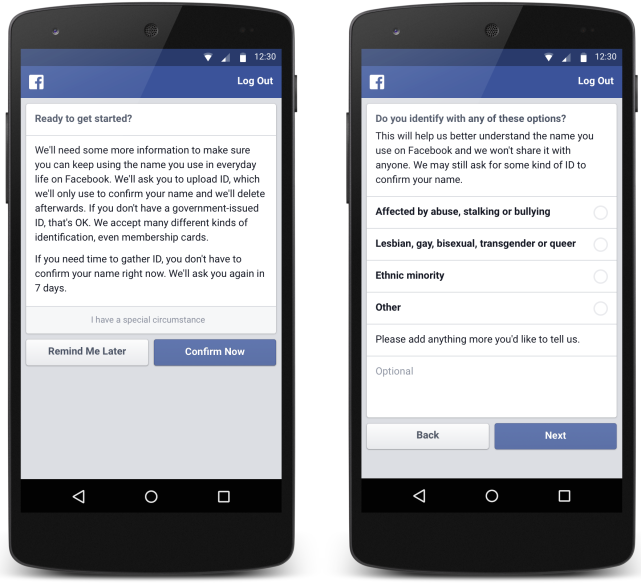
The new system is Facebook' way to address the issues the company had when it comes to its real name policy. However, the new system isn't reflecting any changes to the policy itself. Users are still required to use the same name they have in real life.
When announcing the changes, Facebook made it clear that "we're firmly committed to this policy, and it is not changing."
“However, after hearing feedback from our community, we recognize that it's also important that this policy works for everyone, especially for communities who are marginalized or face discrimination," said Facebook's VP Justin Osofsky and Product Manager Todd Gage in a blog post.
Among the minor changes are how Facebook is delivering its message. For example, before, Facebook asks for a user's legal name. But with the new system, Facebook asks "the name you use in real life". This approach is more friendly and less annoying to some people. But because the verification requires third-party documents to prove someone's real name, there is still a difference between the facts and the practice.
But still, Facebook is hoping to create more flexibility in the future, seeking out new forms of IDs that the system can use to verify names without opening the doors to abusers.
"We want to create the best experience that we can for everyone," said Facebook, "and we will continue to make improvements until everyone can use the name that their friends and family know them by."
Facebook is still betting on it, and with the policy. The company hopes that this can help users and solve any future concerns about the said policy, and if necessary, to do more improvement in moments to come.
"Throughout this process, we will continue our ongoing conversations with the Facebook community so they can share their thoughts on improvements they'd like to see," said Facebook in its official post.
With the change, Facebook is not discriminating, or putting someone's opinion over others. It's just trying to be discerning. The new system is not a change to its policy, it's just a workaround to solve the issue.
Real Name and Human Rights on the Internet
The internet is widely popular and is used by almost everyone. From those coming from traditional computers to mobile devices, the scope of the web is widening. As people on the internet are literally strangers, privacy is more than just a concern. Especially when it comes to personal data that include real names.
Facebook has faced numerous criticisms from human right groups, and from the number of fake accounts flagging incidents. The most notable moment was then the company disabled the accounts of a number of San Francisco's Drag Queens back in 2014. Other high-profiled accounts that were suspended further accelerate the public's attention, bringing complaints to the social network.
Before designing and implementing the new system, Facebook consulted a number of gay right groups, including the Human Rights Campaign and GLAAD.
The new change is Facebook's hope to eliminate the issues once and for all by bringing something to Facebook that will benefit both parties. But no matter the outcome will be, adding human oversight to what was before automated process, should give the social network a chance to resolve any future issues.
While real name is one of the aspects of online privacy, Facebook is also prone for cases such as stalking and abuse. With the most users than other online services, Facebook's influence has gone worldwide. And because almost everyone on the planet has at least one Facebook account, everyone can be the unsuspecting targets by cyber bullies.
On Facebook, cyber stalking and abuse had less press coverage. But the number is high. Facebook's real name policy has brought some of those cyber bullying to real-life stalkers and abusers.

















































































































































































































































































