
Technology is made to aid humans in doing what's necessary, and that includes competing. The 2016's Summer Olympics is taking place in Rio de Janeiro, Brazil, on August 5-21, and Google wants to be there.
Just a couple days after Google-owned Waze announced updates in anticipation of the Olympics, Google unveiled its own will to participate. And not a moment too soon, Google has all of Rio's venues covered, added some improvements, and introduced the Olympics theme and features across its various products.
More than 6 million people are living in Rio. With the game, addition of 10,000 athletes, 500,000 travelers, and tens of thousands of volunteers are entering the city. Google notes that mapping the busy city has proven to be a difficult task. But in the sake of the Olympics, Google put "the finishing touches on some first-prize-worthy updates to help tourists and Rio residents alike get around 'the Marvelous City' with ease."
First and foremost, Google is working in tandem with the city's government to maintain the most up-to-date traffic, road closure, and detour information possible on Maps. The next is to map the stadiums and arenas complete with locations for restrooms, concession stands, info desks and ATMs.
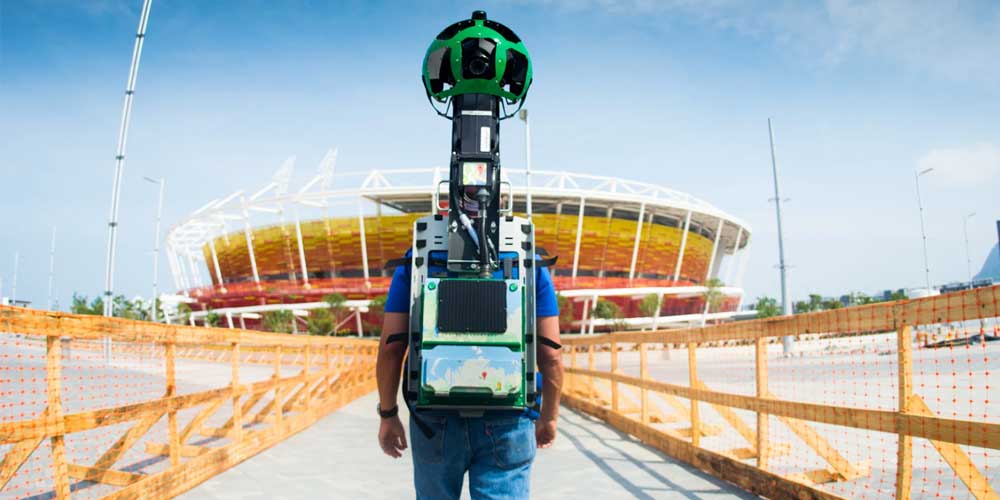
To make all of these happen, as a start, Google's Rio-based employees walked through all of the Olympic venues carrying those backpacks that are topped with the all-seeing eye. The images taken will be then stitched to create a 360-degrees view on Maps.
Real-time transit info for the Brazilian city is also added to Maps.
The company also worked with the local Grupo Cultural AfroReggae organization where the two spent their time mapping a couple dozen of the favelas using Google Street View technology. With the organization, Google has released a new project called "Tá No Mapa" or "It's On the Map." The company said that 150 favelas residents that were trained on digital mapping, has helped more than 3,000 local businesses on be on the map.
"Not only does this allow locals to find businesses like Bar do David - an award-winning restaurant in the favela Chapeu Mangueira - it's helped some local residents get a mailing address for the first time," said Google.
Google promises that its navigation tool "can be your real-world assistant" no matter what method of transportation users are taking.
In addition to help visitors in getting to their desired location, Google also updates Maps for Rio to help people explore the Brazilian city better. Taping on the "Explore food & drinks near you" which is located at the bottom of Maps, will reveal dining and drinking spots around the user's location.
It isn't Google Maps if it's not accessible wherever you are. For those that can't (or don't want to) make it to Rio to enjoy the Summer Olympics, Google is bringing Maps with the latest refresh of the Street View imagery in the city. Virtual travelers can get a closer look at the stadium and other Rio's highlights.
And not just Maps and Street View, Google also updates Search, YouTube and Google Trends to get their own Olympic love.
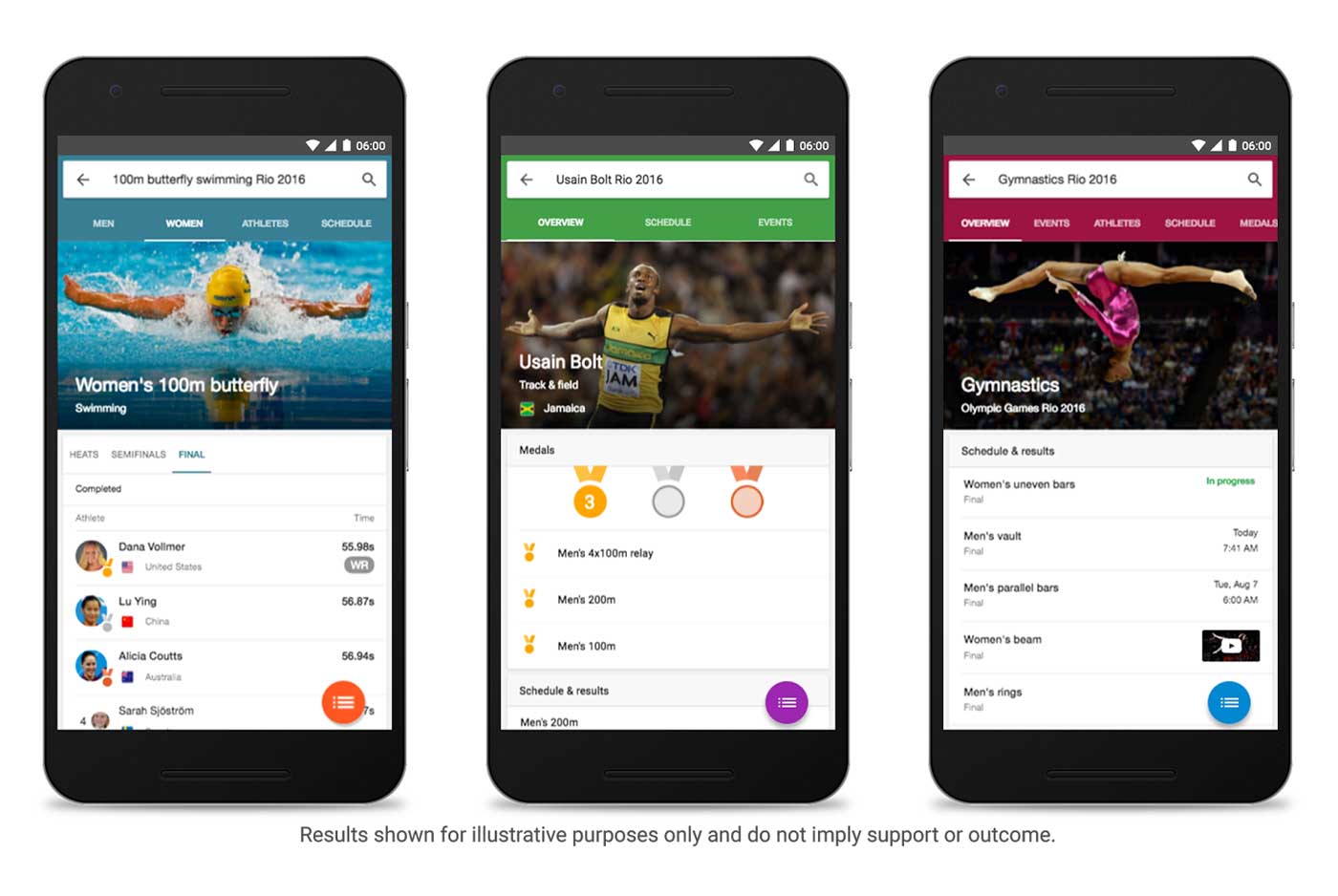
Its Search includes event schedule, medal counts, athlete information on its results page. Furthermore, TV schedules are also available in more than 30 countries around the world. Google's mobile app for Android and iOS can also show notification about top events and medal wins.
For YouTube, Google has partnered with broadcasters in over 60 countries. As a result, video highlights are available right on the video-streaming site, as well as directly through Google Search. To make the event more personal to viewers, YouTube is also sending its top 14 creators to Rio to livestream and take 360-degree videos on the events.
New technologies that are either newly introduced or updated from the former, are included in the Olympics.
From LED lap counters to helping swimmers remember what lap they're on, Protective Scoring System to count combat strikes like in Tae Kwon Do, canoeing GPS, sensors that can identify exact placement of an arrow in archery, to bringing remote viewers right into the action with virtual reality tours and of course, drones to get much more angles like never before.
With mobile devices in more hands, tech in the 2016's games are providing both aid and a closer personal look of talented athletes in their attempt to make history.
With Google having them all in the screen, people around the world can enjoy the game right in the comfort of their home. And what's good for users, should also be good to Google's business.






















































































































































































































































































