
Google's Material Design has been a cornerstone in shaping intuitive and visually appealing digital experiences since its inception in 2014.
Evolving through iterations like Material Design 2 and Material You, Google has continually refined its design language to meet user needs. And this time, Google unveils 'Material 3 Expressive,' which marks a significant leap towards more personalized and emotionally resonant user interfaces.
According to Google, Material 3 Expressive builds upon the foundations of Material You, emphasizing personalization and dynamic aesthetics.
This update introduces vibrant color schemes, bold typography, and fluid animations, aiming to create interfaces that are not only functional but also emotionally engaging.
Material Design just leveled up! M3 Expressive is here to help you build more engaging, easy-to-use products. Dive into the details → https://t.co/802u9Zb2cD#TheAndroidShow #MaterialDesign pic.twitter.com/lPtIMJaXCQ
— Google Design (@GoogleDesign) May 13, 2025
This evolution introduces:
- Dynamic Color Palettes: Enhanced theming options adapt to user preferences, offering richer and more nuanced color schemes that reflect personal styles.
- Responsive Typography: A refined type scale improves readability and hierarchy, ensuring content is accessible across various devices.
- Fluid Animations: Natural, springy animations provide a sense of continuity and responsiveness, enhancing user interaction.
- Enhanced UI Components: New components like split buttons, FAB menus, and toolbars offer developers more tools to create engaging interfaces.
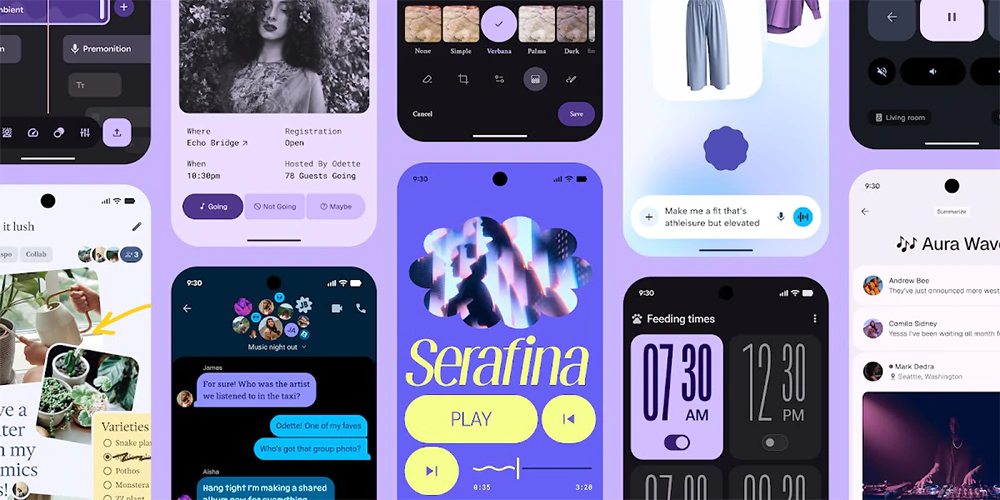
These design elements are designed to make digital interactions more intuitive and delightful, catering to a diverse user base.
Material 3 Expressive is the culmination of extensive research, including 46 global studies and feedback from over 18,000 participants. The findings revealed that expressive interfaces not only enhance aesthetic appeal but also improve usability, with users identifying key UI elements up to four times faster in expressive layouts.
The rollout of Material 3 Expressive begins with Android 16 on Pixel devices, extending to Wear OS 6, ensuring a cohesive and immersive experience across smartphones and smartwatches.
Developers can leverage updated APIs and tools to integrate these design principles into their applications, fostering a unified ecosystem.
Material 3 Expressive signifies a bold step towards more personalized and emotionally engaging digital experiences.
By harmonizing form and function, Google sets the stage for a future where technology resonates more deeply with the human experience.
On a web page on its website, Google said that:
It's worth noting that the M3 Expressive is not the successor of the M3, nor it is newer version of the design language.
"We’re not deprecating M3, and this isn’t 'M4,'" said Google.
Announced during The Android Show: I/O Edition on May 13, 2025, Material 3 Expressive builds upon Material You by introducing more dynamic and emotionally resonant design elements. What this means, the M3 Expressive is a more 'expressive' version of the M3 with an update that aims to make the platform more visually appealing, emotional and interactive.






















































































































































































































































































