
It was at Google I/O 2017 that Google quietly introduced Chatbase. After testing it with hundreds of early adopters including Ticketmaster, HBO, Viber, and others, the chatbot analytics platform is publicly launched to all.
Chatbase is similar to Google Analytics. While the latter is for websites, Chatbase is for bots.
The idea for Google in creating Chatbase’s cloud service, was to offer tools so users can easily analyze and optimize chatbots. This includes giving bot builders the ability to understand what strategy works to increase customer conversions, improve the bot’s accuracy, and create a better user experience.
Through its analytics dashboard, users can track specific metrics like active users, sessions, and user retention. These insights give an overall picture of the general trends and the bot’s health.
Besides that, the dashboard also allows bot creators to compare bot's metrics across platforms, which can be useful when they need to tweak or optimize their bots.
What's more, Chatbase's system is already integrated with any voice and messaging platforms, including Facebook, Kik, Viber, Slack, WhatsApp, WeChat, Alexa, Cortana, Allo, Line, Skype, Twitter, and more.
But there is more than just messaging services where Chatbase could prove itself to be valuable: With the rise of voice assistants like Google Assistant, Amazon Alexa, Samsung’s Bixby, and Apple’s Siri, understanding analytics has become more important than ever.

Free for anyone to use, Chatbase supports bot creators from company of any size, regardless of how little or how many bots they have in operation.
Going more than just analytics, Chatbase is also a tool that leverages Google’s machine learning capabilities to figure out what sort of problems could be affecting the bot.
Typically, developers are required to analyze log files and data to find patterns in user messages. But using Chatbase, the system has made the data clustered. This feature is initially available to only Early Access testers.
"One example would be for finding and fixing 'misses,' or alternate phrasing of supported actions that weren’t originally anticipated by the developer," explains a Google spokesperson. "Like in so many other areas, machine learning and natural language processing are opening up powerful new opportunities in bot analytics. Putting some of Google’s machine learning capabilities to work for our users is a clear differentiator, and our users are really excited about that."
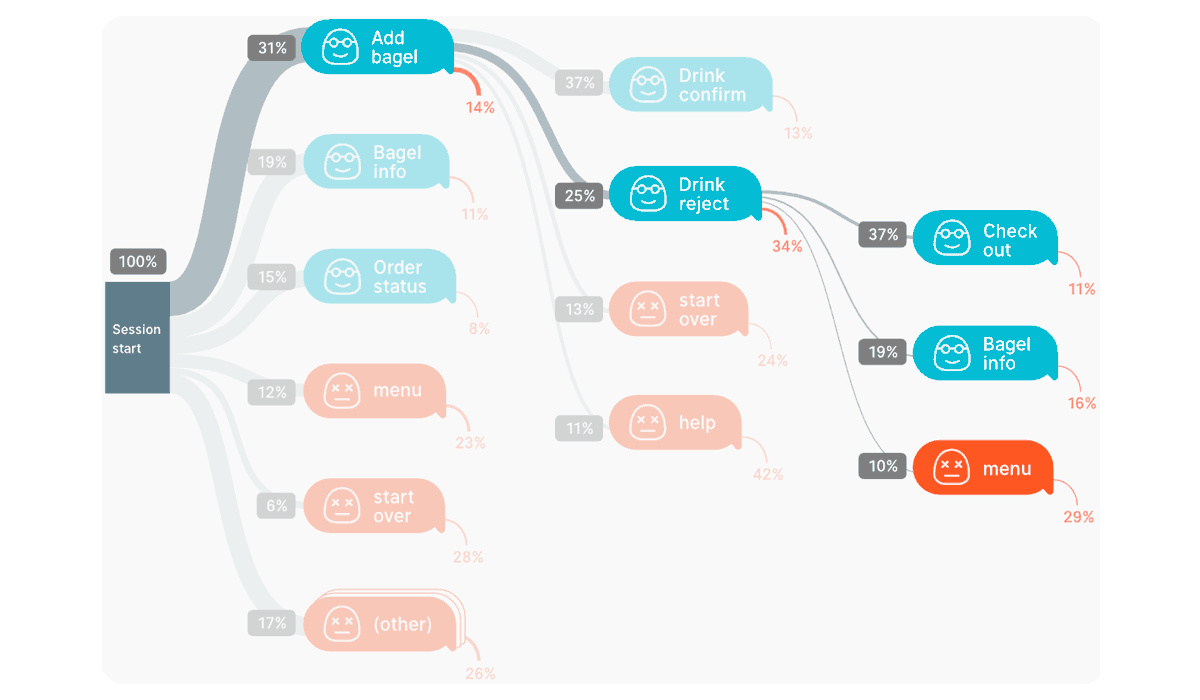
Another notable Chatbase capability is the auto-generated data visualization of conversation flows across sessions. This allows bot developers to see what common paths users take, and where they often exit the application.
Google also noted users of Dialogflow (formerly API.AI), the company's end-to-end platform for building cross-platform conversational experiences, saying that they are automatically getting access to basic Chatbase features within Dialogflow.
The public availability of Chatbase comes when chatbots are facing criticism for not being as useful as promised, and often suffering from usability issues.
It’s intended to help developers better analyze and optimize their bots so they can improve conversion rates and accuracy, and at the same time, to avoid making users feel bots as useless.
But still, the market for bots is still at its early age, and many chatbots aren't doing well. Developers should become better as they figure out what works and what doesn't. And with Chatbase analytics, developers should have more insight about their bots' performance.
Chatbase isn’t the only solution for chatbot analytics. But with Google providing machine learning ability and offering the product for free, is sure an advantage for the company if compared to the competition.
While it's good as it seems, Chatbase was born from Area 120, which is known to have created numerous experimental projects that usually don't see long-term run. But Google is thinking about its future.




















































































































































































































































































