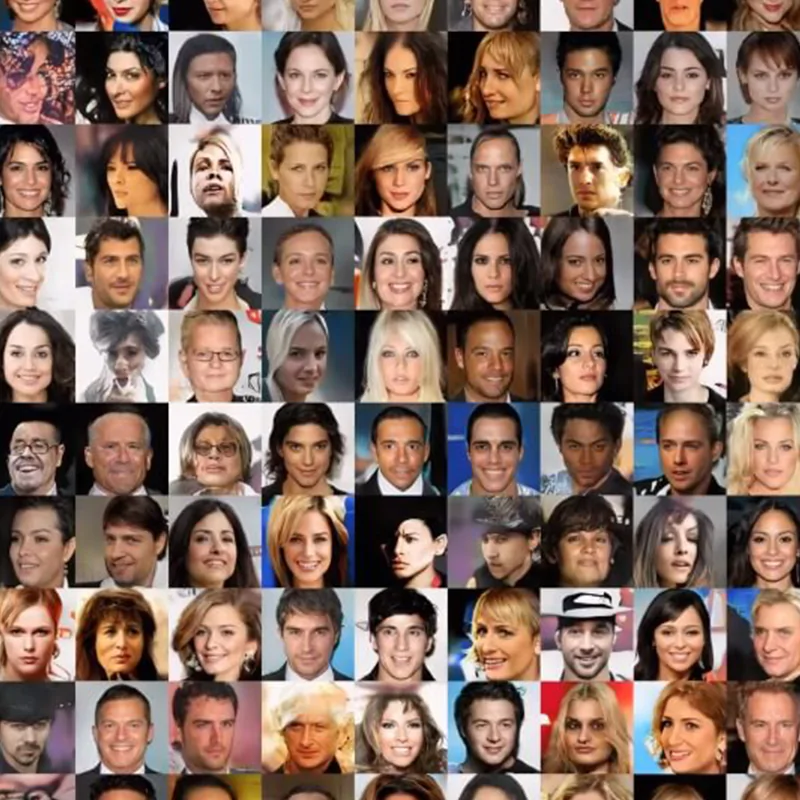
Faces of strangers smiling innocently can be heartwarming and convincingly real. Yes, at least to most people.
With increasingly powerful computer hardware and more data, artificial intelligence (AI) can be trained to generate increasingly convincing photos of people's faces. This, to a degree, that most humans are deceived, tricked into believing that the computer-generated faces are real.
That, according to a research released today by ID R&D, a provider of AI-based voice and face biometrics and liveness detection technologies.
On the report titled Human or Machine: AI Proves Best at Spotting Biometric Attacks, humans have far greater difficulty identifying images of biometric spoofing attacks compared to computers performing the same task, whereas computers have become better than humans.
The test involved liveness detection to instantly validate whether a photo, taken in real time, is of a live person.
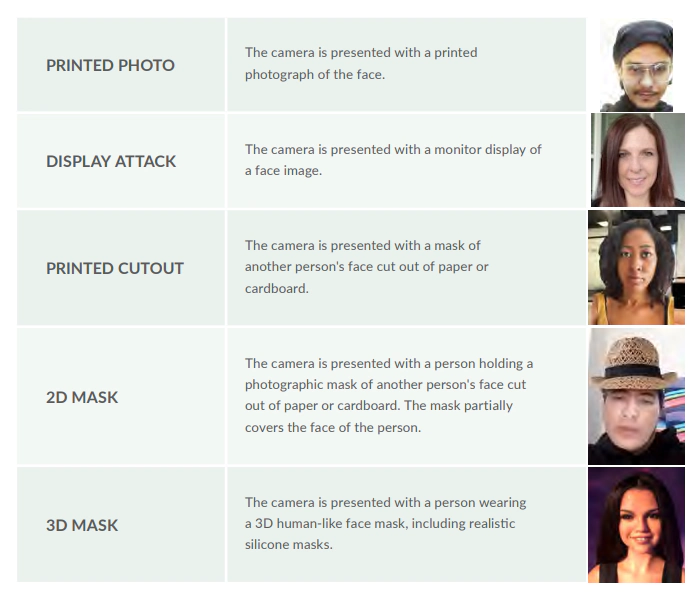
The study tested both humans and machines by presenting them 175,454 images across five types of presentation attacks, including printed photos, digital displays, printed cutouts, 2D masks, and 3D masks.
When tested on humans, the 8,821 participants misidentified 30% of photo prints.
Even when a group of 17 people voted on the images, resulting in a more accurate outcome than an individual person, their majority decisions were never better than the computer’s performance of the same task.
Read: A Website Uses AI To Showcase Convincing Faces Of People Who Don't Exist
According to the research, computers were much more accurate in the tests, scoring 0% error rates across all images and all types of attack.
In this study, the AI system classified just 1% of genuine faces as spoofs. Humans, on the other hand, misclassified 18% of genuine faces as spoofs, confirming that passive facial liveness detection is also better than humans.
Computers were also almost 10 times quicker to recognize a photo of a live person or a spoof.
When human require 4.8 seconds on average to determine liveliness, computers running on a single CPU took less than 0.5 seconds per image to accomplish the same task.
This report suggests how fast computer hardware and AI are advancing. And this is a huge advantage in the industry, especially when concerning facial recognition for identity verification and authentication, the researchers stated.
This performance is also a welcome news to those in the industries that put stakes in automation.
The ability to use AI facial liveness technology to detect fraud saves time and enables human resources to focus on more complex fraud, said ID R&D.
"The results are undeniable. Biometric technology used for identity verification has evolved in recent years to increase speed and accuracy, now significantly outperforming the human eye Organisations can achieve tremendous efficiencies by using identity verification systems that include a biometric component. However, there is still work to be done and we are excited to see biometrics helping to build consumer trust," said ID R&D CEO Alexey Khitrov.
However, despite the strong performance of computers at spotting spoofs, this also has issues.
First of, it's becoming increasingly easy for fraudsters to imitate real customers during processes such as creating a new bank account or logging into an existing account.
Since not every process in the financial industry has been automated and many are still relying on human labor, AIs that have the capacity to create convincing computer-generated faces, allow scammers to hide behind those fake smiles, and trick banks into believing that they are real.
Second, while many facial liveness systems on the market are good at keeping fraudsters out, but in the process, a significant number of genuine people are also caught in the filtering process as false negatives.
Because people are not that good in distinguishing between a face generated by AI and a real face, the researchers call for safeguards to prevent deep fakes.
The technology behind deep fakes has democratized access to previously-exclusive Hollywood-grade, special effects.
From synthesizing speech in anyone’s voice, to synthesizing an image of a fictional person, to the infamous swapping of one person’s identity with another or altering what they are saying in a video, the AI holds the power to entertain and also top deceive.
And this research here shows that the advancements in the field is both a good thing, and a bad thing.




















































































































































































































































































