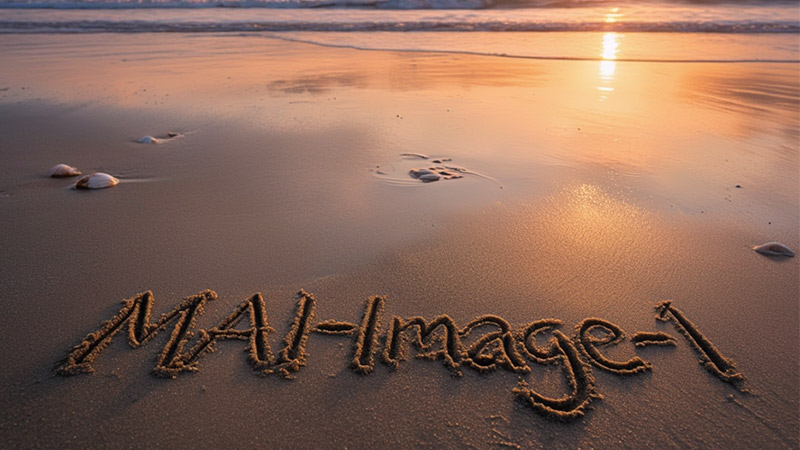
Microsoft has quietly entered a new era: crafting its own visual imagination.
With the debut of 'MAI-Image-1,' the company now joins the ranks of AI players not just consuming third-party models, but building them. No longer simply leaning on OpenAI, because Microsoft is finally stepping into full self-reliance.
And to do that, it chooses photography, light, and pixels as its proving ground for MAI-Image-1.
The model, which joins Microsoft’s other AI products, like MAI-Voice-1 and MAI-1-preview, is Microsoft’s first wholly in-house text-to-image model.
It’s designed to push beyond stylized or repetitive outputs and focus instead on photorealism, rich lighting, textures, and believable landscapes.
Microsoft said that the model was trained on a rigorous data selection and refined evaluation, calling on feedback from professional creators to reduce the generic, uncanny, "AI look."
According to internal benchmarks, it already placed among the top ten models on LMArena, an image-model competition judged by human preferences.
New model drop into the Top 10!
@MicrosoftAI just entered the Image Arena with MAI-Image-1.
Community votes are already rolling in, and MAI-Image-1 has broken into the Top 10. It’s currently ranked #9, tied with Seedream 3!
MAI-Image-1 is now live in Direct Chat for early… https://t.co/NRlhHsmfCW pic.twitter.com/nUeNxKBYpJ— lmarena.ai (@arena) October 13, 2025
This is still below ByteDance's Seedream 4, or Google's Nano Banana, or Tencent's Hunyuan 3.0.
But still, it's an impressive start.
For starters, MAI-Image-1 is fast.
Microsoft said that the model can generate detailed, high-quality visuals in less time, especially compared to many larger, slower architectures. Because speed certainly matters, and that many enthusiasts must remember how slow early image generators were, MAI-Image-1 should appeal creators iterating ideas, because waiting too long can kill momentum.
Initially released to select users, the idea is to give these people the ability to give the model a prompt, which then give users to give the AI some feedback so it can revise its results.
In other words, interacting with MAI-Image-1 is more like a fluid back-and-forth conversations, not a grind.
According to Microsoft in the announcement:
"MAI-Image-1 excels at generating photorealistic imagery, like lighting (e.g., bounce light, reflections), landscapes, and much more. This is particularly so when compared to many larger, slower models. Its combination of speed and quality means users can get their ideas on screen faster, iterate through them quickly, and then transfer their work to other tools to continue refining."

Microsoft was actually an early funder of OpenAI. It supported the startup, and was given access to its large language models that power ChatGPT, right from the very beginning.
In fact, many of its image generation efforts, like the one within Designer and Bing, were using OpenAI’s DALL·E, DALL·E 2 and DALL·E 3 models.
However, the two companies’ relationship has grown increasingly complicated. Since then, Microsoft has also started to use Anthropic’s AI models for some features in Microsoft 365, and is also making “significant investments” in training its own AI models.
And MAI-Image-1 is one of its products that is capable of showcasing Microsoft's ability to remain independent if it must.
Microsoft's story in creating MAI-Image-1 is more strategic than it is technical.
Microsoft has long been a major backer of OpenAI, but by developing its own in-house models, like MAI-Image-1, Microsoft signals a pivot:
By building the models internally, Microsoft can reduce dependency, and gain more control over innovation and deployment.
And since Microsoft is still a partner to some AI companies, Microsoft is diversifying.
The era of AI image models has repeatedly raised concerns: models can hallucinate, distort, or lean into bias. Then, there are issues with deepfakes, overtly violent or sexual content, and so on.
For its part, Microsoft promises built-in constraints to prevent misuse.
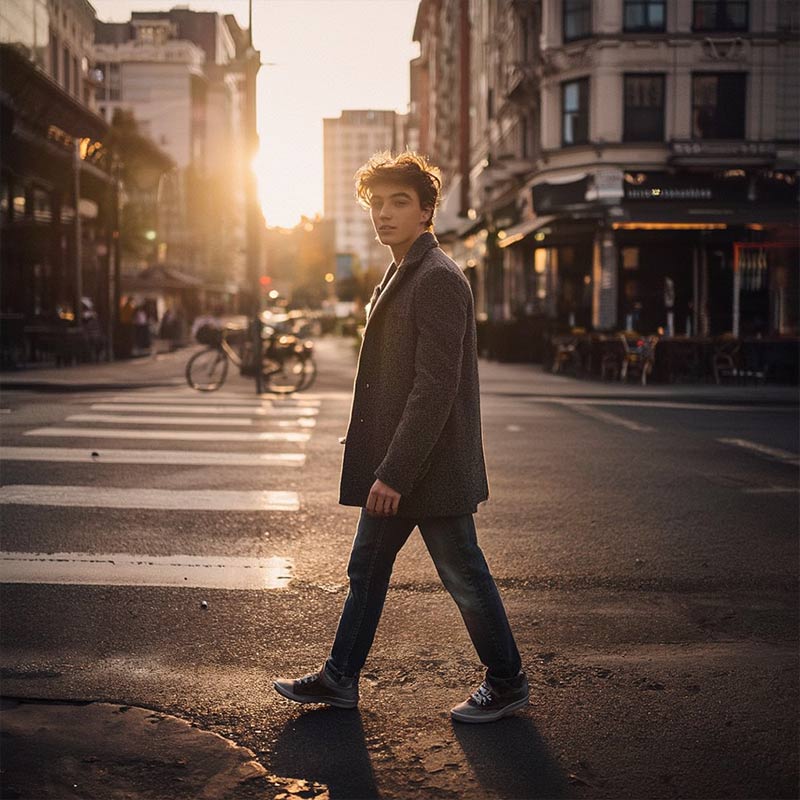
MAI-Image-1 is introduced in the very moment when people's expectations for generative models have matured.
Users expect nuance (lighting, realism, textures) not just stylized "painting effects." Unlike in the past, where people were already awed and wowed by generative AI tools that can generate even the most basic thing that resembles at least something in real life, now people want AI to be able to produce professional-grade photography, or Adobe Photoshop-like edits.
AI companies are trying to bridge that gap, by developing more powerful AIs that can produce what creative professionals are expecting.
And Microsoft is into this game.
Still, the move is audacious. When a company as big as Microsoft says, “We will generate our own visual intelligence,” it changes the game.




















































































































































































































































































