Generative AI entered mainstream use when it gained the ability to understand and respond to text.
Most notably following the launch of OpenAI’s ChatGPT, that moment sparked a technological arms race, as companies around the world rushed to develop increasingly powerful and capable large language models (LLMs).
What started as simple text-to-text generation quickly evolved. These models now have the capability to generate images, audio, and even videos, transforming how people create and consume content.
Now, things are entering a new phase: not just generating AI-made content, but actively editing and transforming it.
One of the few that leads this charge is Meta, through its Meta AI initiative.
Among the few tech giants pushing the boundaries of generative AI this far, Meta is carving out a space where creativity is no longer limited by skill, but only by imagination.
Meta has just introduced a fun and powerful AI-powered video editing feature in the Meta AI ecosystem, as explained in a the announcement:
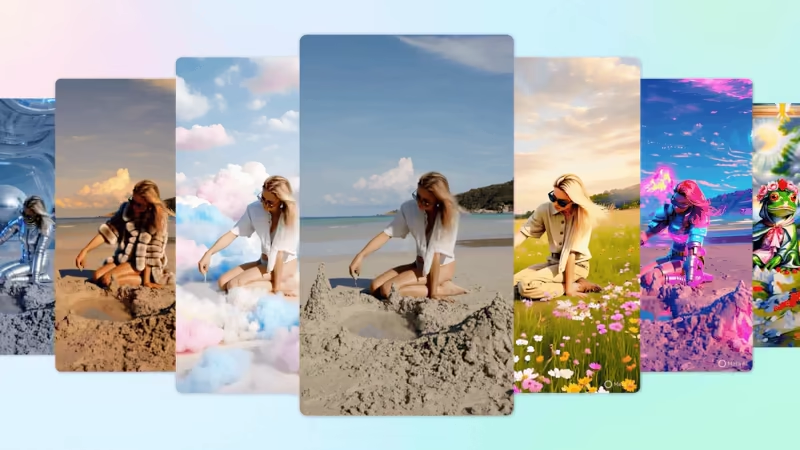
Available via the Meta AI app, the Meta.AI website, and the standalone Edits app, this new tool lets anyone—no editing skills required—transform short clips into stylized creations:
- Over 50 preset prompts: Instantly change outfit, background, lighting, or vibe. Whether it’s a video-game makeover, anime-style look, dreamy sparkles, or desert landscape—the presets cover it all.
- 10-second edits: Free for a limited time, the first 10 seconds of video clip can be edited using these creative prompts.
- Easy sharing: Once edited, share directly to Facebook, Instagram, or Meta AI’s Discover feed.
Further reading: 'Reimagine, Perform, Change, Redesign': Luma AI’s ‘Modify Video’ Makes Creativity Editable
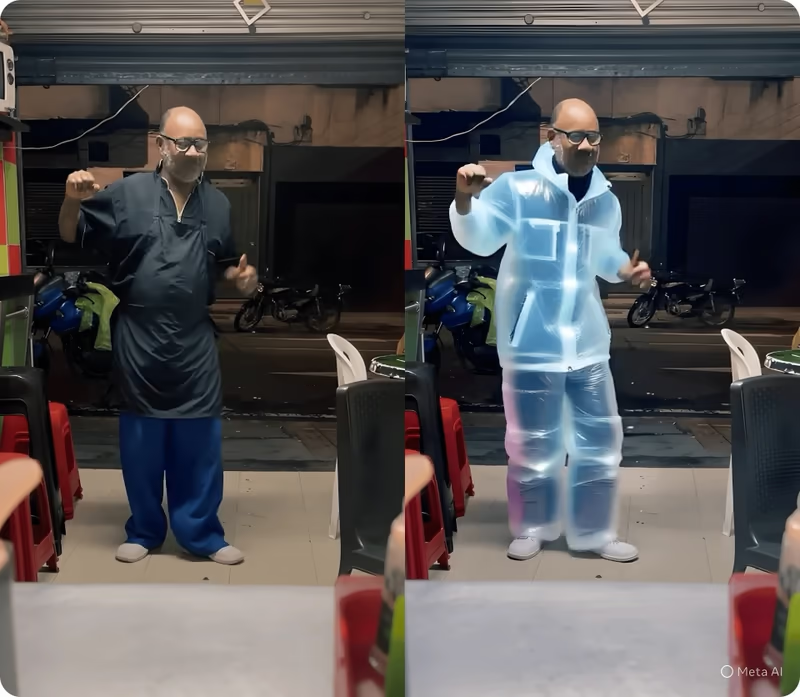
Meta’s latest AI-powered video editing feature is the result of years of generative media research.
Building on tools like Make-A-Scene and Movie Gen, Meta has refined multimodal models that can handle text, video, images, and sound. Now, these advanced capabilities are being placed into users’ hands—literally—through accessible mobile and web apps.
But this isn’t just about fun effects.
By simplifying high-quality content creation, Meta is strategically increasing engagement across its platforms. The more seamless it is to create and share visually compelling content, the more users will interact—benefiting both casual users and content creators seeking stronger reach.
Importantly, Meta involved creators in shaping the prompt libraries, showing it’s not treating this tech as a gimmick, but rather as a tool designed for real-world storytelling—whether by influencers, educators, or hobbyists.
And because Meta also wants to give users the ability to edit videos with custom text prompts, this opens even deeper personalization.




















































































































































































































































































