 Microsoft is a bit late in embracing the emerging trends. But as an experienced company, Microsoft knows that the tech world is changing rapidly.
Despite releasing satisfactory hardware, the company was late to both the modern-day smartphone and tablet scene, hindering its success. Now the company is targeting the mini PC and development board market with the release of Sharks Cove.
The Sharks Cove is Microsoft's homage dedicated to pint-sized PCs like the Raspberry Pi, a device that is practically common. Microsoft has teamed with Intel and product manufacturer CircuitCo to announce a Windows-compatible development board that can be used as both development boards or cheap desktops.
The Sharks Cove board supports driver development for devices that use a variety of interfaces, including GPIO, I2C, I2S, UART, SDIO, and USB. Users can also use the Sharks Cove board to develop drivers for cameras and touch screens.
Measuring at 4 inches by 6 inches, the tiny PC features a 4 core "Bay Trail" 1.33GHz Intel Atom processor with integrated graphics, 1GB of RAM, 16GB onboard storage, a microSD slot, HDMI, a MIPI connector, a single USB 2.0 port, and a micro-USB port for power. There's no Ethernet or Wi-Fi card onboard, so users need to use USB adapters to connect the board to the internet or any other network.
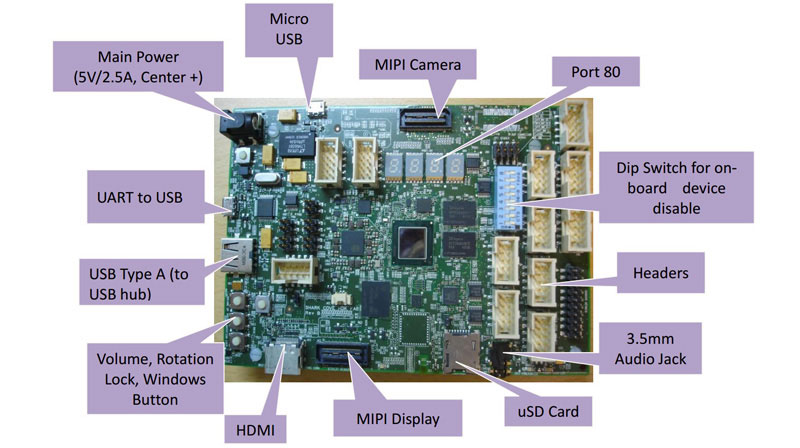
Microsoft says its board is geared towards developers for creating software and drivers for Windows devices such as phones, tablets, and other miniature devices. Microsoft has never been ashamed to copy smaller companies if a trend proves popular enough, and the Sharks Cove has proven the Microsoft is aiming for larger hardware market.
The primary target usage of the Sharks Cove board is for development of subsystems for Intel Atom processors based tablets and mobile devices, but this development board can be used for any Windows or Android based system which uses the Intel Atom processor.
Sharks Cove is set at a $300 price tag (Microsoft 8.1 image and other utilities included). This made it significantly more expensive than its competitor at the time of its release: the Raspberry Pi B+, that costs $35, the BeagleBone Black at $55, and the Minnow Board Max at $99.
However, the Sharks Cove has a much larger RAM, on board storage and faster processor, giving it an advantage despite its hefty price.