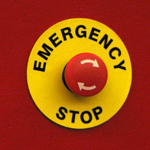
 Since Apple added a "kill switch" starting from its iOS 7, iPhone robberies and thefts have significantly reduced. On June 19th, 2014, Google and Microsoft agreed to add these kill switches to Android and Windows Phone devices after signing agreements with the New York Attorney General.
A kill switch is a safety mechanism used to shut off a device in an emergency situation in which it cannot be shut down in the usual manner. On "smartphones, a kill switch is the ability to remotely wipe data in an orderly fashion without damaging it. There have been increasing calls for kill switches to be enabled on smartphones, specifically because these devices are prone to be lost, and are easy and profitable to resell. Stealing smartphones is a profitable "business". For each device sold on the black market, these thieves can gain hundreds of dollars; the more valuable the device, the greater the payoff. Apple's iPhones usually have the highest payouts, and this practice has led some to dub the theft "Apple picking" and "iCrime".
Adding to the damage, if the stolen/lost smartphone isn't password-protected, thieves can access private information that can lead to identity theft. Smartphones may store password, browsing history, massive amount of contact information, social media accounts, and other personal information. With these private information on the thieves' hands, there is no saying what further injury they can give to the victim.
Smartphone crime is one of the fastest growing segments of crime in many large cities. In 2012 alone, an estimated 1.6 million Americans had their smartphones stolen. With a kill switch, users could remotely disable the device making it worthless for most resale purposes.
New York Attorney General Eric Schneiderman, part of the initiative, said crimes instead surged against people carrying phones without switches intended to make them useless to thieves.
"The statistics released today illustrate the stunning effectiveness of kill switches, and the commitments of Google and Microsoft are giant steps toward consumer safety," he said.
With Android and Microsoft’s now on-board, practically all smartphones will have the feature embedded in them.
Schneiderman stated that robberies of Apple products fell 19 percent while grand larcenies dropped 29 percent in the first five months of 2014 compared with a year earlier. On the other hand, robberies and grand larcenies involving other smartphone brands, notably Samsung smartphone that didn't have a kill switch during much of that time, rose more than 40 percent. The South Korean company introduced a kill switch in April 2014.
The proposal for these kill switches to be implemented in all devices was named the "Smartphone Theft Prevention Act". It was introduced by Senators Amy Klobuchar, Barbara Mikulski, and Richard Blumenthal. Consumer watchdogs, prosecutors, legislators and law enforcement from more than a dozen states have formed Secure Our Smartphones (S.O.S) in 2013.
If the law passed, then these kill switches would be added to smartphones without any additional cost to the consumer. This had happened in Minnesota, where its Governor signed the first kill switch bill into law. However, the bill simply states that phones be "equipped with preloaded anti-theft functionality or be capable of downloading that functionality," without specifying what "anti-theft" means or what sorts of protections the software might actually offer. But some experts see this as a good start.
The proposal does have its opponents, however. Proponents argue that installing a kill switch would almost wipe out the smartphone industry, and can create a situation where the switch could be compromised thus empowering criminals to disable police authorities or potential victims. And although a smartphone that is "killed" is worthless for most resale purposes, the device can still be taken apart for the components to be sold. Having a kill switch was also said to make the target more attractive to hackers. If these criminals could find out the "kill message" on a phone and disable it remotely, this can be a particular risk for people who work in defense or law enforcement.
However, the quick blame for reluctance to adopt the technology is profit. Carriers are said to be reluctant to apply kill switches because they are getting profits from customers buying phone insurance. The top four wireless carriers in the U.S. - AT&T, Sprint, T-Mobile and Verizon - had about $7.8 billion in protection plan premiums in 2013. Carriers also got significant profit from uninsured customers who want replacement phones for their stolen/lost ones.
Early Prevention
Smartphones are prone to be lost and stolen. The best way to prevent smartphone theft is to keep a good eye (and hands) on it. Keep it close to you, and always conceal it in an interior pocket or bag.
All smartphone have their own unique identity. Beside just the model imprinted on the case, smartphones have serial numbers and unique device identification number, known as an International Mobile Equipment Identifier (IMEI).
The IMEI is a 15- to 17-digit numerical code assigned to each smartphone by manufacturers. This unique number allows carriers to remotely disable a smartphone when you contact them. Carriers can also enter your smartphone's IMEI into a national database that tracks stolen smartphones. All major carriers in the U.S. participate in this database, as do a few international carriers. This database feeds into the Global System for Mobile (GSM) and Universal Mobile Telecommunications Service networks.
You can learn your smartphone's IMEI by dialing *#06#. However for older devices, this may not work. You can also see your IMEI printed under the label after you remove the battery.
Apple's iPhones that have iOS 7 installed can remotely launch Activation Lock if the phone is stolen. Other smartphone brands could install a tracking app dedicated to the operating system.
In case your smartphone still got stolen after all the precautions are initiated, you can call the authorities and give them the serial and IMEI numbers and any locations identified by your phone's tracking app.






















































































































































































































































































