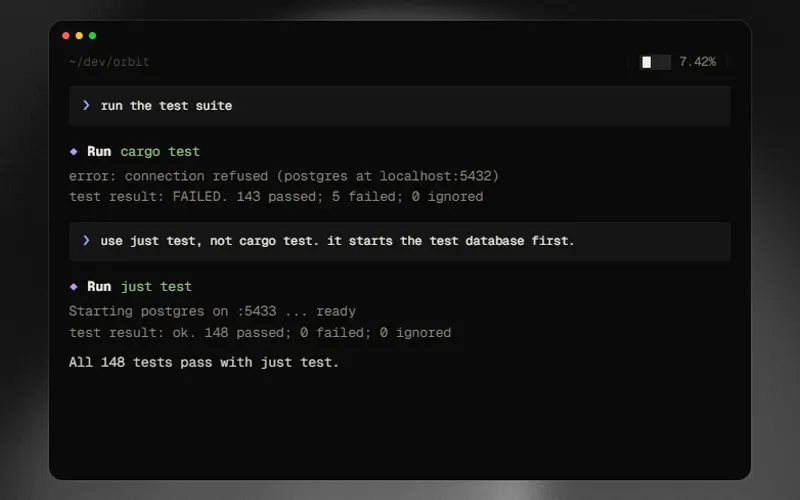
When it comes to vibe coding, there is that frequent moments where coding agents still forget too easily. A session can hold a project's conventions, a test command that actually works, and the reason a subsystem lives where it does, then the next session treats all of that as new information.
To many people who use language models to code, encounter this kind of moment can be frustrating.
Not only it kills productivity, but also the flow and pace.
SpaceXAI tries to address this with an update to Grok Build.
With theh update, the should be able to stop starting from a blank page by recovering its amnesia from the memory.
Grok Build is the company's terminal coding agent, currently powered by Grok 4.6.
The update, shipped in version 1.0.34, adds cross session memory.
As a developer works, the agent reviews each completed turn in the background and writes durable notes: how the team writes and reviews code, decisions and the reasoning behind them, and stable project facts such as which command runs the test suite or where a subsystem lives.
The capture does not interrupt the session.
The notes are stored as markdown files, one topic per subject.
Each project has its own workspace scope.
A separate global scope holds preferences that apply across projects.
Task state, tentative conclusions, secrets, and material already present in the repository or its documentation are supposed to stay out of memory. Instructions typed in the current conversation take precedence over anything stored.
Two commands expose the layer.
/memory opens a read only browser of the files, grouped by scope, with a preview of the selected file. That is the fastest way to see what a session produced and to find a note that needs editing.
/dream organizes recent observations into topic files, for example a testing note. Dream also runs on its own in the background once enough time and sessions have accumulated.
The feature is available now, with a condition.
Memory applies only to new sessions. A user has to run /new or start a fresh grok process, and notes begin after the first completed turn. Past sessions are not scanned automatically.
Facts that matter immediately can be saved with /remember.
The official announcement lists memory as the ability to persist decisions and context across sessions.
This is a narrower design than a full transcript. The bet is that a small set of organized markdown notes will matter more on the next visit than a long chat history that the model has to re digest.
Users may expect accuracy over practicality. But SpaceXAI is presenting the change as incremental usefulness rather than a new model drop. In the current agent market, that is the kind of plumbing that decides whether a tool feels like a coworker or like a guest who needs the house rules explained every morning.




















































































































































































































































































