

SwiftKey provides an input method for smartphones and alike. In September 15th, 2016, the company has rebuilt its famous keyboard app from the ground up to improve predictions to the next level.
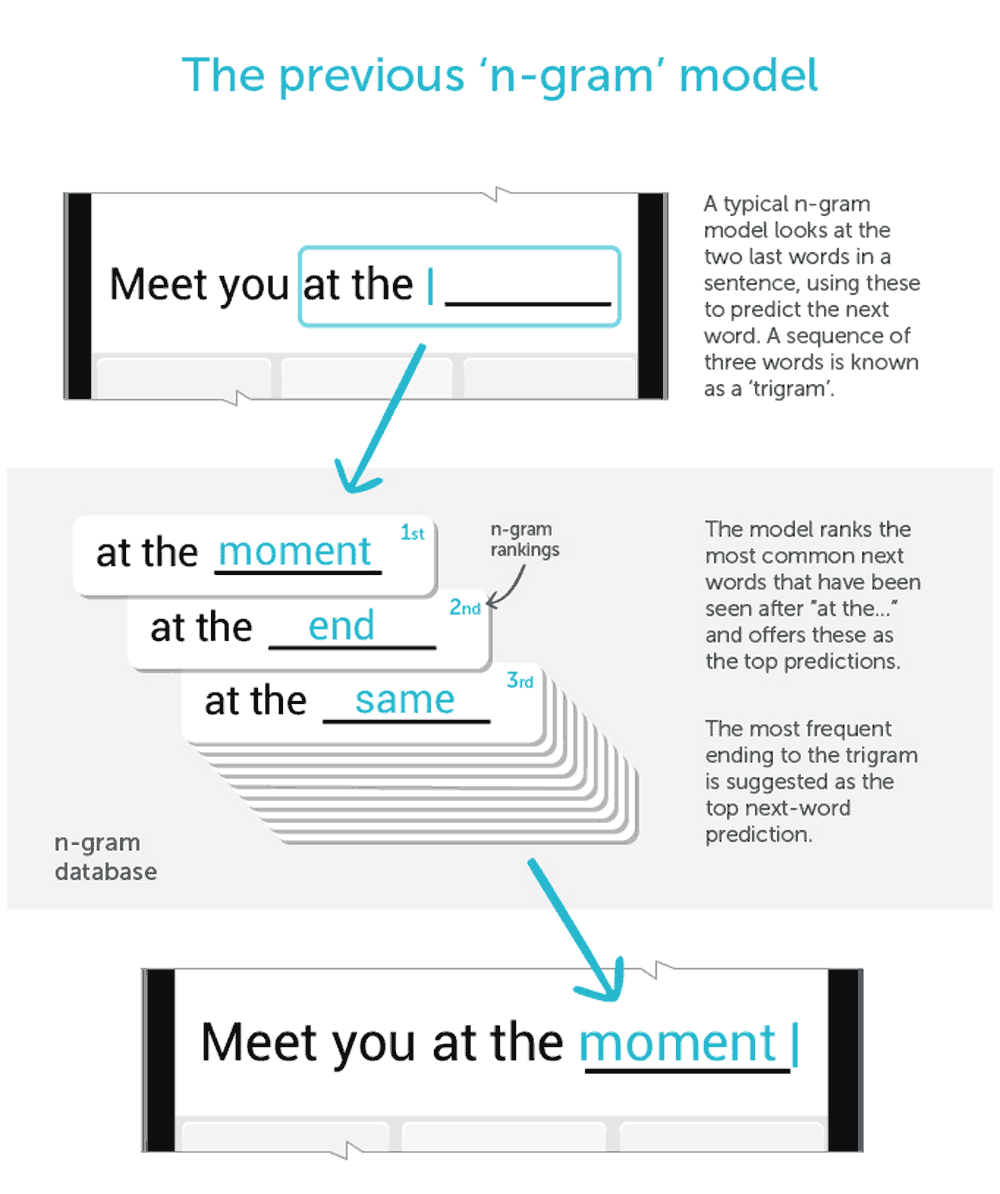
Previously, SwiftKey keyboard relied on an n-gram model which predicted words users intend to type based on the last two words. Users can also train it by typing words and phrases they use often. But occasionally, SwiftKey just doesn't work as good as it should be. Some of the times, it may come up with meaningless predictions.
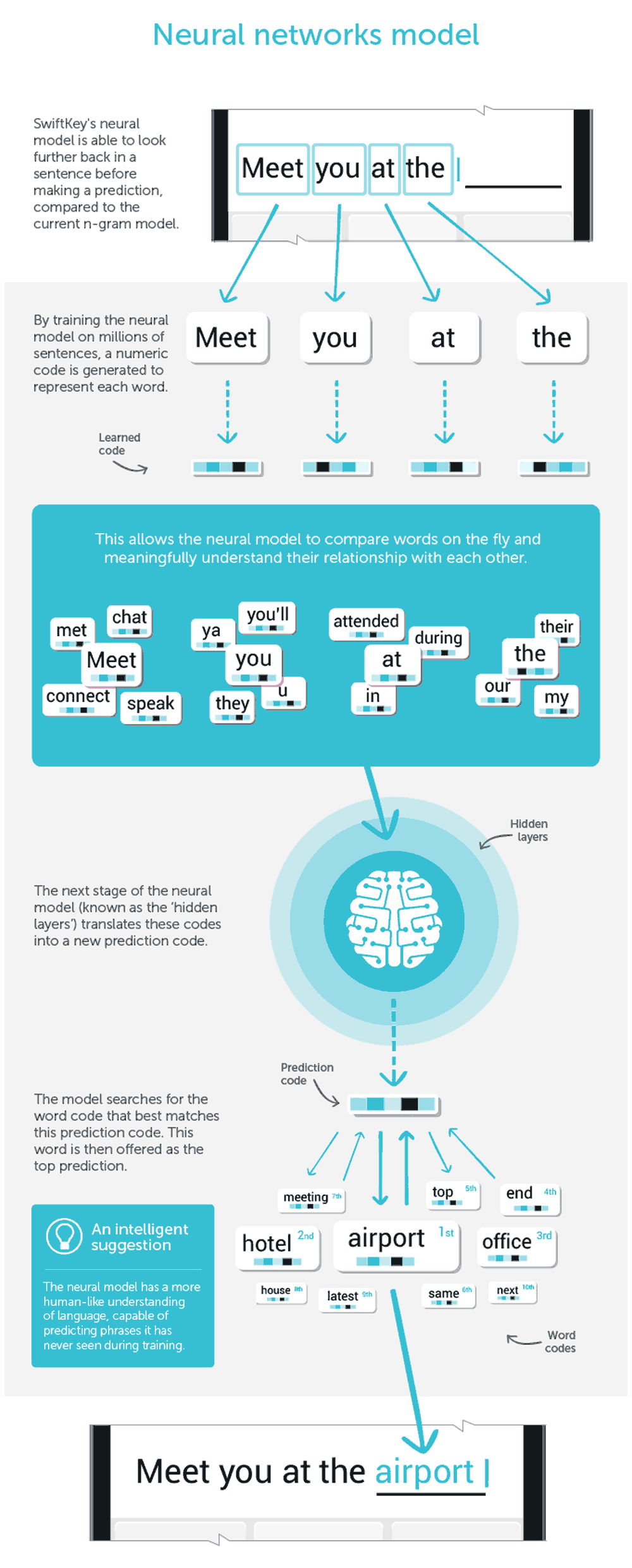
To overcome the situation, SwiftKey that has been acquired by Microsoft, is now using neural network models to understand the words users are typing. Using the method, the app can compare words and understand the relationship between them to produce better predictions.
"SwiftKey is now able to meaningfully capture the relationship and similarity between words."
A neural network is a series of algorithms that SwiftKey uses in its attempt to make its app able to identify underlying relationships in a set of data by using a process that mimics the way the human brain operates.
SwiftKey trained the app with millions of sentences. Based on the training, the keyboard can predict words and phrases in a way that couldn't be previously achieved. This is because it can now understand language at a deeper level.
The training began in October 2015 when the company released an experimental app (SwiftKey Neural Alpha) built on top of the neural network. As the project comes stable, SwiftKey updated its app on Google Play, and initially rolls out its U.S. English and UK English language models.
The neural networks work by learning users from previous interactions to predict future interactions. SwiftKey's keyboard app stores the words users are using, and in simple terms, it's learning that it's far probable for the user to write those words again in the future.
The update rolls out to Android and iOS is soon to follow. It will take a while before Apple users can experience the update because iOS works differently, as SwiftKey's Tim Lovell explained:
The neural network for SwiftKey works locally.